

Quick answer
The costs owners miss in year one are the small, recurring and first-time ones: replacement linens and kitchen gear, supplies, software, permits, occupancy taxes they must file themselves, months with no bookings during setup, and the hours it all takes. None is large alone; together they can turn a first year that looked profitable into one that is not.
Key takeaways
- Year one costs more than a steady year: setup months with no bookings, replacements that arrive sooner than expected, and supplies bought at retail before you find a routine.
- Small items add up. Linens, consumables and broken kitchen gear are rarely in a pro forma, and a large group home goes through them fastest.
- Software and fees are recurring: OwnerRez lists $40 a month for one property plus $15 a month for a hosted site, Airbnb's host-only fee is 15.5% for most hosts, and Stripe charges 2.9% plus 30 cents per domestic card payment.
- Taxes can surprise you. Osceola County, Florida says it is not contracted with Airbnb or Vrbo and that owners and agents must collect and remit its 6% tourist tax.
- Set aside a first-year reserve on top of your operating budget, and track every cost by category so year two is based on real numbers.
In this guide
- Why year one costs more than year two
- Replacements that come sooner than you think
- Supplies: the line that never stops
- Software, fees and payment costs
- Permits, licenses and occupancy taxes
- Income tax: the rules that change your first-year numbers
- Vacancy and the setup months
- Insurance and the first claim
- An Example year-one budget
- How to keep year one under control
- Where professional management fits
- The bottom line
Why year one costs more than year two
Year one has costs a steady year does not, because you are buying, learning and waiting at the same time.
A pro forma usually shows a typical year: so many booked nights at an average rate, minus cleaning, utilities, fees and a maintenance line. The first year is not typical. You pay for setup before the first guest arrives. You buy supplies at retail, in small amounts, before you know what a stay uses. Items wear out faster than you planned because a group of twelve is hard on a home. And a new listing with no reviews often books more slowly than an established one, which our guide to the ramp-up year for a new short-term rental covers in detail.
This guide is a checklist of those year-one surprises. It does not repeat the cost of your own time, which we work through in the true cost of self-hosting a vacation rental, or the full furnishing budget in how to furnish a vacation rental for groups. This is general information, not tax or legal advice.
Replacements that come sooner than you think
In a group home, soft goods and kitchen gear wear out on a schedule set by guest count, not by the calendar.
Most first-year owners buy one set of linens per bed and a stack of towels, and find out within months that it is not enough. A same-day turnover means the next set has to be on the shelf while the last one is in the wash. Towels go missing, get stained with makeup or hair dye, or end up at the pool. Mattress protectors are ruined by one spill.
The kitchen is next. In a home that sleeps 14, guests cook for a crowd: nonstick pans scratch, glasses break, knives dull, the coffee maker runs three pots a morning and gives out early. Small appliances bought for a family of four do not last a year of group stays.
Then come the items guests break or take without meaning to: remotes, phone chargers, pool towels, beach chairs, a broken blind, a cracked lamp. Each is cheap. The trips to replace them are not.
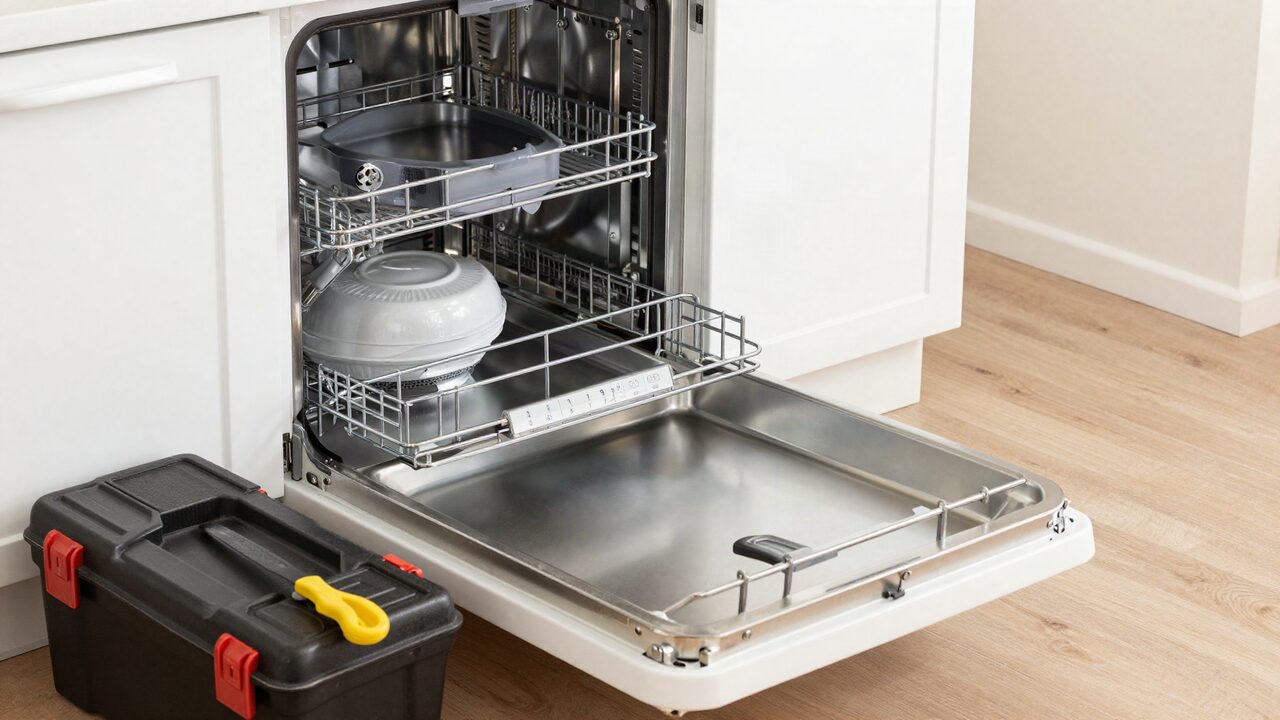
Supplies: the line that never stops
Consumables are the cost new owners forget to multiply by the number of stays.
Every stay uses toilet paper, paper towels, dish soap, dishwasher pods, laundry detergent, trash bags, hand soap, shampoo if you provide it, coffee and filters, and cleaning products. A group of twelve uses far more of each than a couple does. In year one you also stock up: first fills of everything, a starter pantry of salt, oil and spices, and the extras a group expects, like a first-aid kit and a fire extinguisher.
Owners who plan "a few dollars a stay" are usually low. Track the first two months closely, then buy in bulk on a schedule. Our cleaning and turnover checklist lists what a turnover restocks.
Software, fees and payment costs
The tools that run a rental are small monthly bills that add up to a real annual line, and the platform fees are larger than most owners model.
Software. OwnerRez's costs and fees article lists a base subscription of $40 a month for the first property and $15 a month for a hosted website on the first property. That is $660 a year before any other tools. Many owners add a dynamic pricing tool, a smart lock subscription, a noise monitor and an accounting app, each with its own plan. Our guide to smart locks and noise monitors covers what those devices do.
Platform fees. Airbnb's service fees page says "Most hosts pay 15.5%" on the single-fee structure, which it says is mandatory for most hosts. Vrbo's pay-per-booking help page says "a 12% commission rate is charged on the rental amount and any additional fees you charge to the traveler." Those are a share of every booking, so they grow with revenue.
Card fees on direct bookings. Stripe lists "2.9% + 30¢" per successful domestic card charge, plus 1.5% for international cards and $15.00 for each dispute. A direct booking skips the platform fee but not the processing fee or the cost of a chargeback.
| Recurring cost | Named figure | Source opened today |
|---|---|---|
| Property management software | $40 a month for the first property | OwnerRez costs and fees |
| Hosted booking website | $15 a month for the first property | OwnerRez costs and fees |
| Airbnb host-only fee | 15.5% for most hosts | Airbnb service fees |
| Vrbo pay-per-booking commission | 12% of rent and host fees | Vrbo help |
| Direct card payment | 2.9% plus 30 cents, domestic | Stripe pricing |
| Card dispute | $15.00 each | Stripe pricing |
Permits, licenses and occupancy taxes
Local rules add fees and filing work in year one, and some taxes land on the owner even when a platform handles the booking.
Many cities and counties require a short-term rental permit or business license, sometimes with an inspection, a fee and an annual renewal. Some add safety requirements, such as smoke and carbon monoxide alarms in specific rooms. Our guides to short-term rental permits and fire and carbon monoxide rules cover what to check. Budget for the permit fee, any inspection fixes and your time on the application.
Occupancy taxes are the bigger surprise. New owners often assume the platform collects every tax. That is not always true. The Osceola County Tax Collector, which covers Kissimmee, says on its tourist development tax page: "Osceola County is NOT CONTRACTED with Airbnb, VRBO, Evolve, or any other third-party booking platforms," and that "It is the responsibility of the property owners and agents to collect and remit the 6% tourist tax" for all short-term rentals. Florida's Department of Revenue says sales tax and discretionary sales surtax on transient rentals "are always reported and remitted to the Department," and that counties may add local taxes on accommodations rented "for a term of six months or less."
For California homes, our guide to California short-term rental rules for owners covers what to check locally, and for Florida, see Florida vacation rental rules for owners.
Income tax: the rules that change your first-year numbers
Income tax does not change what you spend in year one, but it changes what you keep, and the rules are easy to get wrong.
This is general information, not tax advice. Ask a CPA who works with rental owners before you file.
- Where it is reported. IRS Topic 415 says rental income and expenses are generally reported on Form 1040 or 1040-SR and on Schedule E. Keep receipts by category from day one.
- Personal use. Topic 415 says a home is treated as a residence if your personal use is more than the greater of 14 days or 10% of the days rented at a fair rental price. Owners who use the home often in year one should know where that line is.
- Repairs versus improvements. IRS Publication 527 says "You must capitalize any expense you pay to improve your rental property," and lists improvements as work that fixes a preexisting defect, expands or strengthens the property, restores it, or adapts it to a new use. Ordinary repairs and maintenance can generally be deducted in the year paid. Much of year-one spending sits on that line.
- Depreciation. Publication 527 for 2025 says residential rental buildings are recovered over 27.5 years under the General Depreciation System, and that appliances, carpeting and furniture used in a residential rental activity are in the 5-year class.
Short-term rentals can also fall under different rules depending on the average stay and how much you take part, which our guide to the short-term rental tax loophole explains. A CPA bill is itself a year-one cost worth budgeting.
Vacancy and the setup months
The most expensive year-one cost is often the months the home sits empty while you get it ready.
Between closing and the first guest, you pay the mortgage, insurance, utilities and any HOA dues with no income. Furnishing, photography, permits, a safety inspection and the listing itself can take longer than planned, especially if a contractor or a furniture delivery runs late. Once the home is live, a listing with no reviews may book less often or at a lower rate until reviews come in.
Then there is seasonality. A home that goes live at the start of a slow season has its weakest months first. Our guide to off-season strategy covers what owners do with those months.
Insurance and the first claim
Insurance is a known cost, but year one is when owners find out what their policy actually covers.
A standard homeowners policy may not cover a home rented to guests. Most owners need a policy written for short-term rentals or a landlord policy with the right endorsements, and the price can differ from what a lender or an online calculator suggested. The first damage claim also teaches what the deductible is and what platform host protection programs do and do not pay for. Our guides to short-term rental insurance and vacation rental damage claims cover both. Budget for the deductible as a real cost, because the first claim usually comes before you expect it.
An Example year-one budget
Put every year-one cost on one page, with known figures where you have them and labeled estimates where you do not.
The table below is an Example for a five-bedroom group home that brings in $80,000 of booking revenue in its first year, all on Airbnb. The software and fee lines use the published figures above; every other number is invented to show the categories, not a measured cost.
| Year-one cost | Example amount | Basis |
|---|---|---|
| Platform fee (15.5% of $80,000) | $12,400 | Airbnb's published host-only fee, on invented revenue |
| Software and hosted site | $660 | OwnerRez's published prices, 12 months |
| Extra linens, towels and protectors | $1,500 | Example |
| Consumables, about $150 a month | $1,800 | Example |
| Replacement kitchen gear and small appliances | $900 | Example |
| Repairs not covered by warranty | $2,500 | Example |
| Permit, license and inspection | $500 | Example; check your city |
| Insurance deductible on one claim | $1,000 | Example |
| CPA for the first return | $800 | Example |
| Two setup months of carrying costs | $9,000 | Example from the vacancy section |
| Year-one costs most pro formas miss | $31,060 | Sum of the lines above |
Not every line will apply to your home, and some will be higher. The point is the habit: list every category, put a real or labeled number on each, and keep a reserve for the lines you could not price. Our guide to reading a short-term rental pro forma shows how to test a seller's numbers against a list like this.
How to keep year one under control
The owners who come through year one in good shape plan for surprises, buy on a schedule and track everything.
- Hold a separate reserve for replacements, repairs and slow months, apart from your operating account.
- Buy spares at setup, not after the first complaint: linens, towels, a spare coffee maker, remotes, bulbs.
- Confirm every tax before the first booking, and which ones each platform collects.
- Track costs by category from day one, so your accountant and your year-two budget start from real figures.
- Use a maintenance calendar so filters, gutters and the water heater are scheduled rather than discovered.
- Price your own time honestly, because the hours are a cost even when they do not appear on a statement.
Where professional management fits
A manager does not remove year-one costs, but can shorten setup, price better from the first booking and handle the first problems faster.
That is not always worth the fee. An owner who lives close, has a reliable cleaner, enjoys the work and has time to learn may do as well alone in year one. For an owner who lives far away, owns a large group home or has a full-time job, the setup months and first repairs are where a manager earns the most.
We manage large homes built for groups. Our pricing page lists the Essential Management Package at $4,100, which includes Property Optimization & Setup, Professional Photography, Smart Home Integration, Dynamic Pricing Strategy and Cleaning & Maintenance Coordination, and the Premium Management Package with JekkyAI at $6,800, which adds services such as Interior Design Consultation, a Dedicated Property Manager and a 24/7 AI Property Manager. See what we do for owners, or get a quote for your home.
The bottom line
Year one of a vacation rental costs more than a steady year: setup months with no income, replacements that come early, supplies bought at retail, software and platform fees, permits, occupancy taxes you may have to file yourself, and a first repair and insurance claim. List every category, put a published or labeled Example number on each, hold a separate reserve, and track costs from the first day so year two is planned on real figures. This is general information, not tax or legal advice; talk to a CPA and check your local rules.
Frequently asked questions
What costs do new vacation rental owners underestimate most?
The small recurring ones: linens and towels, consumables like toilet paper and coffee, broken or missing kitchen items, and software subscriptions. The larger surprises are months with no bookings during setup, a first repair bill, and occupancy taxes the owner has to file personally.
Doesn't Airbnb collect occupancy taxes for me?
Sometimes, not always. Platforms collect some taxes in some places through agreements with local governments. Osceola County, Florida, for example, says it is not contracted with Airbnb, Vrbo or other third-party booking platforms, and that owners and agents must collect and remit its 6% tourist tax. Check each tax that applies in your city and county.
How long do furniture and appliances in a rental take to depreciate?
IRS Publication 527 for 2025 says appliances, carpeting and furniture used in a residential rental activity are in the 5-year class under the General Depreciation System, and residential rental buildings are recovered over 27.5 years. This is general information, not tax advice; ask a CPA how it applies to you.
Is a repair deductible in the year I pay for it?
IRS Publication 527 says ordinary repairs and maintenance can generally be deducted in the year paid, while you must capitalize an expense that improves the property, such as one that fixes a preexisting defect, expands or strengthens the property, or restores it. A CPA can help you sort first-year spending into the right group.
How much should I keep in reserve for year one?
There is no standard figure. A practical approach is to budget the setup costs you know, then hold a separate reserve for replacements and repairs and for a few months of carrying costs with lower bookings than you hope. Our Example budget in this guide shows how to build one.
Is it cheaper to have a manager in year one?
Not always. A manager adds a fee, but can shorten setup, price better from the start and handle the first problems faster. Compare the fee with your own time and the revenue difference. For an owner who lives close and has time, self-managing year one can be the cheaper choice.
Sources
- Osceola County Tax Collector: Tourist development tax
- Florida Department of Revenue: Sales and use tax
- IRS Topic 415: Renting residential and vacation property
- IRS Publication 527: Residential Rental Property (for 2025 returns)
- OwnerRez Support: Costs and fees
- Airbnb Help Center: Airbnb service fees
- Vrbo Help: About the pay-per-booking (PPB) model
- Stripe: pricing