Quick answer
To coordinate several cars on a road trip, stop trying to drive as a convoy. Agree on one meeting point, two or three named stops and an arrival window, share locations or ETAs on your phones, and let each car drive its own pace in between.
That plan is less stressful than following bumper to bumper, and it survives the thing that always happens: one car needs gas, one has a carsick child, and one is twenty minutes late leaving. The rest of this guide covers the stops, the phones, the groceries and the parking at the house.
Key takeaways
- Don't try to drive in a tight convoy. Agree on a meeting point, two or three planned stops and an arrival window, and let each car drive its own pace between them.
- Pick one lead planner for the route and one person in each car as the navigator who handles the phone, so no driver texts at the wheel.
- Share locations or ETAs through Find My, Apple Maps or Google Location Sharing so nobody has to call a moving car to ask where it is.
- Split the grocery run by car before you leave: cold food in the car arriving first, dry goods and drinks in the others.
- Ask the host how many cars fit at the house before you decide how many cars to bring.
In this guide
Set one plan before anyone leaves
The answer is a single message, sent the night before, that every driver has read.
Most caravan trouble starts with each car having a slightly different idea of the plan. One person thinks you are meeting at the gas station, another thinks you are meeting at the house. Fix that with one written plan in the group chat, posted by one lead planner, and pinned.
Put these in it:
- Departure points and times for each car, if people are leaving from different towns.
- The meeting point, if cars are leaving from the same area: a large gas station or shopping center lot just off the highway, with restrooms. Avoid meeting at a home on a narrow street.
- The route, with the highway numbers, so nobody's phone sends them a different way to save four minutes.
- Named stops, with the place and the rough time.
- The arrival window and check-in time at the house.
- Who carries what, including the groceries (more on that below).
- The fallback: if a car falls behind, it skips to the next stop or goes straight to the house. Nobody waits on a highway shoulder.
If you are driving to the lake, our guide to driving to Lake Anna from Richmond, Fredericksburg and Charlottesville covers the routes and the last fuel and grocery stops, so this guide won't repeat them.
Plan the stops around the kids, not the map
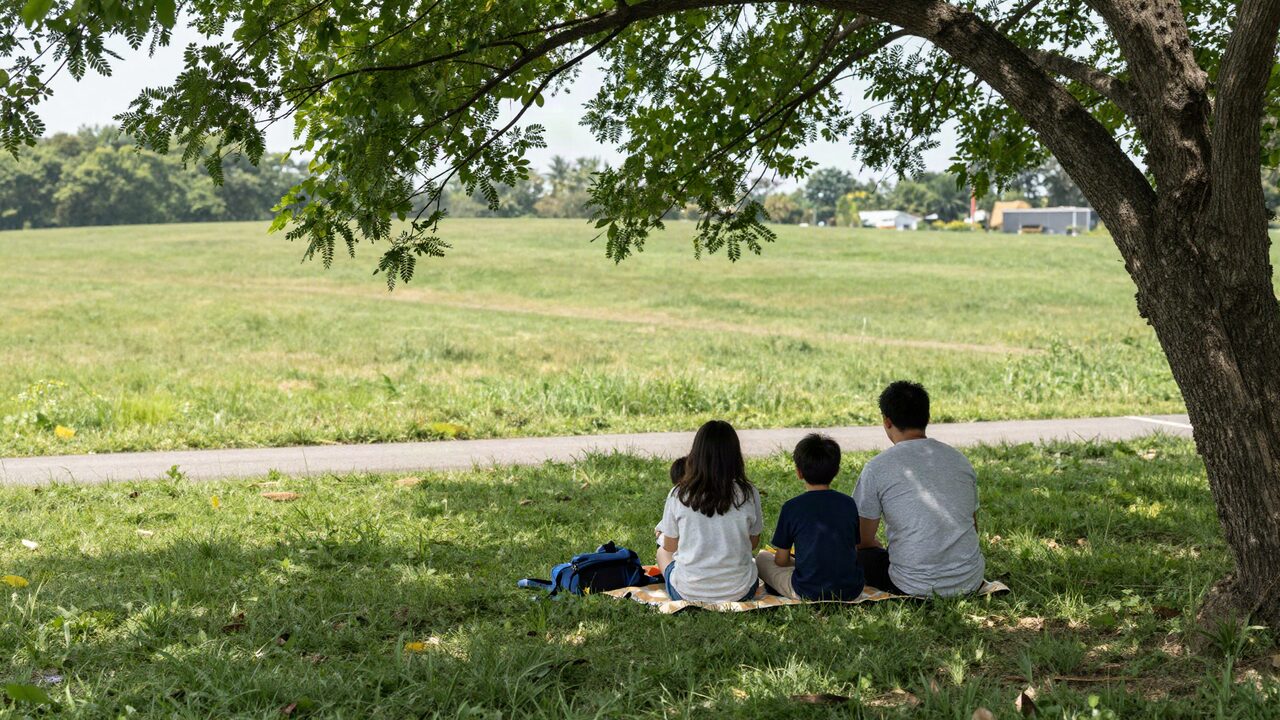
Plan a stop about every two hours, more often with toddlers, and name each stop in advance.
A caravan moves at the speed of its youngest passenger. A car with a two-year-old will need to stop when a car of adults would push on, and that is fine if the stops are planned. What causes friction is one car pulling off without warning while the others keep going.
Use three kinds of stops:
| Stop | When | What it is for | How long |
|---|---|---|---|
| Fuel and restroom | Every 2 hours or so | Gas, restrooms, snacks | 10 to 15 minutes |
| The real break | Near the middle of the drive | Lunch, a picnic area or park, space for kids to run | 45 to 60 minutes |
| The last stop | 20 to 40 minutes before the house | Groceries, fuel, a final restroom stop | 20 to 40 minutes |
The real break is the one to regroup at. Fuel stops can happen car by car, but if everyone meets for lunch, the caravan resets there: late cars catch up, kids swap cars to ride with cousins, and drivers trade off.
A few habits that help with kids:
- Give each car its own snack bag and trash bag, so nobody needs to stop for a wrapper.
- Agree that a car with a sick or crying child can stop anywhere and tell the group later. The others don't turn around.
- Put the car with the youngest kids at the front of the plan, not the back. If they set the pace for stops, nobody is left waiting.
Use your phones for location, not for texting at the wheel
Share locations or ETAs so the group can see where each car is without calling a moving driver.
Pick one passenger in each car as the navigator. That person runs the map, reads the group chat and answers it. The driver doesn't touch the phone. This is a safety rule and, in many places, the law: Texas has banned reading, writing or sending a text while driving since September 1, 2017, with fines of up to $200, and TxDOT counted 86,384 crashes and 299 deaths from distracted driving on Texas roads in 2025. TxDOT also notes that research shows voice-to-text and hands-free devices still affect your driving.
Here are the tools most groups already have:
| Tool | What it does | What to know |
|---|---|---|
| Find My (iPhone) | Shares your location with people you choose | In the People tab, choose Share My Location, add the person, then choose how long to share. Stop it from the same screen. |
| Apple Maps: Share ETA | Sends your arrival time while you follow directions | The ETA updates on its own if there are major delays. People on iOS 13.1 or later can follow your progress in Maps; other phones get a text. |
| Google Location Sharing | Shares your real-time location with people you choose | They see your name, photo, real-time location and battery status. It needs the "Use location" setting on, and you can stop sharing from your Google Account at any time. |
| State 511 and DOT sites | Traffic, closures and conditions | Florida's FL511 has a trip planner and route alerts by text. Caltrans QuickMap shows California closures and chain controls. |
Set it up the night before, not at the meeting point. Ask each car's navigator to share their location or ETA with the lead planner, and tell people when you will turn sharing off. Location sharing is a convenience for the trip, not something to leave running for weeks.
Drive like separate cars, not a convoy
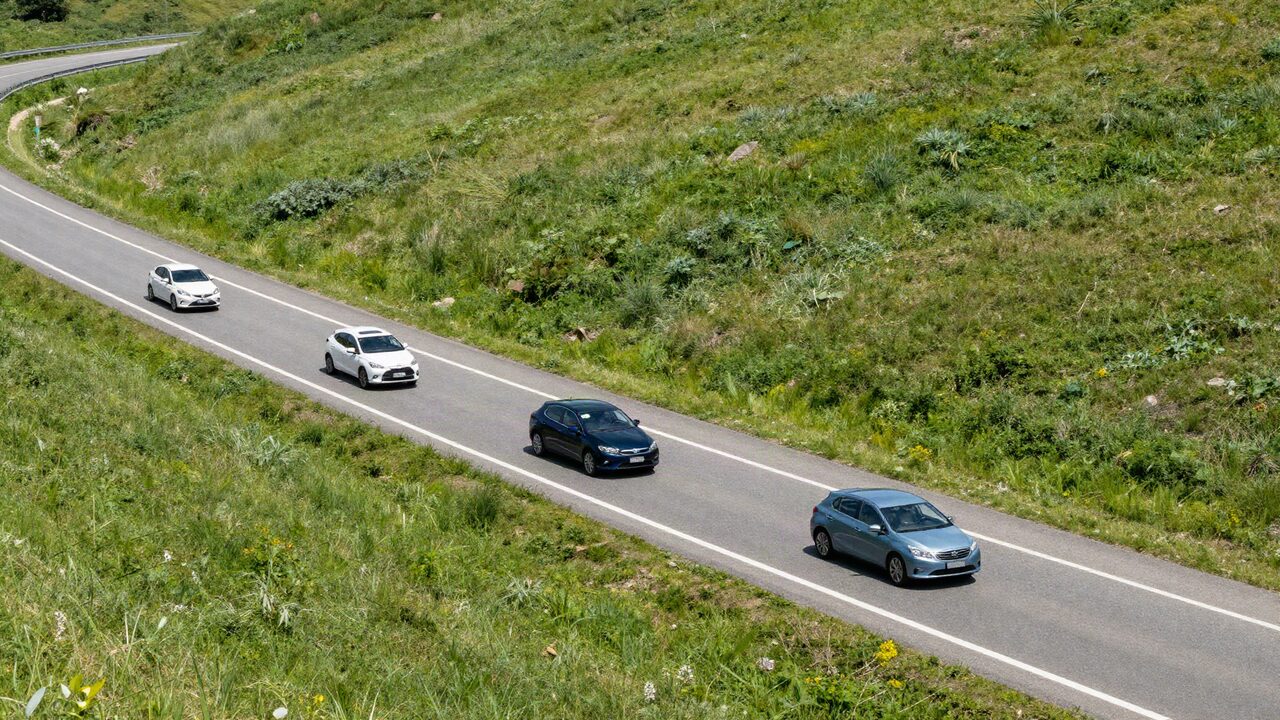
Each car should drive normally, with its own safe following distance, and regroup at the stops.
It is tempting to have one lead car and everyone follow. Over a long drive, that means drivers watching the car ahead instead of the road, changing lanes in a hurry to stay together, and running yellow lights. Let it go. Traffic will split you up, and the plan already tells everyone where to meet.
A few rules keep it simple:
- Everyone has the address. Every navigator has the house's address in their map app before leaving, so no car depends on another to find it.
- Share the driving. If a car has two licensed drivers, swap at the real break. A rested driver is the best safety plan you have.
- Watch the weather. For a winter trip in the mountains, Caltrans advises leaving early, keeping your gas tank full in case you need to change routes or wait out a delay, carrying chains sized for your tires, and checking conditions often because they change quickly. Our packing list for a winter group trip covers what to bring for the house itself.
- Arrive in a window, not at a minute. "Between 4 and 5" is a plan people can keep.
Decide who carries the groceries
Assign food and supplies by car before you leave, so nothing gets bought three times.
A group of 12 can easily come home with three bags of tortilla chips and no coffee. The fix is to split the shopping list by car:
| Car | Carries | Why |
|---|---|---|
| The car arriving first | Cold and frozen food, or the grocery stop near the house | It gets to the refrigerator soonest |
| Car two | Breakfast items, coffee, snacks for the first evening | The first morning is when people notice what's missing |
| Car three | Drinks, ice, paper goods, trash bags | Bulky and heavy, but nothing spoils |
| Any car with space | Kid gear, beach or lake gear, games | Spread the bulk across the trunks |
If the drive is long, buy cold food near the house rather than at home. Put that stop at the end of the drive and send one or two adults in while the rest of the group heads to check in. For the meal plan itself, see our group meal plan for a vacation rental.
Plan the parking at the house
Ask how many cars fit before you decide how many cars to bring.
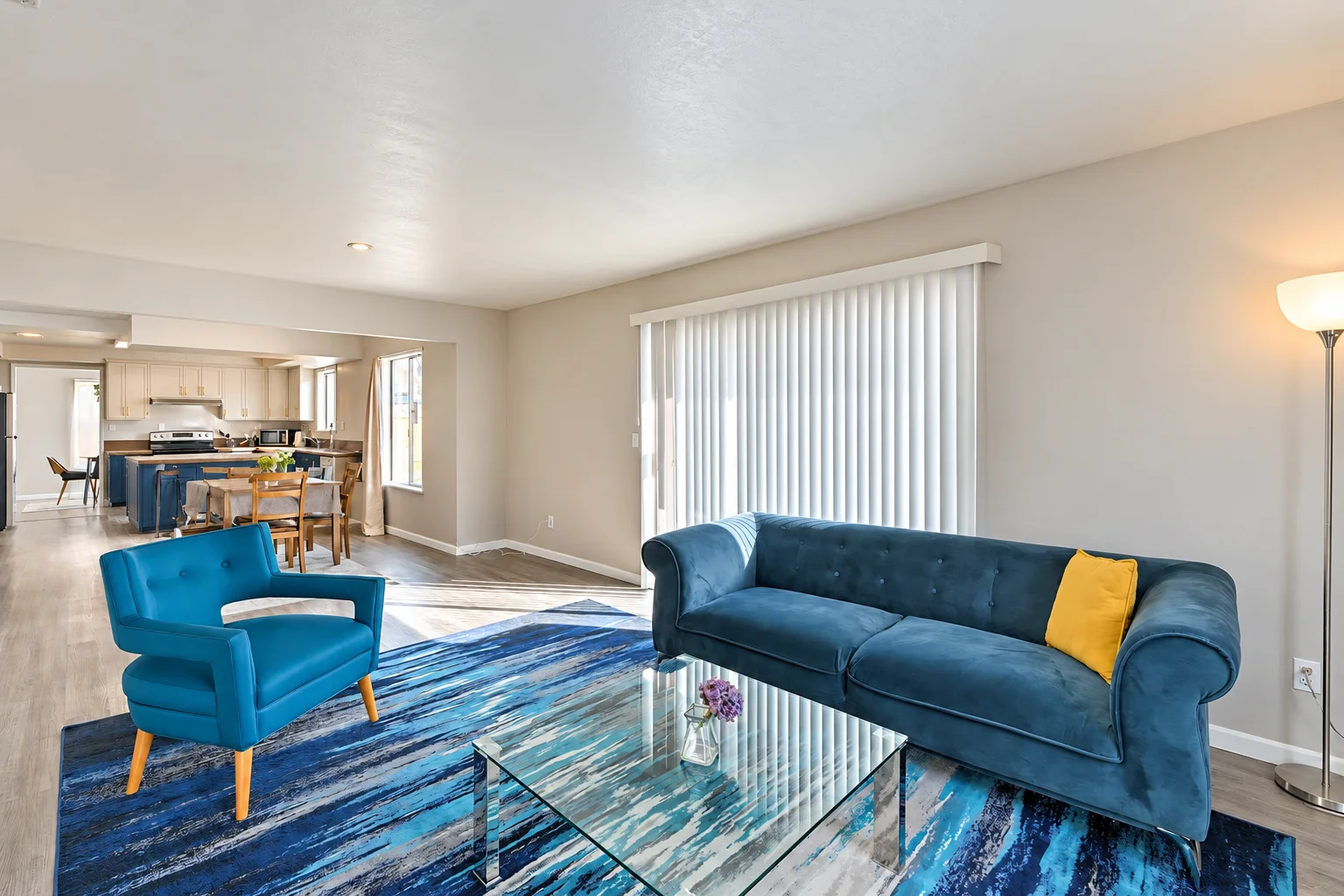
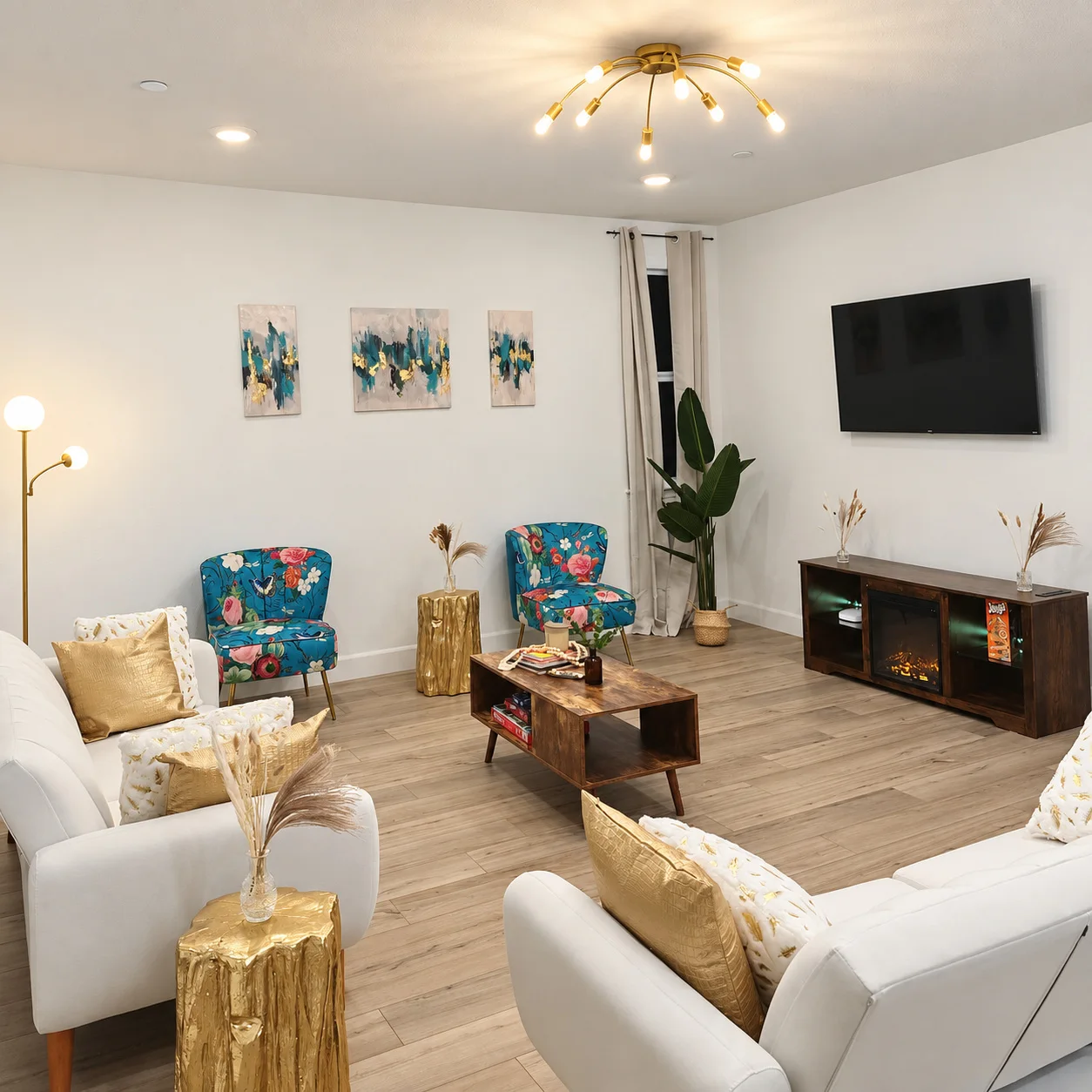
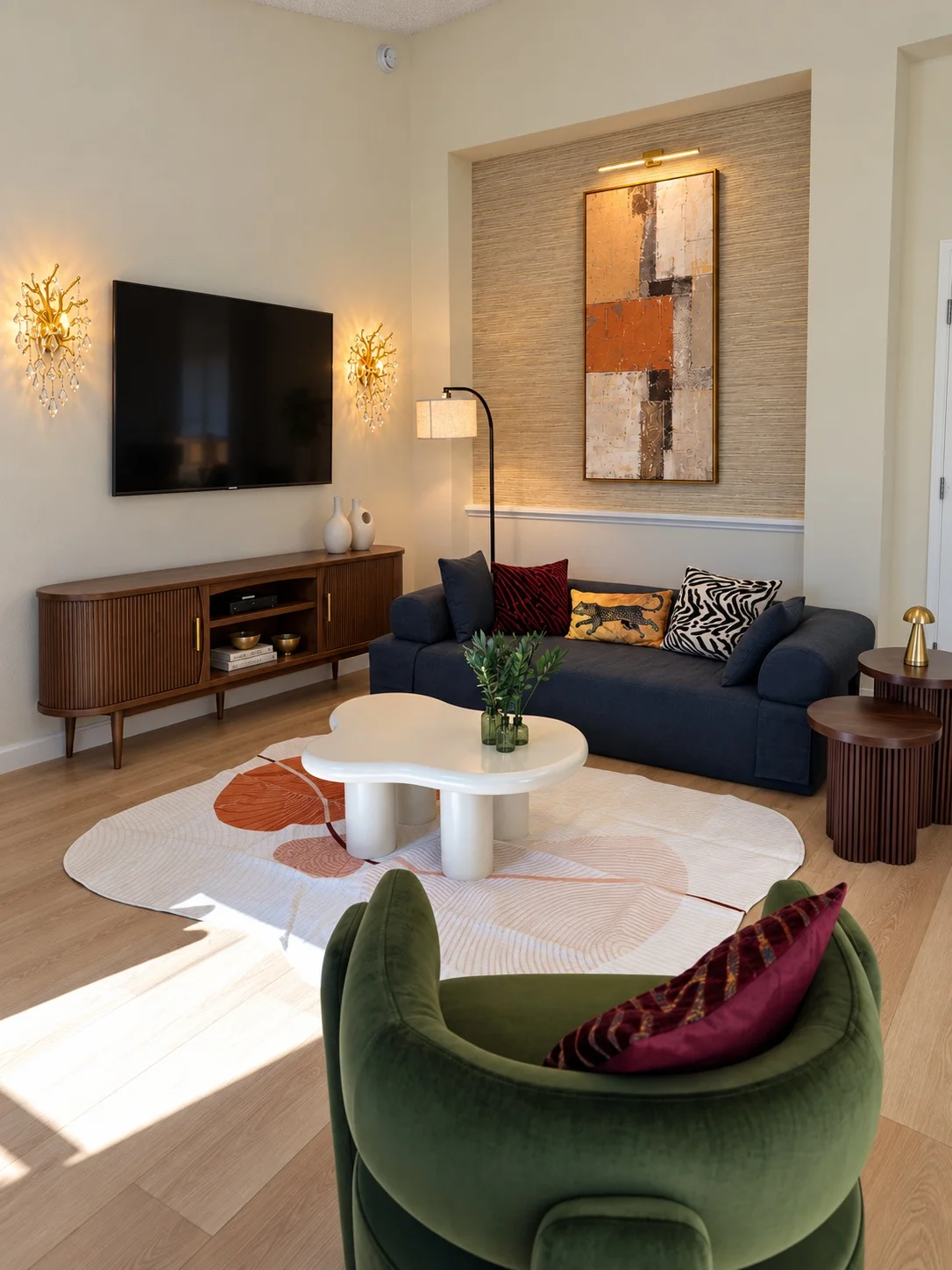
A caravan of four cars needs four spaces, and a residential street is not a parking lot. Each of our homes lists its parking on its page:
| Home | Parking listed on the home's page |
|---|---|
| Sacramento | Free parking on premises, free street parking, free off-site parking |
| Roseville | Free parking on premises, free street parking |
| Antioch | Garage parking, free parking on premises |
| Houston | Free parking on premises |
| Lake Anna | Free parking on premises |
| Kissimmee | Free parking on premises, free street parking |
The pages don't give a number of spaces, so ask us before you travel. If you'll have more cars than the home can take, consolidate: leave a car at the meeting point, or have two families share one car for the trip.
On arrival, park so the cars that will leave first are not blocked in, keep driveways and neighbors' mailboxes clear, and follow the home's house rules. Our guide to vacation rental check-in and check-out covers what to do once you're through the door.
The bottom line
Coordinate the cars with a plan, not a convoy. Send one message with the route, a meeting point, named stops and an arrival window. Stop every two hours or so for the kids, and make one stop a real break where the group regroups. Let a passenger in each car run the phone, and share locations or ETAs so nobody calls a driver. Split the groceries by car, and ask how many cars fit at the house before you pick how many to bring. When you're ready to choose a home, browse our homes for groups.
Frequently asked questions
How do you keep several cars together on a road trip?
You mostly don't. Following another car closely for hours is tiring and unsafe. Agree on the route, a meeting point, planned stops and an arrival window, share locations or ETAs, and let each car drive normally between the stops.
What is the easiest way for a group of cars to share locations?
Use what the group already has. iPhone users can share their location in Find My for a set time and share an ETA in Apple Maps while following directions. Android and mixed groups can use Google Location Sharing, which shows the people you choose your real-time location and battery status.
How often should a caravan with kids stop?
Plan a stop roughly every two hours, and more often with toddlers. Name the stops in advance so every car knows where to pull in, and make one of them a real break with food and space to run around.
Who should buy the groceries on a group road trip?
Assign it by car. The car most likely to arrive first carries cold and frozen food, or does the grocery stop near the house. The other cars bring dry goods, drinks, breakfast items and paper goods, so nothing doubles up.
How many cars can park at a JekkyStay home?
Each home's page lists its parking. All six of our homes list free parking on the premises, and some add free street parking, off-site parking or a garage. The pages don't give a number of spaces, so ask us how many cars fit before you travel.
Is it legal to text while driving to coordinate the group?
In many states it is not. Texas, for example, has banned reading, writing or sending a text while driving since September 1, 2017, with fines of up to $200. Let a passenger handle the group chat, or pull completely off the road first.