Quick answer
To handle a vacation rental damage claim, document the damage the day the guest leaves, price it with an estimate or receipt, ask the guest to pay, and file with the platform inside its window. Airbnb and Vrbo both give hosts 14 days after checkout. On a direct booking, your deposit or card hold and your signed agreement carry the claim.
The process is simple. What sinks most claims is missing proof, a missed deadline, or a bill that mixes real damage with normal wear. This guide walks through the steps for each booking channel and the paperwork that makes a claim hold up.
Key takeaways
- Inspect and photograph the home at every turnover, so you can show the damage is new and tie it to one stay.
- Airbnb and Vrbo both give hosts 14 days after checkout to start a damage claim, so the clock starts the day the guest leaves.
- On Airbnb, you ask the guest first in the Resolution Center; they have 24 hours to respond before you can escalate to host damage protection.
- On Vrbo, a deposit claim can't exceed the deposit you set, and you get one claim per deposit, so get the amount right the first time.
- On a direct booking, your own agreement and card hold are the whole process, and a disputed charge turns into a chargeback you must answer.
In this guide
Why claims fail before they start
A claim fails when you can't show that the damage is new, that it happened during one stay, and what it costs to fix. Every step below exists to answer those three questions.
Most owners find damage at the turnover, often through the cleaner. If no one photographed the room before the guest arrived, the guest can fairly say the crack or stain was already there. If the repair has no estimate, the amount looks like a guess. And if a week passes while you decide what to do, the platform window may close.
Three habits fix most of this:
- Photograph every room at every turnover, after cleaning and before the next guest. Phone photos with the date stored are enough.
- Keep a short damage log per stay: what was found, when, by whom, and the photos.
- Decide within 48 hours whether to claim, so you have time to get an estimate before the 14-day mark.
If you haven't read it yet, our guide to guest screening and chargebacks covers what to collect before a guest arrives. This guide picks up after checkout.
The claim process on each channel
Each channel runs its own process, and the rules differ in ways that change how you file. Here is how they compare, from the platforms' help pages as of today.
| Airbnb | Vrbo | Direct booking | |
|---|---|---|---|
| Deadline | Within 14 days of the guest's checkout | 14 days after checkout | Your agreement and your card hold's expiry |
| First step | Request payment from the guest in the Resolution Center | Contact the guest, then report damage from the inbox | Message the guest with photos and the amount |
| Guest response | 24 hours to respond | Guest receives your damage description | Whatever your agreement sets |
| If the guest won't pay | Submit under host damage protection for Airbnb review | Claim is paid from the deposit you set | Capture the hold or charge the card; expect a possible chargeback |
| Limit | Airbnb lists up to $3 million under host damage protection, subject to its terms | Up to the damage deposit amount | Your deposit or hold amount |
| Larger amounts | Covered through the protection review | Separate extra charge payment request | Invoice, then small claims court if unpaid |
Step by step on Airbnb
On Airbnb, you ask the guest first, and Airbnb steps in only if the guest doesn't pay in full.
Airbnb's help center sets out the steps:
- Document the damage. Gather photos or video, repair or cleaning estimates, and receipts.
- Request payment in the Resolution Center within 14 days of the responsible guest's checkout.
- Wait 24 hours. The guest has 24 hours to respond. If they don't respond, pay only part, or decline, you can submit the request under host damage protection.
- Airbnb reviews it. Airbnb Support reviews the request. Airbnb says some requests may be decided automatically, and you can ask for a human review if you don't accept the result.
Airbnb also says that to involve Airbnb Support in an AirCover for Hosts request, you need to submit supporting documentation within 14 days of the damage or loss. Treat 14 days as a hard limit and file well before it.
Host damage protection can also cover some specialized cleaning, which Airbnb describes as removing stains left by guests, pet accidents or smoke odor. It is not a substitute for your own policy: Airbnb says AirCover for Hosts "is not a substitute for personal insurance." Our guide to short-term rental insurance for owners explains what a rental policy adds.
Step by step on Vrbo
On Vrbo, the claim comes out of the deposit option you chose when the guest booked, and the deposit sets the ceiling.
Vrbo lets hosts ask for a card on file, an upfront refundable damage deposit, or property damage protection that the guest buys. With a card on file, the guest is charged only if you file a claim. With a refundable deposit, the guest pays at booking and the money goes back after 14 days if no claim is filed.
Vrbo's steps to file a deposit claim:
- Log in and, if you have more than one home, pick the listing.
- Open the Inbox and find the guest by name or reservation ID.
- In the Damage protection section, select Damage protection, then Report damage.
- Enter the damage amount, which can't be more than your damage deposit.
- Enter a damage description, which is sent to the guest, and confirm.
Vrbo recommends contacting the guest before you file about the damage, the amount and your photos, and keeping the conversation in Vrbo's messaging. It says most valid claims are processed right away and funds reach your account in 3 to 7 business days.
If the damage costs more than the deposit, Vrbo points hosts to a separate extra charge payment request. That is also a reason to set the deposit at a level that would cover a realistic repair in a large home, not a token amount.
Direct bookings: your agreement is the process
On a direct booking there is no platform in the middle, so your rental agreement, deposit and card hold are the entire claim process.
That makes the paperwork before arrival matter more:
- A signed agreement that names the guest count, house rules, the deposit amount and what it covers, and how damage is charged.
- A deposit or card hold placed close to check-in, so it is still valid at checkout.
- A written check-out note in the house guide asking guests to report anything broken. Guests who report a broken glass usually pay for it without argument.
After checkout, message the guest with the photos, the before photo, the estimate and the amount. Give them a few days to reply. If they agree, capture the hold or charge the card. If they dispute the charge with their bank, it becomes a chargeback, and the same evidence is what you submit. If the amount is beyond the hold and the guest won't pay, small claims court is the last option; check your county court's rules and limits first.
Building the evidence file
A strong claim file is short and specific: before, after, cost and conversation.
| Item | What good looks like |
|---|---|
| Before photo | The same spot from the last turnover, with the date stored |
| After photos | One wide shot to show the room, one close-up with a reference point such as a switch or outlet |
| Video | A slow 20-second clip for anything that works badly, like a door that won't latch |
| Estimate or receipt | From a contractor or store, itemized, for the actual repair or replacement |
| Cleaner's note | Who found it, when, and on which turnover |
| Messages | Your request to the guest and their reply, kept on the platform |
A few things weaken a file: replacement prices for items that were already old, a single photo with no context, bundling normal wear into the bill, and arguing with the guest in the messages. Keep the tone factual. The person reviewing the claim reads those messages too.
Damage or wear and tear?
Claim clear, new damage that one stay caused. Absorb the slow wear of a busy home.
Charging for wear is the fastest way to lose a claim and earn a bad review. As a rough line:
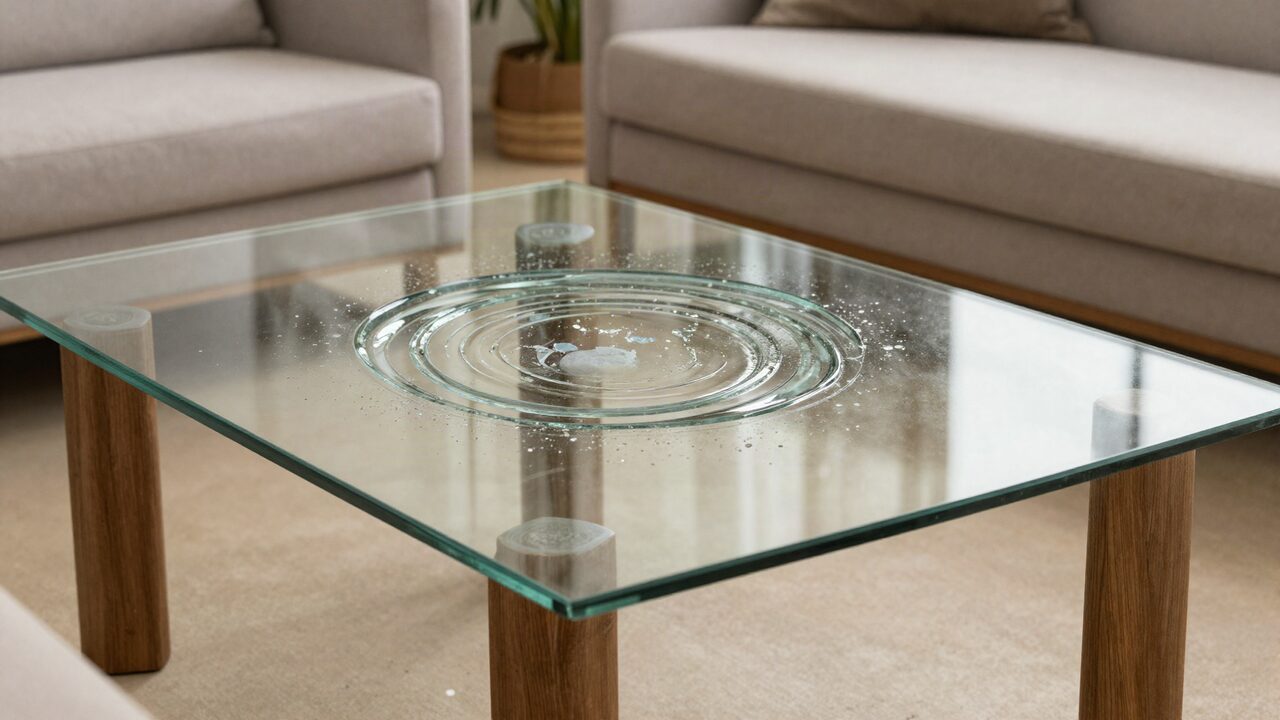
- Usually damage: a cracked glass table top, a hole in drywall, a burned countertop, red wine on a white sofa, a broken window, a smoke smell that needs treatment.
- Usually wear: small scuffs on walls, worn towels, faded cushions, a loose cabinet hinge, carpet that has thinned in a hallway.
For a home that sleeps 12 to 16, the wear budget is part of running the business. Set aside money for it each season and keep claims for the cases above.
Preventing the next claim
The cheapest claim is the one you never file. Most prevention is setup, not policing.
- Use coasters, trivets and table pads, and skip glass table tops in rooms where groups gather.
- Put washable slipcovers on light-colored sofas.
- Add corner guards and door stops in hallways where luggage goes by.
- Keep a short house rules page on events, smoking and pets, and repeat the key ones in the pre-arrival message. Our guide to house rules for groups has a template.
- Train cleaners to photograph and report anything new at every turnover.
If you'd rather not run inspections and claims yourself, our owner services include cleaning and maintenance coordination and 24/7 guest communication in both packages on our pricing page. You can also get a quote for your home.
The bottom line
A damage claim comes down to three things: proof the damage is new, a priced repair, and filing on time. Photograph every turnover, decide within two days, and file well inside the 14-day window on Airbnb or Vrbo. On direct bookings, a signed agreement and a well-timed card hold do the same job. Claim real damage, absorb normal wear, and keep every message factual.
Frequently asked questions
How long do I have to file a damage claim on Airbnb?
Airbnb's help center says to submit a reimbursement request in the Resolution Center within 14 days of the responsible guest's checkout. If the guest doesn't pay, pays only part, or declines, you can then submit the request under host damage protection.
How long do I have to file a damage claim on Vrbo?
Vrbo gives hosts 14 days after checkout to assess the property and file a damage claim. A refundable deposit is returned to the guest after 14 days if no claim is filed.
Can I claim more than the damage deposit on Vrbo?
Not through the deposit claim. Vrbo says the damage amount can't be more than your damage deposit, and after a first claim you can't withhold more. For a larger amount, Vrbo points hosts to a separate extra charge payment request.
What evidence do I need for a damage claim?
Dated photos or video of the damage, a photo of the same spot from before the stay, repair or cleaning estimates or receipts, and the messages with the guest. Airbnb lists photos or video, estimates and receipts as the documentation to gather.
Does Airbnb host damage protection replace insurance?
No. Airbnb says AirCover for Hosts is not a substitute for personal insurance. Most owners also carry a short-term rental policy that covers the building, contents and liability.
Should I charge guests for normal wear and tear?
No. Scuffs, worn linens and the slow wear of a busy home are part of the cost of renting. Claims work best for clear, new damage that you can tie to one stay and price with an estimate or receipt.