Quick answer
A good vacation rental house rules template covers maximum guests and visitors, quiet hours, events, pets, parking, smoking and checkout, each in one specific sentence with a reason. Copy the template below, set your own numbers, and put it in your listing's house rules section before anyone books.
Key takeaways
- Good house rules are short, specific and tied to a reason: the neighbors, the permit, safety or the home.
- Set four rules carefully: maximum overnight guests and visitors, quiet hours, pets, and the number of cars.
- From November 20, 2026, Airbnb requires house rules to be in the listing's house rules section at booking and bars adding new rules after booking.
- Airbnb treats fines, heavy checkout chores and restricting advertised features as unreasonable rules, so leave them out.
- Service animals never pay a pet fee, and on Airbnb, California and New York homes must also accept emotional support animals without pet fees.
In this guide
Why written house rules protect the owner
House rules protect your neighbors, your permit and your home, and they give you a clear basis to act when a stay goes wrong. Without them, every problem becomes an argument about what the guest was told.
The stakes are real for a large home in a residential street:
- Cities expect fast action. Roseville, California, for example, requires short-term rental owners "to respond to the residence within 30 minutes of a complaint." A rule a guest has already agreed to makes that call much shorter.
- Platforms ban disturbances. Airbnb says it does "not allow open-invite parties, disruptive gatherings, or other community disturbances," and that disruptive gatherings are prohibited "regardless of size." It lists excessive noise and parking nuisances as signs of disruption, and hosts who facilitate severe or repeated disturbances also break the policy.
- Platforms enforce the rules you wrote. Under Airbnb's house rules policy, if a guest breaks a house rule during a stay, or says before check-in that they intend to, the host may cancel without fees or other consequences. That only works if the rule was in the listing.
This guide is for owners writing rules. If you want to see the same rules from the guest's side, read vacation rental house rules for groups, and point your guests to it.
Airbnb's new house rules policy
From November 20, 2026, Airbnb's house rules policy changes what owners can put in rules and when. It applies to all reservations booked on or after that date.
The main points, from the policy page:
| Airbnb says | What it means for your rules |
|---|---|
| Hosts "may set house rules for their listing, as long as they are reasonable" | Rules need a clear purpose, not a long list of don'ts |
| Rules must be "disclosed in the designated section of the listing page at the time of booking" | Rules in the description, photos or a PDF don't count |
| Hosts "may not communicate new house rules in other sections of their listing page or after booking" | No new rules by message, in-home signs or in person |
| Fines or penalties are unreasonable | Only warn about local fines a city or association may impose |
| Checkout tasks that take significant time or that a cleaner would usually do are unreasonable | No stripping beds, taking trash offsite or washing dishes |
| Fees for advertised features belong in the price | Don't charge extra for the hot tub you advertised |
The policy also lists restricting access to an advertised feature, and requiring separate contracts or personal information such as a government ID, as unreasonable, except where the law requires it or in limited cases. It gives examples of reasonable rules tied to local conditions, such as limiting shower time during drought restrictions or requiring animal-proof trash bins in bear country.
Airbnb's standard house rules cover pets, events, smoking and vaping, quiet hours, maximum overnight guests, commercial photography and filming, and lock up at checkout. Additional rules can cover things like removing shoes or limiting daytime visitors, and you choose whether each applies during the stay or before checkout. Any change you make applies to future reservations only.
Occupancy and visitors
The guest limit is the rule that matters most, so tie it to the beds, the bathrooms, the parking and your permit, and state it as a number.
- Overnight guests. Write one number and say that children count unless you set a separate infant rule. If your city or permit sets a cap, use it.
- Visitors. Decide whether day visitors are allowed, how many, and until what time. Airbnb lists limiting daytime visitors as an example of an additional rule.
- Events. Say plainly that events need written approval before booking. Define an event: people not on the booking, hired vendors, anything advertised.
Quiet hours and noise
Set quiet hours as exact times, say where they apply, and disclose any noise monitor. Vague rules such as "be respectful" give you nothing to point to.
- Times. Pick hours that match your street and any local rule, for example 10pm to 8am.
- Where. Say that quiet hours cover the yard, patio, pool and hot tub, and that outdoor speakers go off.
- Monitors. Airbnb defines noise decibel monitors as devices that "assess sound levels and their duration but do not record audio." Hosts may use them indoors if they disclose that one is present, but not in bedrooms, bathrooms or sleeping areas. Exterior cameras must have their location disclosed in the listing.
Tell guests what happens when the monitor alerts: you will message them, and you expect the noise to come down. That sets a calm expectation instead of a threat.
Pets and service animals
State your pet limit, the fee, and any areas pets stay out of, and keep service animals separate from your pet rules.
| Animal | What you can do on Airbnb |
|---|---|
| Pets | Set a limit, a pet fee and pet rules, or ban pets |
| Service animals | No pet fee or pet cleaning fee; you generally can't refuse the booking because of the animal |
| Emotional support animals | Normal pet fees may apply in most places, but California and New York homes must accept them without those fees |
Airbnb lets hosts ask only two questions about an assistance animal: "Do you require your animal because of a disability?" and "What work or task has the animal been trained to perform?" Hosts can't ask for documentation or a demonstration.
At JekkyStay, our homes allow up to three pets per stay with a $100 pet fee, and service animals stay free. Our guide to a group vacation rental with dogs shows how that reads to guests.
Parking
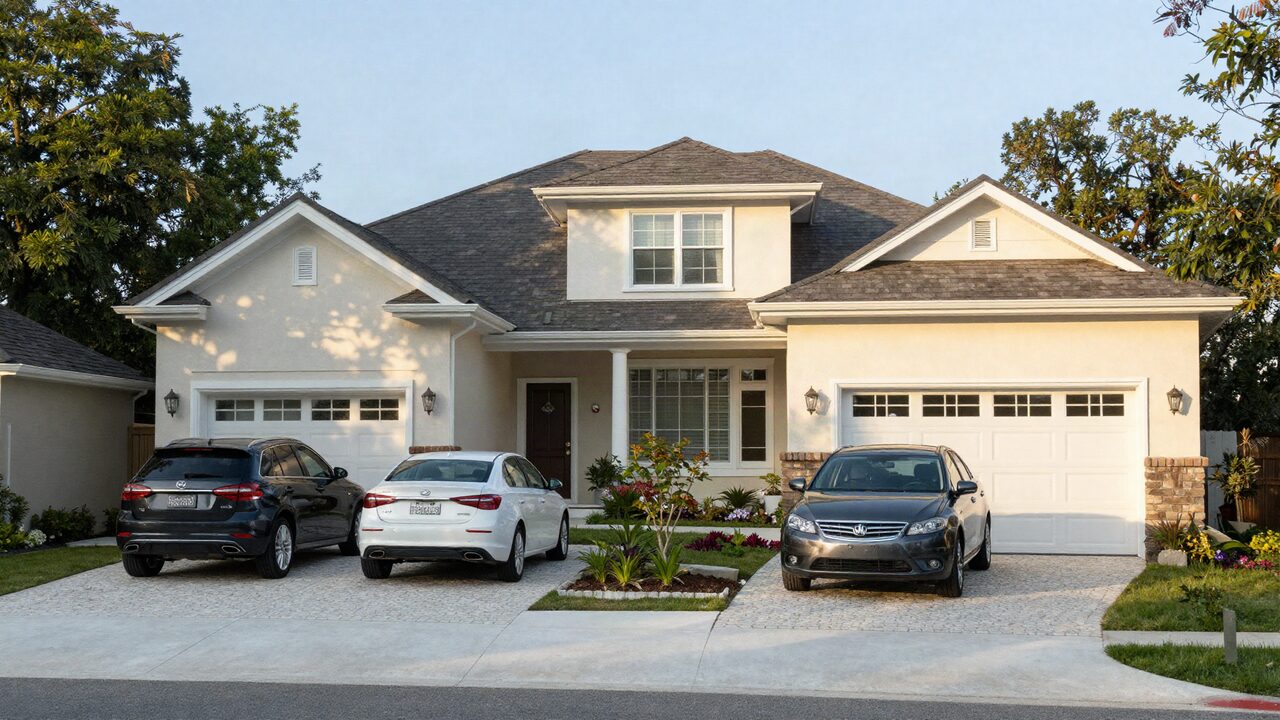
Write the number of cars and where they go, because parking is the complaint neighbors notice first. Airbnb lists parking nuisances among the signs of disruption.
- Number. Count the driveway and garage spaces you can actually use, and set the car limit to match.
- Where. Say whether street parking is allowed, and ban blocking neighbors' driveways, mailboxes and sidewalks.
- Large vehicles. Say whether trailers, boats or RVs are allowed.
- Garage. If the garage is off limits or holds a car, say so, so guests don't plan on it.
A house rules template you can copy
Copy this into your listing's house rules section, change the numbers in brackets, and delete anything that doesn't apply. Keep each rule to one or two sentences.
HOUSE RULES

1. Guests: Up to [12] overnight guests, including children. Only guests named on the booking may stay overnight.
2. Visitors: Up to [4] daytime visitors, between [10am] and [9pm]. Visitors count toward parking.
3. Events: No parties or events. Anything with people not on the booking, hired vendors or a public invite needs our written approval before you book.
4. Quiet hours: [10pm] to [8am]. This covers the yard, patio, pool and hot tub. Outdoor speakers off.
5. Noise monitor: The home has a noise monitor in a common area. It measures sound levels and does not record audio. If it alerts, we will contact you.
6. Parking: Up to [3] cars, in the driveway only. Please don't park on the street or block neighbors' driveways. No trailers or RVs.
7. Pets: Up to [3] pets with a [$100] pet fee per stay. Pets stay off beds and furniture. Service animals are always welcome at no charge.
8. Smoking: No smoking or vaping anywhere on the property, indoors or out.
9. Pool and hot tub: Children must be supervised by an adult at all times. No glass in the pool area.
10. Check-in and checkout: Check-in after [4pm], checkout by [10am].
11. Before you leave: Lock all doors and close the windows. Load used dishes in the dishwasher if you can, and put trash in the bins provided.
12. Local rules: Our city sets limits on noise and parking for short-term rentals. Guests may face fines from the city for breaking them.
Notes on the template:
- Rule 11 stays light on purpose. Under Airbnb's policy, washing dishes, stripping beds and taking trash offsite are tasks you can't require, so ask for simple courtesies only.
- Rule 12 warns about city fines rather than setting your own, which is the one form of fine Airbnb's policy allows hosts to mention.
- Direct bookings can use the same rules in your rental agreement. Keep them identical across every channel so no guest sees a different version. Our guide to getting more direct bookings covers the rest of that setup.
This is general information, not legal advice. Local ordinances and fair housing rules vary, so check your city's short-term rental rules and ask an attorney about anything you're unsure of. Our guide to short-term rental permits lists what to look up.
Enforcing rules without a fight
Rules work when guests read them before they pay and when the host responds quickly and calmly during the stay. Most problems end with one polite message.
- Repeat the rules at booking. Send a short note pointing to the house rules section, and ask the lead guest to share it with the group.
- Respond fast. If a neighbor or a monitor flags noise, message the guest at once. In Roseville, the city's 30-minute response rule applies to the owner either way.
- Keep it in writing. Use the platform's messages so there is a record if you need to cancel or file a claim.
- Escalate only when needed. Under Airbnb's policy, a host may cancel for a house rule violation. Use it for serious breaches, such as an unapproved party.
- Review after each stay. If one rule keeps causing friction, rewrite it for future bookings.
If 2am noise calls and guest messages are the part you don't want to handle, our owner services cover it. Both packages on our pricing page include 24/7 guest communication and cleaning and maintenance coordination, and the Premium package adds a dedicated property manager. You can also get a quote for your home. For screening before guests arrive, see our guide to guest screening and chargebacks.
The bottom line
Write house rules that are short, specific and tied to a reason: a guest number, a visitor policy, exact quiet hours, a no-events rule, pet terms and a car limit. From November 20, 2026, Airbnb requires them in the listing's house rules section at booking, bars new rules after booking and treats fines and heavy checkout chores as unreasonable. Copy the template, set your numbers and keep the same rules on every channel.
Frequently asked questions
What should vacation rental house rules include?
At minimum: the maximum number of overnight guests, a visitor policy, quiet hours, a no-events rule, pet terms, the number of cars and where they park, smoking, check-in and checkout times, and a short checkout list. Add rules for a pool, hot tub or fire pit if the home has one.
Can I charge guests fines for breaking house rules?
Not on Airbnb. Its house rules policy lists imposing fines or penalties as unreasonable; hosts may only warn guests about local fines a government or community association might impose. Use the platform's damage and resolution process, and your own deposit terms on direct bookings.
Can I add new house rules after a guest books?
On Airbnb, no. For reservations booked on or after November 20, 2026, hosts may not communicate new house rules after booking, including by message, signs in the home or in person. Changes to your rules apply to future reservations only.
Can I charge a pet fee for a service animal?
No. Airbnb says hosts can't charge pet fees or pet cleaning fees for a service animal, and may ask only whether the animal is needed because of a disability and what task it has been trained to perform. In California and New York, Airbnb homes must also accept emotional support animals without those fees.
What quiet hours should a vacation rental set?
Pick hours that match your neighborhood and any city rule, and state them in exact times rather than "late at night." For example, 10pm to 8am. Make it clear that quiet hours cover the yard, pool and hot tub.
Can I use a noise monitor in my rental?
On Airbnb, yes, if you disclose that one is present. Airbnb defines noise decibel monitors as devices that assess sound levels and their duration but do not record audio, and does not allow them in bedrooms, bathrooms or sleeping areas.