Quick answer
To book an accessible vacation rental for a group, ask the host four things before you pay: is there a step-free route from parking to the door, is there a bedroom on that level, is the bathroom on that level usable, and how wide are the doorways? Then ask for photos with a tape measure in the frame.
A listing that says "accessible" can mean one step at the door or a fully adapted home. Measurements and photos settle it. Below: what to ask, the numbers to compare against, and how to plan a group stay around one person's needs.
Key takeaways
- Ask about four things first: a step-free route from parking to the door, a bedroom on the entry level, a usable bathroom on that level, and doorway widths.
- Ask for measurements in inches and photos with a tape measure in the frame. Words like "accessible" or "wheelchair friendly" mean different things to different hosts.
- The ADA 2010 Standards give useful yardsticks: 32 inches of clear door width, a 60-inch turning circle, and grab bars 33 to 36 inches above the floor.
- On Airbnb, confirmed accessibility features must be backed by photos the platform reviews, but many homes list none, so message the host either way.
- Get the answers in writing before you pay, and plan the rest of the trip, such as parking and outings, around the same needs.
In this guide
Start with the person, not the listing
The right home depends on what the person who needs it can and can't do, so write that down before you search.
A wheelchair user who transfers independently needs different things than someone who walks with a cane and can't manage stairs, or a parent pushing a large stroller with a child who uses medical equipment. Ask them, or the person who cares for them, a few plain questions:
- Can they manage any steps at all? One small step with help, or none?
- What do they use: a manual chair, a power chair, a walker, a cane? How wide is it?
- Do they need a roll-in shower, or is a tub with a bath seat fine?
- Which side do they transfer from, and do they need grab bars by the toilet?
- Do they need a particular bed height, or space beside the bed for a chair?
Measure the wheelchair or walker at its widest point. That number, plus a few inches for hands and elbows, is what every doorway needs to clear. Keep the list in your phone; you'll use it in every message to a host.
The four things to confirm first
The entry, a bedroom, a bathroom and the doorways between them decide whether a home works, so ask about them before anything else.
| What to ask | Why it matters | Yardstick to compare against |
|---|---|---|
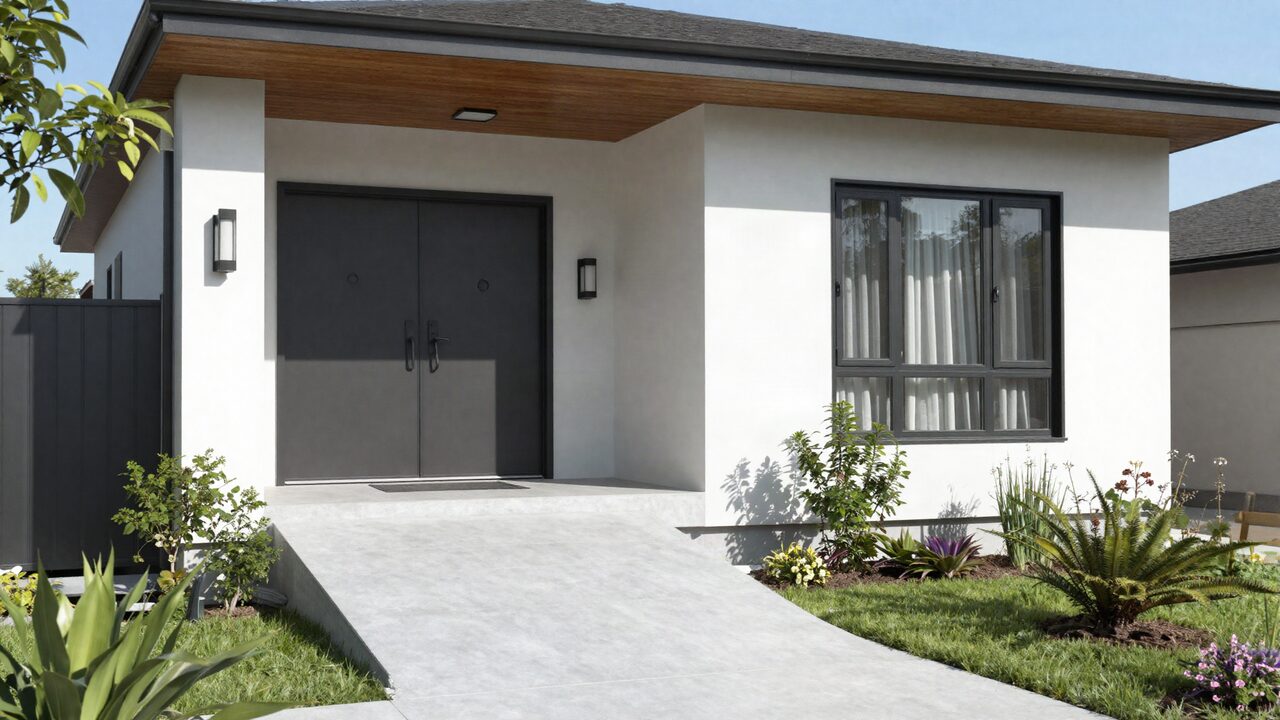
| Is there a step-free route from where we park to the door? | One step can stop a wheelchair. Gravel and steep driveways count too. | Ramps no steeper than 1:12 (ADA 405.2), meaning 1 inch of rise per 12 inches of length |
| Is there a bedroom on the entry level? | Many group homes put every bedroom upstairs. | A bed with clear space beside it for a chair |
| Is there a full bathroom on that same level? | A half bath downstairs doesn't solve showering. | Step-free shower, grab bars, toilet seat 17 to 19 inches high (ADA 604.4) |
| How wide are the doorways on that route? | Older homes often have narrow bathroom doors. | 32 inches of clear width minimum (ADA 404.2.3) |
| Is there room to turn around in the bathroom and bedroom? | A chair needs space to turn, not only to enter. | A 60-inch circle (ADA 304.3.1) |
| Where are the grab bars, if any? | Placement decides whether they help. | 33 to 36 inches above the floor (ADA 609.4) |
The ADA numbers come from the 2010 ADA Standards for Accessible Design, which apply to places like hotels, not automatically to private homes. They are still the clearest public yardstick for "will this work," and hosts who know them can answer quickly.
Ask for photos and measurements
Photos with measurements are the most reliable answer a host can give, and a good host will send them without fuss.
Here is a message you can copy and adapt:
What to look for in the photos:
- Path and entry: no steps, no deep gravel, no lip at the threshold taller than about half an inch. Look at the angle of any ramp.
- Doorways: measure the clear opening, from the face of the open door to the stop on the other side, not the door slab. A 32-inch door often gives less than 32 inches of clear width once it's open.
- Bathroom: a step-free shower should meet the floor with no curb. Check whether a glass door or a vanity narrows the space.
- Bedroom: space beside the bed for a chair, and a path that isn't blocked by furniture. Ask if the host can move a dresser before you arrive.
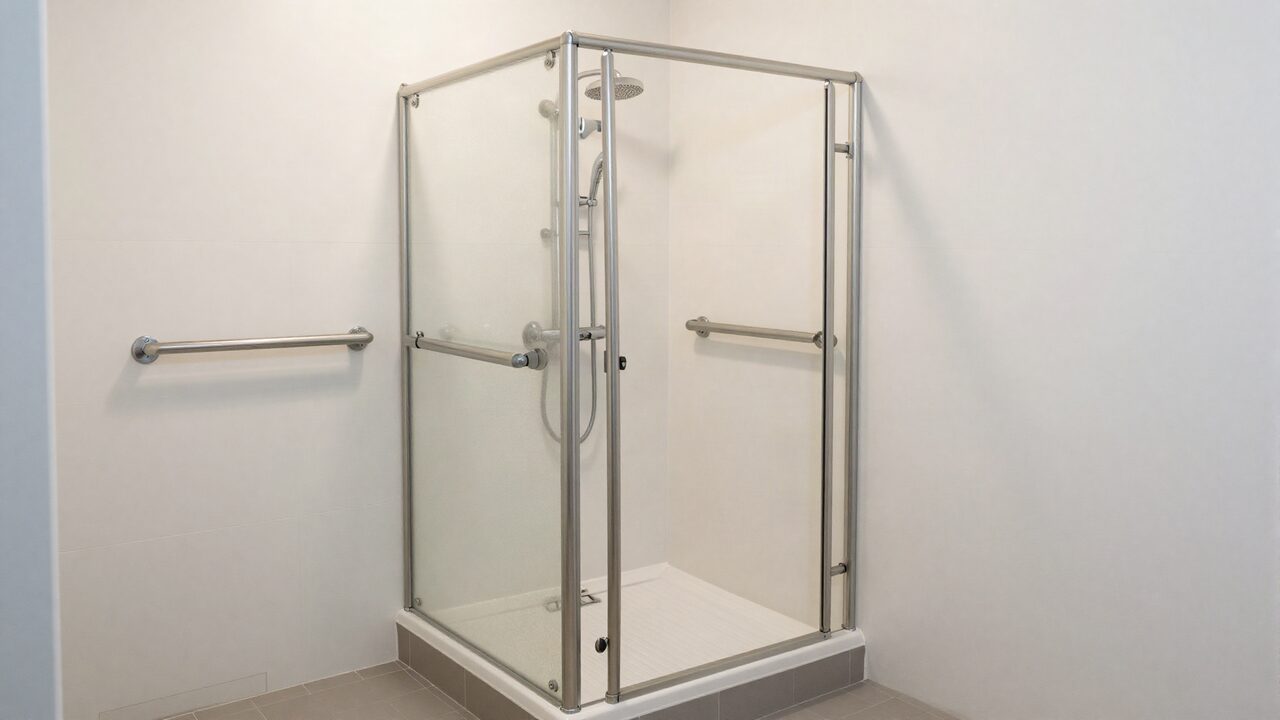
The ADA standard for a roll-in shower is 30 inches wide by 60 inches deep inside, with a 60-inch-wide entry (ADA 608.2.2). Few homes match that exactly, but it shows how much room a chair needs to roll in and turn.
How the platforms show accessibility features
Platform filters help you find homes faster, but they only show what the host has added, so treat them as a starting point.
On Airbnb, the help center describes the steps: search your destination and dates, click Filters, then "Accessibility features," and pick what you need. The home filters include "Step-free access," "Disabled parking spot," "Guest entrance wider than 32 inches," "Step-free bedroom access," "Step-free bathroom access," "Toilet grab bar," "Shower grab bar," "Step-free shower" and "Shower or bath chair."
Airbnb says hosts must back those features with photos. Its accessibility page says, "We review every accessibility feature submitted by stays hosts for accuracy," and that hosts "confirm each accessibility feature with at least one clear photo." For entrance width, its host instructions ask for a photo of a tape measure across the narrowest part of the open doorway.
That is useful, with two limits. Many large group homes list no accessibility features at all, even when parts of the home would work. And a confirmed feature tells you one thing about one room, not whether the whole route works. Airbnb's own advice is to "Contact your host for more detailed information about the specific accessibility features they offer."
Plan the house around the group
In a group home, the person who needs step-free access should get the best room for them first, and everyone else fits around it.
A few things make a big difference for 10 to 20 people:
- Claim the downstairs suite early. Tell the group before rooms are assigned. Our guide to planning a multigenerational family trip covers room assignments when grandparents and toddlers share a home.
- Count bathrooms on the accessible level. If one bathroom serves the person who needs it and four other guests, set a shower schedule.
- Check parking. Ask whether the driveway or garage can hold a van with a side ramp, and keep that spot clear for the whole stay.
- Look at the shared spaces. Can a chair reach the dining table, the kitchen island and the patio? A step down to the yard leaves someone out of every dinner outside.
- Pack what the home lacks. A portable ramp for one low step, a shower chair or a toilet seat riser can turn a near miss into a workable home. Ask the host first.
For choosing a home in general, our guide on how to choose a vacation rental for a large group covers beds, bathrooms and parking.
Service animals and other needs
Accessibility covers more than wheelchairs, so mention any need that affects the stay.
Airbnb's service animal policy says hosts may not "Charge the guest additional fees related to the reservation, such as pet fees" because of a service animal. It also limits what hosts may ask to two questions: "Do you require your animal because of a disability?" and "What work or task has the animal been trained to perform?"
At JekkyStay, service animals are free. Pets are welcome too: up to 3 per stay, with a $100 pet fee per stay. If your group is bringing dogs as well, see our guide to a group vacation rental with dogs.
Other things worth raising with a host: a guest who needs a quiet room away from the living area, a guest who uses an oxygen concentrator and needs reliable power near the bed, or a guest with low vision who would benefit from a walkthrough of the kitchen. Most hosts are glad to help when they know ahead of time.
Get it in writing and know your fallback
Keep every answer in the booking messages, so you have a record if the home doesn't match.
Before you pay, reread the host's answers against your list from the first section. If anything is vague ("the doors are pretty wide"), ask for the number. If the host won't send photos, book elsewhere.
When you arrive, check the route, the bedroom and the bathroom first, before everyone unpacks. If something important doesn't match, message the host right away with photos. If you booked directly with JekkyStay, our Stay Promise applies: "If the home isn't as described, or something important stops working, such as the air conditioning or heat, hot water, Wi-Fi or the pool, tell us. If we can't fix it within 24 hours, we refund the nights affected or move your group to a similar home." On a platform, use its reporting process quickly; Airbnb's rebooking and refund policy asks guests to report issues within 72 hours of discovering them.
Read the cancellation terms too. Our cancellation policy page shows the terms for each JekkyStay home.
The bottom line
Don't book on a label. Ask about the step-free route, an entry-level bedroom, a usable bathroom on that level and doorway widths, and ask for photos with a tape measure in them. Compare the answers with the ADA yardsticks (32 inches of clear width, a 60-inch turning circle, grab bars 33 to 36 inches high), give the accessible room to the person who needs it first, and keep everything in writing. Browse our homes for groups, see our family reunion page, and contact us with your list before you book.
Frequently asked questions
What makes a vacation rental accessible for a wheelchair user?
At minimum, a step-free route from parking into the home, a bedroom and a bathroom on that same level, doorways wide enough to pass through (32 inches of clear width is the ADA yardstick), and room to turn around in the bathroom. A roll-in or step-free shower and grab bars make the bathroom usable for many guests.
Do vacation rentals have to follow the ADA?
Do not assume a private vacation home was built to ADA standards. Hotels are covered by Title III of the ADA, but whether and how it applies to a private home rented to guests is a legal question that depends on the facts. Ask the host about each feature you need instead of relying on a label.
What should I ask a host for besides a description?
Photos and measurements. Ask for a photo of the route from the driveway to the door, a photo of each doorway with a tape measure across it, and photos of the bathroom showing the shower entry, the toilet and any grab bars.
How do I find accessible homes on Airbnb?
Search your destination and dates, click Filters, then Accessibility features, and choose what you need, such as step-free access or a step-free shower. Airbnb says hosts must confirm each feature with photos that are reviewed. Many homes list no features at all, so message the host about your needs.
Can a host charge a pet fee for a service animal?
On Airbnb, no: its policy says hosts may not charge pet fees or other added fees because of a service animal. At JekkyStay, service animals are always free; pets are welcome up to 3, with a $100 pet fee per stay.
What if the home turns out not to be as described?
Contact the host right away, with photos. If you booked directly with JekkyStay, our Stay Promise covers a home that isn't as described. On a platform, report it through the platform quickly; Airbnb, for example, asks guests to report issues within 72 hours of discovering them.