Quick answer
To plan a trip for grandparents and toddlers together, choose the house around the least mobile and the youngest guests: a ground-floor bedroom and bathroom, an entry with few steps and a pool that can be fenced or covered. Then plan one outing a day, keep afternoons for rest, and assign rooms by need before you split the cost.
Key takeaways
- Choose the house around the least mobile and the youngest guests: a ground-floor bedroom and bathroom, an easy entry and a safe pool setup.
- Ask the host for the bed layout by floor, the number of steps at the entry and how the pool is fenced or covered before you book.
- Name a water watcher every time children are near the pool, and rotate the job every 15 to 20 minutes.
- Plan one outing a day, in the morning, and keep afternoons at the house for naps and rest.
- Assign rooms by need first (grandparents and toddlers), then split costs by room or by household.
In this guide
Start with who is coming
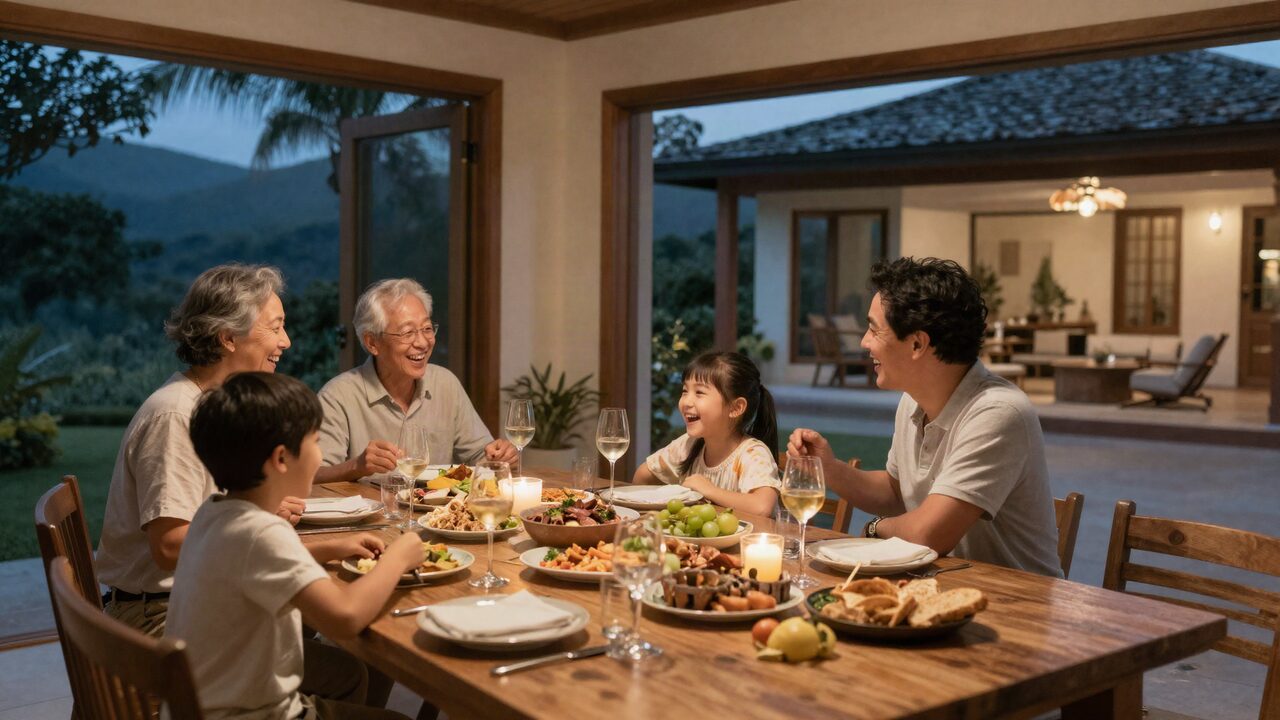
The right plan starts with a simple list of every guest and what they need, not with the destination.
Write down each person's name, age and anything that shapes the trip: a grandparent who uses a walker or a cane, a baby who naps twice a day, a teenager who needs Wi-Fi for a summer class, a cousin with a food allergy. Ten minutes on this list saves hours of rearranging later, because it tells you how many ground-floor rooms you need, how many cribs to bring and how far from the house you can realistically go each day.
| Generation | What they usually need | What to plan for |
|---|---|---|
| Grandparents | Fewer stairs, a bathroom close to the bed, quiet mornings, good lighting | Ground-floor bedroom, step-free or low-step entry, a seat in the shade |
| Parents | A kitchen that works, laundry, some time off | Shared cooking rota, a washer, one evening out |
| Toddlers and babies | Naps, a safe place to play, close supervision near water | A room that gets dark, a plan for the pool, a crib or travel cot |
| Older kids and teens | Space of their own, something to do, Wi-Fi | A game room or bunk room, a few outings that are for them |
Choose a house that works for every age
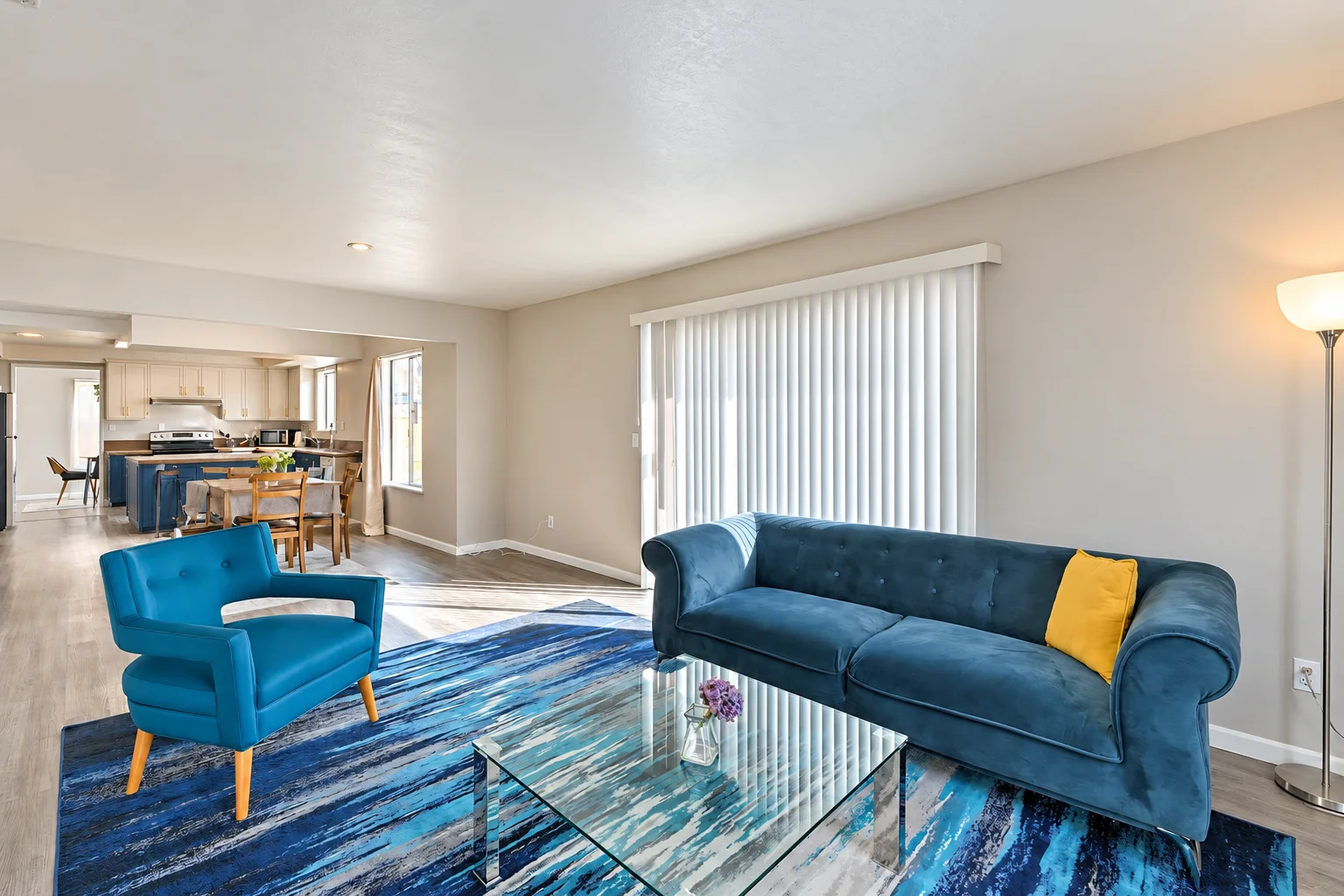
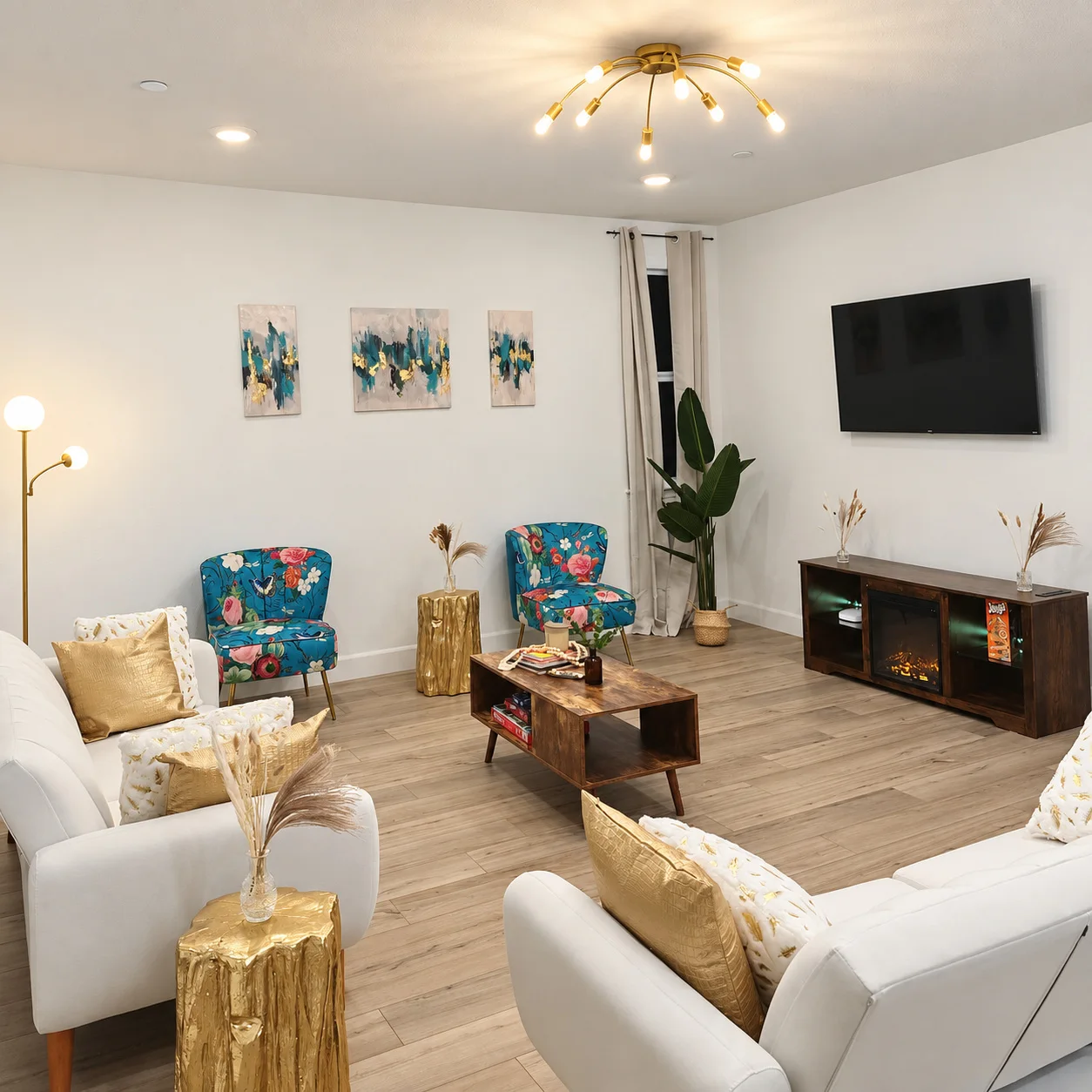
The best house for three generations has at least one bedroom with its own nearby bathroom on the ground floor, an easy way in, and common rooms big enough for everyone at once.
Bedroom count matters less than layout. A five-bedroom home with every bedroom upstairs can be harder for a grandparent than a four-bedroom home with one on the main floor. Before you book, ask the host for:
- The bed layout by floor. Which bedrooms and bathrooms are on the ground floor, and what size are the beds?
- The entry. How many steps are there at the front door and from the garage or driveway? Is there a handrail?
- Bathrooms. Is the ground-floor bathroom a full bathroom with a shower, and does the shower have a step or a tub edge to climb over?
- Lighting and floors. Are there rugs on hard floors, and is there light on the route from the bedroom to the bathroom at night?
- The pool and water. Is the pool fenced, screened or covered? Is there a hot tub, and does it have a cover that locks?
- Parking. Is there space close to the door for the car that brings the grandparents?
Falls are a real risk for older guests in an unfamiliar house. The CDC calls falls the leading cause of injury death for adults 65 and older. A dark hallway, a loose rug or a staircase without a rail in a house you have never stayed in is exactly where that risk shows up. Pack a few plug-in night lights and ask the host to move any loose rugs on the route from the grandparents' bedroom to the bathroom.
Our own homes are listed with the details that matter here. The movie loft at the Roseville House is upstairs, and the Kissimmee House has stairs and an upstairs bunk room along with its private screened pool and spa. Ask us which bedrooms are on the ground floor in any home before you book. Our guide to choosing a vacation rental for a large group covers the rest of the checklist.
Make the pool safe before anyone swims
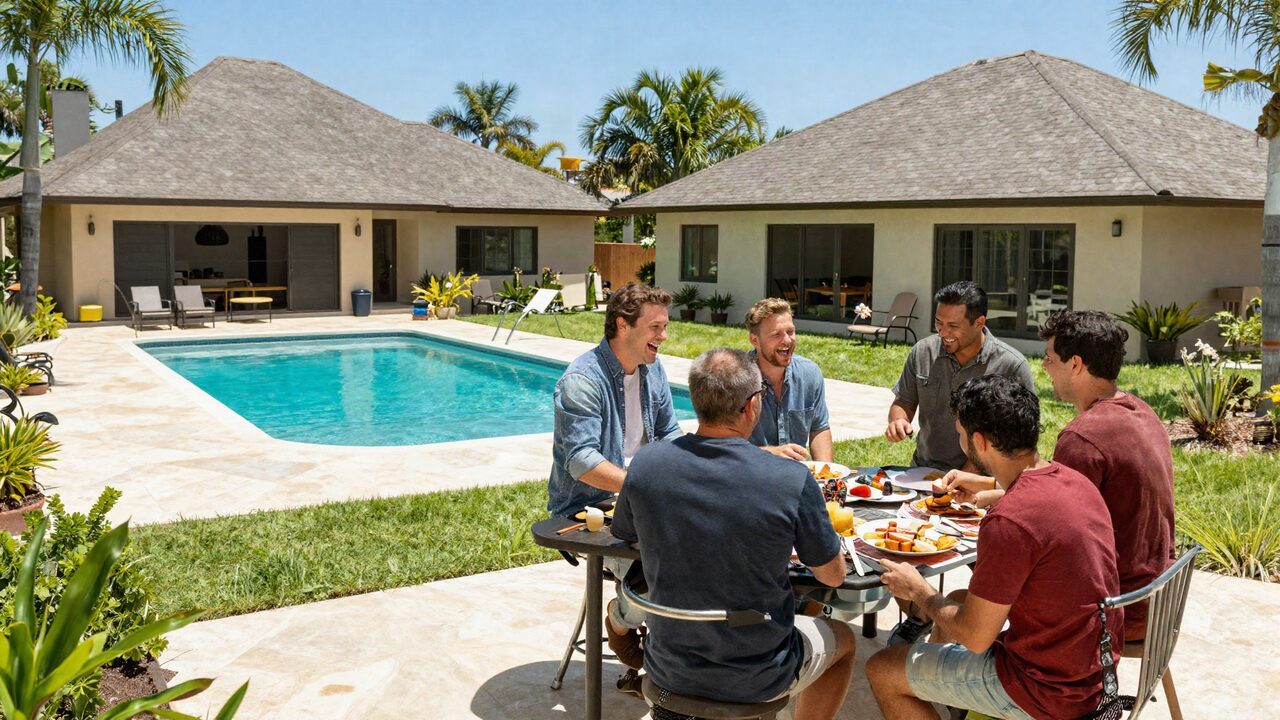
Pool safety on a family trip comes down to one rule: a named adult watches the water, with full attention, every minute children are near it.
The CDC says more children ages 1 to 4 die from drowning than from any other cause. A vacation home adds risk because the pool is new to the children, the adults are relaxed, and there are many people who each assume someone else is watching.
The American Academy of Pediatrics recommends assigning one adult as the water watcher at gatherings near water and rotating the job every 15 to 20 minutes. Pool Safely, the federal pool safety campaign, adds that if a child goes missing, check the pool first.
Practical steps for the first hour at the house:
- Walk the pool area before you unpack. Find the gate, the cover, any door alarm and the drain covers. Pool Safely says never to use a pool or spa with a broken or missing drain cover.
- Lock the doors that lead to the pool when swim time ends, and keep toys out of the pool area so they do not draw a child outside.
- Cover the hot tub after each use. The AAP says to cover and lock hot tubs and spas.
- Agree on the rule in the group chat before you arrive: no child in the pool area without an adult who has said "I'm watching."
- Bring life jackets for weak swimmers. The CDC notes that air-filled or foam toys are not safety devices.
At least one adult in the family should know CPR. The CDC points to the American Red Cross and American Heart Association for courses, and some are online.
Set a pace that works for three generations
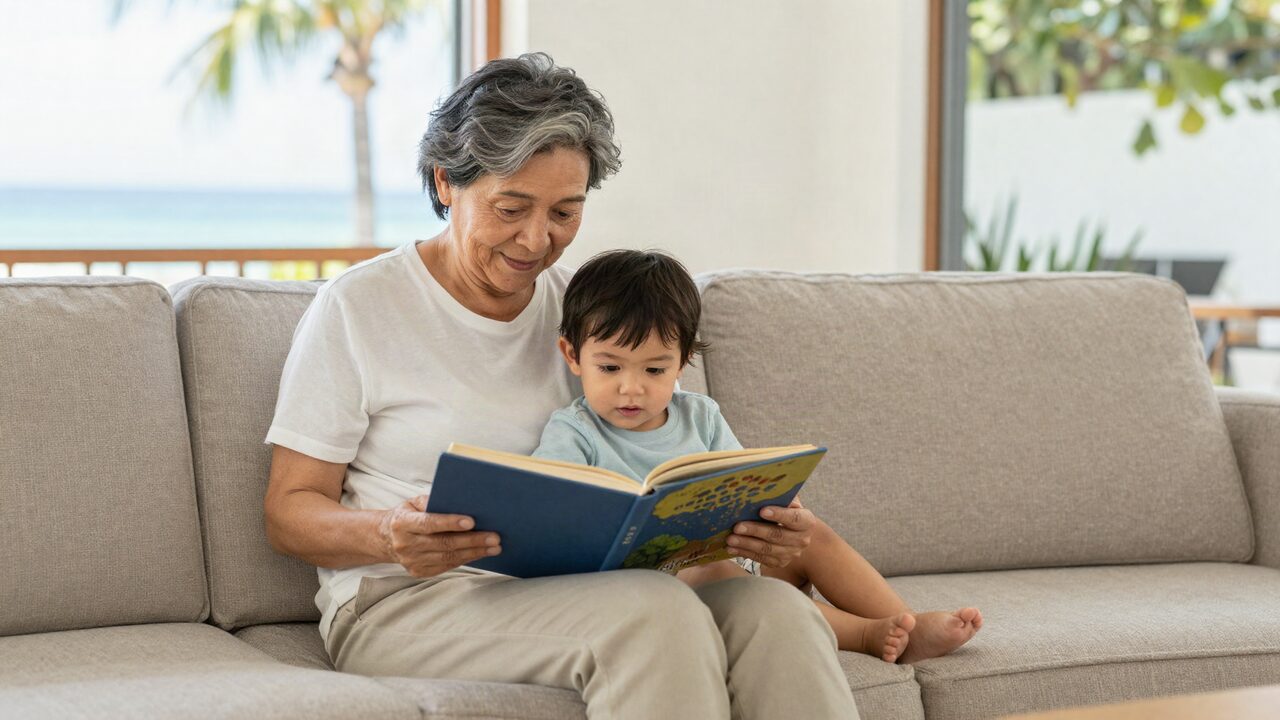
Plan one main outing a day, in the morning, and use the house as the base for afternoons.
Toddlers nap after lunch. Many grandparents tire by mid-afternoon, especially in summer heat. Teens may not appear before 10am. A schedule that fights all three of those leaves everyone tired by day two. A schedule that works with them looks like this:
| Time | What happens | Who it suits |
|---|---|---|
| 8am to 9:30am | Breakfast at the house, cooked by one household | Everyone, at their own pace |
| 9:30am to 12:30pm | The day's one outing | Anyone who wants to go |
| 12:30pm to 4pm | Lunch, naps, pool with a water watcher, reading | Toddlers, grandparents, tired parents |
| 4pm to 6pm | Free time: a walk, a game, a short drive for the teens | Older kids, active adults |
| 6pm onward | One shared dinner, at the house or booked ahead | Everyone |
A few habits help:
- Make outings optional. Grandparents who stay home with a sleeping baby give the parents a morning out, and many grandparents prefer it.
- Keep drives short. Pick outings within 30 to 45 minutes of the house. A long drive costs a nap and puts everyone in a bad mood.
- Book restaurants for the early slot. A 5:30pm table suits toddlers and grandparents and is easier to get for a big group.
- Leave one full day open. Nothing planned, nothing booked. Families often say this is the day they remember.
Split the rooms by need, then by household
Assign the rooms by need first and by fairness second.
The order that works for most families:
- The ground-floor bedroom goes to the grandparents or whoever has the most trouble with stairs.
- The quietest room near a bathroom goes to the family with a baby or toddler, so night wakings do not wake the house.
- The bunk room or game room goes to the older kids and teens, who usually prefer to be together.
- The remaining rooms are shared out by household, largest family to the largest room.
If one room is clearly better than the others, such as a primary suite with its own bathroom, settle the money before the trip. Some families charge that household a little more. Others rotate the best room from one trip to the next. Either is fine, as long as it is agreed before deposits are paid. Our guide to splitting costs on a group vacation rental walks through the common methods.
Food, gear and the small things
A shared kitchen is one of the big reasons families choose a house over hotel rooms, and it works best with a simple plan.
- Cook by household. Each household takes one dinner. One person shops for breakfasts and snacks for everyone, and costs are split at the end.
- List allergies and diets on the fridge on day one.
- Rent or bring baby gear. A travel cot, a high chair or a booster seat and a baby gate for the stairs make a big difference. Ask the host what the home has and bring the rest.
- Pack a small kit for grandparents: night lights, a shower mat, any medicines with a few extra days' supply, and a list of doctors and pharmacies near the house.
- Bring the dog if you want. At our homes, up to three pets are welcome with a $100 pet fee per stay, and service animals stay free.
For a direct booking with us, our Stay Promise covers the things a family trip depends on: "If the home isn't as described, or something important stops working, such as the air conditioning or heat, hot water, Wi-Fi or the pool, tell us. If we can't fix it within 24 hours, we refund the nights affected or move your group to a similar home."
Where to start
Browse our homes for groups, each with its bed layout and things to know, or see our page on family reunions. For a larger gathering, our guide on how to plan a family reunion covers dates, invitations and budgets, and vacation rental vs. hotel for groups helps if part of the family prefers a hotel nearby. Questions about a specific home? Our FAQ and contact page are the fastest route.
The bottom line
A trip for grandparents and toddlers works when the house fits the people with the most needs. Book a home with a ground-floor bedroom and an easy entry, make a plan for the pool before anyone swims, plan one outing a day, and give rooms by need before you split the cost. Then leave room in the schedule for the quiet hours, because those are often the ones the family remembers.
Frequently asked questions
What should we look for in a vacation rental for grandparents and toddlers?
A bedroom and full bathroom on the ground floor, an entry with few or no steps, good lighting, a kitchen big enough for several cooks, and a pool that is fenced or covered. Ask the host for the bed layout by floor and photos of the entry before you book.
How do we keep toddlers safe around a vacation home pool?
Always have one adult watching the water with no phone or drink in hand, and pass that job on every 15 to 20 minutes. Keep doors to the pool locked when no one is swimming, use a fence or cover if the home has one, and empty buckets and wading pools after use. Floaties and inflatable toys are not safety devices.
How many activities should we plan each day on a multigenerational trip?
One main outing a day works for most families, ideally in the morning. Toddlers need naps and many grandparents prefer a quieter afternoon, so plan the house as the afternoon base and save the big shared meal for the evening.
Who gets the best bedroom on a family trip?
Give rooms by need first: the ground-floor room to the grandparents or anyone who struggles with stairs, and a quieter room near a bathroom to families with babies. Then share the remaining rooms by household, and adjust the cost split if one room is clearly bigger.
How do we split the cost of a multigenerational trip fairly?
Common methods are an equal share per household, a share per bedroom, or a share per adult with children free or reduced. Agree on the method before anyone pays a deposit, and put it in writing in the group chat.
Can we bring the family dog?
At JekkyStay homes, up to three pets are welcome per stay with a $100 pet fee per stay. Service animals stay free.