Quick answer
A vacation rental needs working smoke alarms in every bedroom, outside each sleeping area and on every level, plus carbon monoxide alarms wherever there is gas, a fireplace or an attached garage. Most places also expect an accessible, serviced fire extinguisher. The exact rules come from state lodging law, building codes and city ordinances, and they differ in California, Texas, Florida and Virginia.
This guide covers what the rules say in the four states where we manage homes, what inspectors look at, and the riskier features of group homes: fireplaces, grills and bedroom exits. It is general information, not legal advice.
Key takeaways
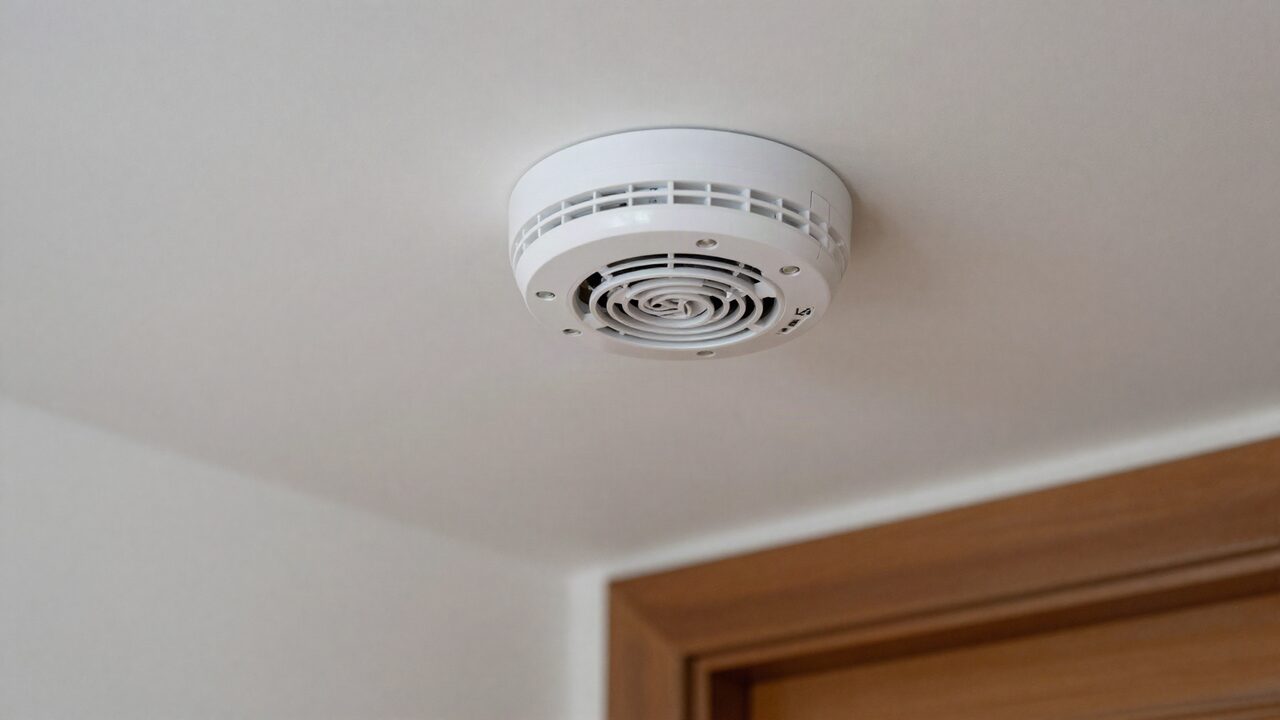
- Put a smoke alarm in every bedroom, outside each sleeping area and on every level, and a carbon monoxide alarm outside sleeping areas and on every level when the home has gas appliances, a fireplace or an attached garage.
- State rules differ and often sit in building codes, lodging laws or city ordinances rather than one rental law, so check the state, the county and the city.
- Florida's lodging inspectors record readily observable fire safety items and report them to the State Fire Marshal; Houston's rental ordinance requires compliance with the city's Construction and Fire Code.
- Virginia's landlord-tenant smoke alarm certificate does not cover short vacation stays, so the local fire marshal and building code are the reference there.
- A fire or carbon monoxide incident is a liability problem as much as a safety one: keep dated records of every test, battery change and service visit.
In this guide
Why fire safety is a liability question, not just a checklist
When a fire or carbon monoxide incident happens in a rental, the first questions are whether the alarms worked and whether the owner can prove they were maintained.
A group home raises the stakes. Ten to twenty guests sleep in rooms they don't know, often after a late night, and some may be children or older relatives. They don't know where the extinguisher is or which door leads outside. A working, interconnected alarm system and clear exits do more for those guests than any house rule.
The legal exposure follows from that. If an alarm was missing, dead or past its replacement date, an injured guest's claim gets much stronger, and an insurer may look hard at whether the owner met the local code. We cover how platform protection and insurance respond in vacation rental liability and host protection, and the same logic applies to water in pool and hot tub liability for vacation rentals.
The baseline every rental should meet
Whatever your state requires, one baseline from federal fire safety guidance fits almost every group home.
The U.S. Fire Administration says to "Put smoke alarms inside and outside each bedroom and sleeping area" and to "Put alarms on every level of the home." It says to "Test the alarm monthly," to "Replace the entire smoke alarm every 10 years," and that "Smoke alarms should be interconnected. When one sounds, they all sound." In a large house where a fire in the kitchen may be two floors away from a sleeping child, interconnection matters.
For carbon monoxide, the Texas State Fire Marshal's Office advises owners to "Have a smoke and CO alarm installed on every floor in your home" and to "install smoke alarms outside of individual sleeping areas." It also warns that "CO alarms don't substitute for smoke alarms." California's code goes further, as the next section shows.
| Device | Where it goes | Upkeep |
|---|---|---|
| Smoke alarm | Every bedroom, outside each sleeping area, every level | Test monthly; replace every 10 years |
| Carbon monoxide alarm | Outside each sleeping area and on every level when there is gas, a fireplace or an attached garage | Test monthly; replace by the maker's date |
| Fire extinguisher | Kitchen at minimum, mounted and easy to reach | Check the gauge at each turnover; annual service where required |
| Escape route | A clear way out of every bedroom | Check at each turnover that nothing blocks a door or window |
The extinguisher and escape rows are good practice drawn from the inspection items later in this guide. Your city may set specific sizes, counts or placement, so check its rules before you buy.
State by state: California, Texas, Florida and Virginia
Each of our four states puts fire rules for rentals in a different place, so check the state, the county and the city.
California
California treats smoke and carbon monoxide alarms as building code requirements for all homes, not only rentals. The City of Roseville's building handout says that "Effective July 1, 2011, all single family dwelling units require smoke & carbon monoxide detectors throughout the residence," installed under the California Residential Code.
Under that code, per Roseville's handout, smoke alarms go "In each sleeping room," "Outside each sleeping area in the immediate vicinity of the bedrooms" and "On each additional story of the dwelling, including basements." Carbon monoxide alarms go outside each sleeping area, "On every level of a dwelling unit including basements," and inside a bedroom when a fuel-burning appliance is in that bedroom or its attached bathroom. Permitted work triggers an upgrade: when alterations requiring a permit occur, "or when one or more sleeping rooms are added or created," the home must have smoke alarms located as required for new homes.
We could not open the California State Fire Marshal's pages or the state's legislative site today. Check California's current rules with your city or county building department and your local fire authority, and check the short-term rental permit rules in Sacramento, Roseville or Antioch for any added items.
Texas
Texas guidance comes from the State Fire Marshal's Office, and Houston adds a city layer. The Fire Marshal's alarm page advises a smoke and carbon monoxide alarm on every floor and smoke alarms outside sleeping areas.
Houston's adopted short-term rental ordinance requires owners, operators and occupants to comply with "All applicable provisions of the Construction and Fire Code." It also requires an emergency contact who is "available by phone at all times" and responds to an emergency condition "within one hour" of being notified. The ordinance defines an emergency condition to include "any fire, natural disaster, power outage, gas leak, noise violation, or medical emergency."
We could not open the Texas Property Code's smoke alarm sections today. Check how Texas law applies to your rental with your city and a Texas attorney.
Florida
Florida's lodging fire rules sit in its public lodging law, chapter 509, and its lodging inspectors look at fire safety. The Division of Hotels and Restaurants' licensing guidance says that "The division records readily observable fire safety items during inspections," tells operators to "Install smoke detectors in every living unit" and to "Have accessible fire extinguishers," and says the division reports possible violations to the State Fire Marshal and local fire safety authorities.
Florida Statute 509.215 requires that "Each guest room shall be equipped with an approved listed single-station smoke detector" in the buildings it covers, and it applies where "more than 50 percent of the units in the building are advertised or held out to the public" for transient stays. That matters for condo owners in resort buildings. The same statute requires hearing-impaired detectors on request at a rate of at least one per 50 units. Statute 509.211 requires carbon monoxide detection in enclosed spaces with a fuel-fired boiler near sleeping rooms and bans unvented "fuel-burning wick-type equipment for space heating."
Check with DBPR how your license is classified, and check Osceola County and the City of Kissimmee for any local vacation rental inspection.
Virginia
Virginia's landlord-tenant smoke alarm rules mostly don't reach short vacation stays. Code of Virginia 55.1-1220 requires landlords to give tenants a certificate that smoke alarms are present, inspected and working. But 55.1-1201 exempts lodging where "overnight sleeping accommodations are furnished" to a guest who doesn't live there as a primary residence, so a weekend group is not a tenant under that act.
Section 36-99.5 does reach rentals more broadly: landlords must provide smoke alarms for deaf or hard-of-hearing tenants on request, and hotels and motels of 35 units or more must keep at least one such alarm per 70 units.
Inspections in Virginia are mostly local. The Virginia Department of Fire Programs says the State Fire Marshal's Office inspects set categories such as schools and residential care facilities, and that "all other inspection types are handled on a complaint basis." For a Lake Anna home, check with Louisa or Spotsylvania County for any short-term rental registration, and with the local fire marshal for alarm placement under the Statewide Fire Prevention Code.
What inspectors actually check
Inspectors look for the things a guest would trip over in an emergency: alarms that don't sound, extinguishers that won't work and doors that won't open.
Florida publishes its lodging fire observations, which show what gets written up. The September 5, 2026 report includes a "Portable fire extinguisher pressure gauge indicates the extinguisher is in need of recharge," an extinguisher whose gauge "indicates the extinguisher is overcharged," a "Portable fire extinguisher obstructed/not accessible," and a "Hearing-impaired smoke detector is not functioning when tested." These are hotel citations, but a house inspector looks at the same things.
Turn those into a turnover check:
- Press the test button on every smoke and carbon monoxide alarm, or test a rotating set each turnover so every alarm is tested monthly.
- Look at each alarm's manufacture date and replace any that is past its life.
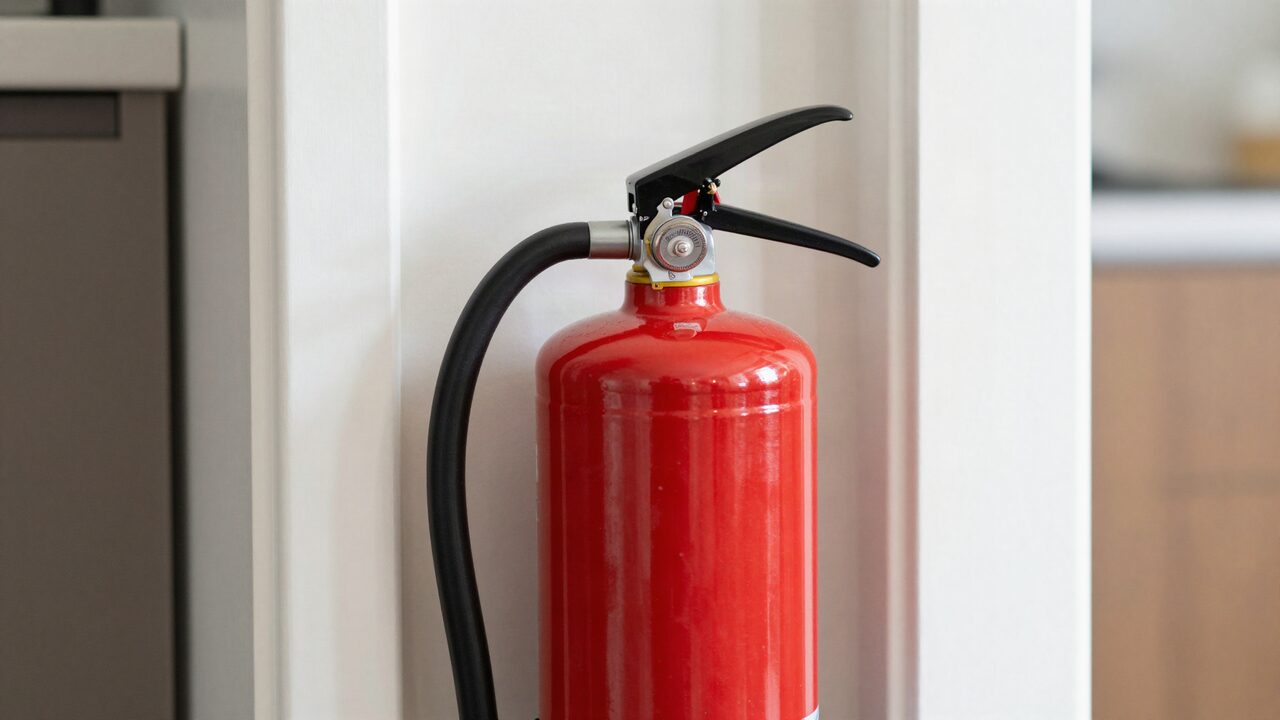
- Check that the extinguisher gauge reads in the green, the pin and seal are in place and nothing blocks it.
- Open every bedroom door and window used as an exit and confirm it isn't painted shut, locked with a key or blocked by furniture.
- Make sure the house guide shows the exits, the extinguisher and the gas shut-off.
Bedroom exits, fireplaces and grills
Group homes tend to have the features that need the most care: extra bedrooms, wood-burning fireplaces and outdoor kitchens.
Bedroom exits. Building codes require a way out of every sleeping room, and many require an escape window. The risk in rentals is the room that was never a legal bedroom: a basement den, office or bonus room with a bed added to raise the sleep count. That room may lack an exit, and Roseville's handout shows that creating a sleeping room through permitted work triggers alarm upgrades. Only advertise bedrooms that meet code, and never block an escape window with a bed or a security bar that needs a key.
Fireplaces. The U.S. Fire Administration advises to "Keep anything that can burn at least 3 feet from all heat sources including fireplaces," and to have heating equipment and chimneys "cleaned and inspected each year by a professional." A fireplace is also a carbon monoxide source, which is the reason a carbon monoxide alarm belongs on that level. Many owners lock or remove access to wood fireplaces in a group home rather than rely on rules; that is a reasonable choice.
Grills. A grill on a deck full of people is a common fire risk. Write rules guests can follow: outdoors only, set well away from the house, railings and overhangs, never left alone while lit, and coals cooled before disposal. Charcoal and gas grills give off carbon monoxide, so they never go in a garage or screened porch.
Space heaters and fire pits. Keep combustibles at least 3 feet from space heaters, as the U.S. Fire Administration advises, or don't supply them. For a fire pit, check local burn rules, which can change by season.
Records, insurance and where management helps
A safety system only protects you if you can show it worked, so keep records and tell your insurer what the home has.
Keep a log with the date, the device and what was done for every alarm test, battery change, alarm replacement, extinguisher service and chimney sweep. Save receipts and photos. If a claim arrives, this is what your insurer and attorney will ask for first. Read your policy for conditions on alarms and fireplaces, and see short-term rental insurance for owners.
Self-managing owners can do all of this. It takes discipline: a monthly test schedule, a cleaner trained to report missing alarms and someone who knows the local code. Where an owner lives far away, that is where it usually slips.
That is the work professional management is for. JekkyStay's owner pricing lists two packages. The Essential Management Package, at $4,100, includes Property Optimization & Setup, Smart Home Integration and Cleaning & Maintenance Coordination. The Premium Management Package with JekkyAI, at $6,800, adds a Dedicated Property Manager. If you live near the home and like doing your own checks, you may not need a manager for this part. If you don't, see how we work with owners.
The bottom line
Put smoke alarms in every bedroom, outside sleeping areas and on every level, connect them if you can, and add carbon monoxide alarms wherever there is gas, a fireplace or an attached garage. Keep a serviced extinguisher in the kitchen and a clear exit from every bedroom. Then check your state, county and city rules, because California, Texas, Florida and Virginia each put them in a different place, and keep a dated log of every test. This is general information, not legal advice; confirm your home's requirements with the local fire marshal or building department.
Frequently asked questions
Do vacation rentals need carbon monoxide detectors?
In many places, yes, when the home has a fuel-burning appliance, a fireplace or an attached garage. California requires carbon monoxide alarms in existing single-family homes, and Roseville's building handout says they go outside each sleeping area and on every level. Even where a state rule is unclear, installing them is the safer choice for a home that sleeps a group.
Where should smoke alarms go in a rental home?
The U.S. Fire Administration says to put smoke alarms inside and outside each bedroom and sleeping area and on every level of the home, to test them monthly and to replace each alarm every 10 years. Interconnected alarms, where one sounds and all sound, are the better setup for a large house.
Do I need a fire extinguisher in my vacation rental?
Florida's lodging division tells licensed operators to have accessible fire extinguishers, and its inspection reports cite extinguishers that are overcharged, need a recharge or are blocked. Many cities in other states require one too. A mounted, serviced extinguisher in the kitchen is a reasonable minimum everywhere.
Who inspects vacation rentals for fire safety?
It depends on the state and city. In Florida, the Division of Hotels and Restaurants records readily observable fire safety items during lodging inspections and reports them to the State Fire Marshal and local fire authorities. In Virginia, local fire marshals handle most inspections and the State Fire Marshal handles others on a complaint basis. Many cities add their own permit inspections.
Can guests use the fireplace and grill at a vacation rental?
That is the owner's choice, but each one adds risk. If you allow them, have the chimney cleaned and inspected every year, keep anything that can burn at least 3 feet from the fireplace, as the U.S. Fire Administration advises, and write clear rules for the grill: outdoors only, away from the house, never left alone.
Is this guide legal advice?
No. It is general information, not legal advice. Fire and building codes change and vary by city and county, so confirm your home's requirements with the local fire marshal or building department and a local attorney.
Sources
- U.S. Fire Administration: Smoke alarms
- U.S. Fire Administration: Heating fire safety
- Texas Department of Insurance, State Fire Marshal's Office: Smoke and CO alarms
- City of Houston: Short-term rental ordinance (adopted)
- Florida Statutes 509.215: Firesafety
- Florida Statutes 509.211: Safety regulations
- Florida DBPR Division of Hotels and Restaurants: Transient and non-transient apartment guide
- Florida DBPR: Lodging fire report, September 5, 2026
- Code of Virginia 55.1-1201: Exemptions from the Virginia Residential Landlord and Tenant Act
- Code of Virginia 55.1-1220: Landlord to maintain fit premises
- Code of Virginia 36-99.5: Smoke alarms for persons who are deaf or hard of hearing
- Virginia Department of Fire Programs: Fire inspections
- City of Roseville Building Division: Smoke and carbon monoxide alarm requirements