
Quick answer
No. Platform host protection is a useful backstop, but it is not a liability plan. It covers only stays booked on that platform, it has exclusions you cannot negotiate, and part of it is not insurance at all. Owners of large homes, especially with a pool, hot tub or lake access, still need their own rental policy and usually an umbrella.
This is general information, not insurance or legal advice. Your policy, your state and your insurer decide what is covered.
Key takeaways
- No. Platform host protection is a useful backstop, but it only follows stays booked on that platform and leaves gaps an owner has to fill.
- Airbnb's host liability insurance lists $1 million in coverage and excludes intentional acts and damage to your own place; Airbnb says other exclusions apply.
- Airbnb says host damage protection is not insurance, and it excludes wear and tear, acts of nature and injuries to guests.
- A large home with a pool, hot tub, dock or boat carries liability risk that can outgrow a single policy limit, which is what an umbrella is for.
- Fences, gates, life jackets, written rules and enforced occupancy limits lower the chance of a claim and help you defend one.
In this guide
- What platform protection is, and what it is not
- Airbnb host liability insurance: the terms
- Airbnb host damage protection: the terms
- The gaps, side by side
- Why a commercial short-term rental policy still matters
- Umbrella coverage for large homes
- Pool and lake risks for large homes
- House rules, waivers and records
- Where professional management helps, and where it doesn't
- The bottom line
What platform protection is, and what it is not
Platform protection is two separate programs: a liability insurance policy for injuries and guest property, and a damage reimbursement program for your home. They have different rules, and neither one replaces your own insurance.
On Airbnb, both sit under the name AirCover for Hosts, which Airbnb describes as "Always included, always free. Only on Airbnb." Those last three words matter more than any limit on the page. The protection follows the booking, not the home. A direct booking, a stay from another platform, a friend using the house for a weekend, or a contractor hurt on the property is outside it.
Airbnb is also plain about how it fits with your own cover. Its Help Center says: "While AirCover for Hosts protects you while you're hosting an Airbnb stay, Experience, or Service, it's not a substitute for personal insurance." It suggests hosts talk to their own insurer about how the two overlap.
We cover the basics of building, contents and lost-income coverage in our guide to short-term rental insurance for owners. This guide goes one level deeper into liability: who pays when someone is hurt, and where the platform programs stop.
Airbnb host liability insurance: the terms
Airbnb's host liability insurance is real insurance with a $1 million limit, and it applies only when you are found legally responsible for harm during an Airbnb stay.
The AirCover for Hosts page lists "$1M liability insurance" and describes it as "Protection in the rare event that a guest gets hurt or their belongings are damaged or stolen." The Help Center article on host liability insurance gives more detail. It says the policy "provides hosts with $1 million in coverage in the rare event you are found legally responsible for a guest getting hurt or their belongings being damaged or stolen while they're staying at your place." It adds that "People who help you host, like Co-Hosts and cleaners, are also included."
It also lists what host liability insurance doesn't cover:
- "Damage or injury resulting from something done intentionally"
- "Damage to your place or belongings caused by a guest (that's covered by Host damage protection)"
- "Other exclusions apply"
That last line is the one to take seriously. The Help Center summary is not the policy. Airbnb says a claim goes through an intake form, and a third-party insurer assigns a representative who resolves it under the policy terms. You do not see those terms in full on the summary page, and you cannot change them.
Three practical points follow:
- "Legally responsible" is a high bar and a narrow trigger. The policy responds to your legal liability. It is not medical payments cover that pays a guest's bills regardless of fault.
- $1 million is one limit for one program. A serious injury at a pool or on a dock can produce claims well above that. There is no second layer unless you buy one.
Airbnb host damage protection: the terms
Host damage protection reimburses some guest damage to your home, but Airbnb says plainly that it is not insurance, and it excludes several of the losses owners worry about most.
The AirCover page says host damage protection "is in place to help reimburse costs up to $3M USD," including art and valuables, pet damage, deep cleaning and income lost when you cancel Airbnb bookings because of guest damage. It also lists autos and boats: "Get reimbursed for damage to cars, boats, and other watercraft that you park or store at your home."
The Help Center article adds the conditions. It says: "Host damage protection is not insurance or a financial service." It lists what host damage protection doesn't cover:
- "Damage from normal wear and tear"
- "Loss of currency"
- "Loss due to acts of nature (ex: earthquakes and hurricanes)"
- "Injury or property damage to guests or others (those may be covered by host liability insurance)"
- Cleaning associated with normal check-out tasks
You must file a request in the Resolution Center "within 14 days of the responsible guest's checkout," and document the damage with photos, videos, estimates or receipts. The guest gets 24 hours to respond, and Airbnb says requests may be reviewed automatically, with human review available if you do not accept the result.
For an owner, the important line is the injury exclusion. Damage protection is about your property. It never pays for someone who is hurt. Our guide to vacation rental damage claims covers how to document and file a damage request.
The gaps, side by side
The gaps are not in the fine print alone; they are in the shape of the programs. Platform protection is built around one booking on one platform, while your liability exists every day you own the home.
| Situation | Airbnb host liability insurance | Airbnb host damage protection | Your own STR policy and umbrella |
|---|---|---|---|
| Guest hurt at the pool, Airbnb booking | Possibly, if you are found legally responsible; exclusions apply | No (injuries excluded) | Yes, if written for rental use and the pool is disclosed |
| Guest hurt at the pool, direct booking | No | No | Yes, same conditions |
| Guest damages the kitchen, Airbnb booking | No (that is damage protection) | Possibly, with conditions | Often, check the wording |
| Hurricane or earthquake damage | No | No (acts of nature excluded) | Depends on the policy; flood and quake are often separate |
| Guest's child hurt on the dock, Vrbo booking | No | No | Yes, if the dock and water use are covered |
| Visitor or contractor hurt between stays | No | No | Yes, under premises liability |
| Claim larger than the base limit | Capped at $1 million | Not applicable | Umbrella responds above the base limit |
Vrbo describes its own liability program for owners on bookings made through its checkout. We could not open Vrbo's policy page when we wrote this, so we have not quoted its terms. Read Vrbo's current page for limits, exclusions and which bookings it covers before you count on it.
Owners who list on several channels or take direct bookings cannot treat any one platform's program as their liability plan. Our guide to listing on several channels covers the operating side of that choice.
Why a commercial short-term rental policy still matters
Your own short-term rental policy is the layer that covers the home every day, on every channel, under terms you can read before you sign. That is the main reason it matters more than any platform limit.
A standard homeowners policy is not built for this. Triple-I says "Standard homeowners insurance policies do not provide any coverage for business activities conducted in the home," and its home business article notes that a homeowners policy "usually doesn't cover business-related liability." A home rented to groups most weekends is a business in the eyes of most insurers.
What a commercial or dedicated short-term rental policy gives you that platform programs do not:
- One set of terms for every booking. Airbnb, Vrbo, direct and repeat guests are treated the same.
- Premises liability between stays. Cleaners, contractors, delivery drivers and neighbors are on the property too.
- Wording you can read and negotiate. You can ask for a pool, hot tub, dock or watercraft to be named, and see the occupancy and event conditions before a claim, not after.
- A defense. Liability policies usually include legal defense costs. Ask how your policy treats them and whether they reduce the limit.
The downsides are real. Dedicated policies cost more than a homeowners policy; Triple-I says landlord policies "generally cost about 25 percent more than a standard homeowners policy," and rental-specific cover can cost more again. Some insurers will not write homes with diving boards, slides or unfenced pools, or will exclude them. And a policy is only as good as your compliance with it: an unpermitted rental or a party you allowed can give the insurer grounds to decline.
Umbrella coverage for large homes
An umbrella policy adds liability limits above your base policy, and for a large home with a pool or water access it is often the cheapest way to raise your ceiling. It only works if it accepts rental use.
Triple-I explains the basic mechanism: "An umbrella policy kicks in when you reach the limit on the underlying liability coverage." It says most insurers want about $250,000 of liability on your auto policy and $300,000 on your homeowners policy before they will sell an umbrella. Your rental policy may need a similar minimum.
The catch for rental owners is business use. Triple-I's home business article says "most personal umbrella policies that are tacked onto a homeowners or personal auto policy will cover liability stemming from business activities and business property only if covered by the basic policies." If your base policy excludes the rental, your personal umbrella likely does too.
Questions to settle with your broker:
- Does the umbrella accept short-term rental use, and is the rental home listed on it?
- Does it follow the base rental policy, or does it have its own exclusions for pools, docks or watercraft?
- What underlying limit does it require, and does your rental policy meet it?
- If the home is owned through a business entity, does the umbrella cover that entity, or only you personally? Many owners need a commercial umbrella instead.
- Does it cover your property manager, or does the manager need its own?
Umbrella limits do not stop a lawsuit. They raise the amount the insurer will pay before your own assets are exposed.
Pool and lake risks for large homes
Water is the biggest liability exposure in most group vacation homes, and it is also the risk you can reduce the most with physical barriers and clear rules. Large groups bring children, alcohol and late nights together around the same water.
The CDC is direct about the stakes: "More children ages 1–4 die from drowning than any other cause of death." It adds that "Drowning happens in seconds and is often silent."
Pools and hot tubs
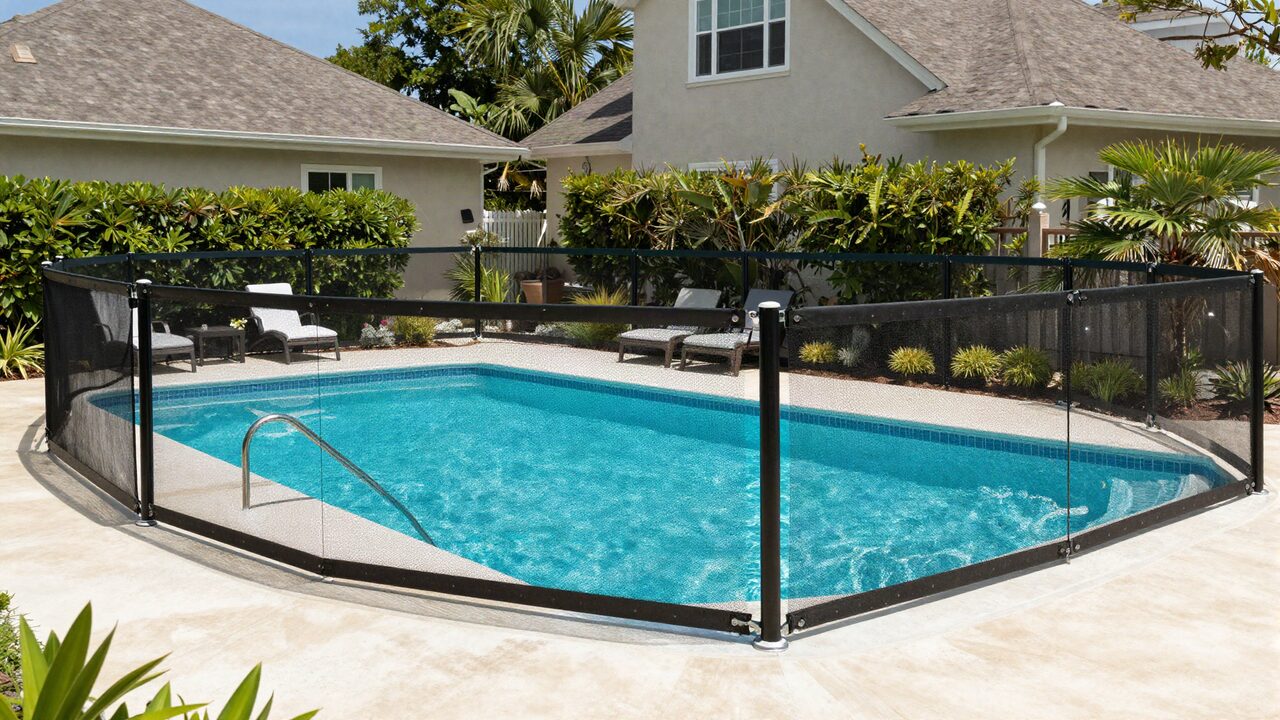
The CDC recommends a four-sided fence "that is at least four feet in height and fully encloses the pool," with self-closing and self-latching gates. Pool Safely, the U.S. Consumer Product Safety Commission's campaign, says a fence of at least four feet "should surround the pool or spa on all sides" and "should not be climbable for children," and that "The water should only be accessible through a self-closing, self-latching gate." It also warns guests to "never enter a pool or spa that has a loose, broken or missing drain cover."
For an owner, that turns into a checklist:
- A four-sided fence that separates the pool from the house, not just the yard from the street.
- Self-closing, self-latching gates, tested at every turnover.
- Compliant drain covers on the pool and spa, inspected on a schedule.
- Door or pool alarms where local rules allow them.
- Rescue equipment and posted rules: no diving where it is shallow, no glass, children supervised by a named adult.
Docks, boats and open water
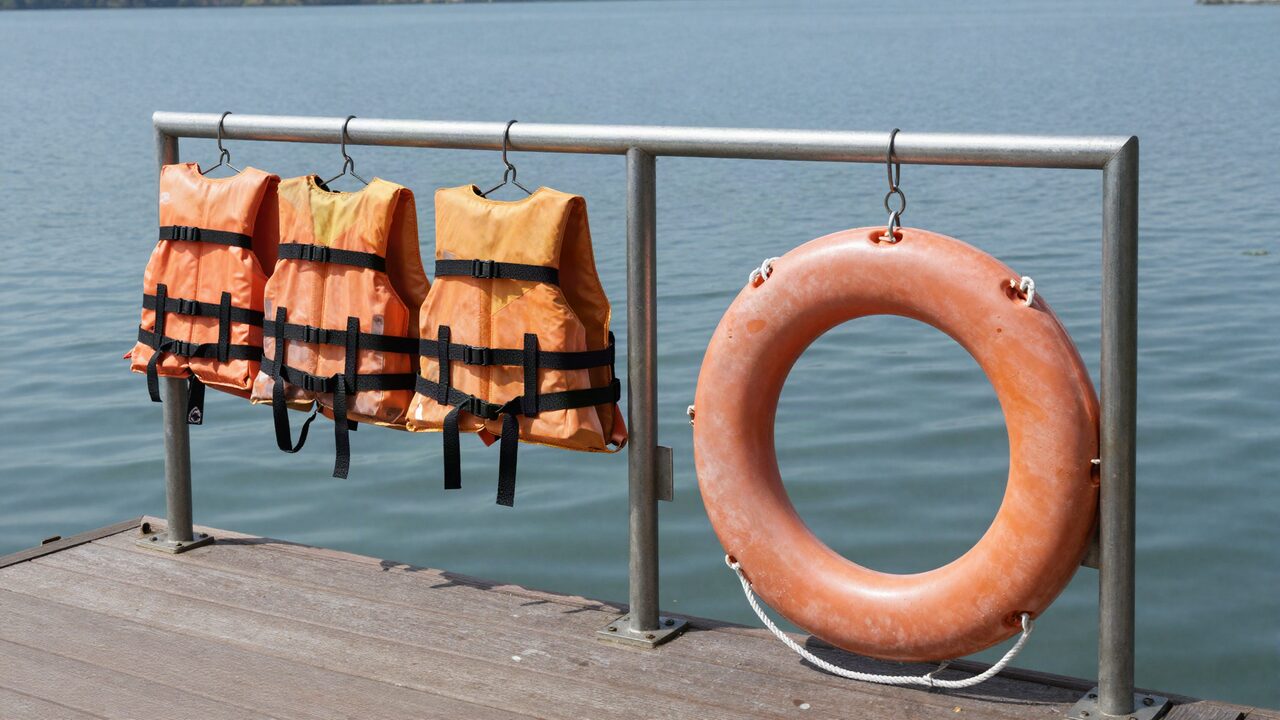
Lake homes add risks a pool fence cannot solve: open water, docks, kayaks, paddleboards and sometimes boats. The CDC says "Life jackets reduce the risk of drowning while boating for people of all ages and swimming abilities," and that children should wear them in and around natural water. The U.S. Coast Guard's boating safety program says federal law requires children under 13 to wear a USCG Approved life jacket when a vessel is underway, with some exceptions, and that state rules may vary.
What owners of lake homes usually do:
- Provide USCG Approved life jackets in child and adult sizes, stored where guests can see them, and replace damaged ones. The Coast Guard says foam-filled jackets should be tested at least once a year.
- Keep a ring buoy or throwable device at the dock.
- Decide in writing whether guests may use any boats or watercraft. Renting out a boat can be a separate business that needs its own coverage and, in some states, licensing.
- Tell your insurer exactly what is on the water: docks, lifts, kayaks, paddleboards, any motorized craft.
House rules, waivers and records
Written rules and good records will not prevent every claim, but they lower the odds and make a claim easier to defend. Rules that you post and do not enforce can hurt you more than having none.
- Occupancy limits. Set a maximum, state it in every listing, and enforce it. Many policies and permits tie coverage to occupancy.
- Events. If your policy excludes events, your listing and house rules should say the same.
- Pool and water rules. Post them at the gate and the dock, and include them in the house guide.
- Waivers. Some owners ask guests to sign a rental agreement with a liability release. How much a release protects you depends on state law, so have an attorney draft it.
- Records. Keep dated photos of fences, gates, drain covers and life jackets, plus maintenance logs. They show the condition of the home if an injury is ever disputed.
Our guide to vacation rental house rules for groups has wording you can adapt.
Where professional management helps, and where it doesn't
A manager can run the safety routine for you, but it does not move your liability off your shoulders, and it is not always worth the fee.
A good manager inspects gates and drain covers at every turnover, enforces occupancy, screens bookings, keeps records and responds fast when something goes wrong. That lowers risk. But you still own the home, you are still a likely defendant, and you still need your own policy and umbrella. If you live nearby, have a simple home without a pool or water, and enjoy the work, self-management with a solid policy can be the better choice. Our guide on self-managing or hiring a manager weighs the trade-offs honestly.
If you want help running a large group home, see our owner services and the Essential and Premium packages on our pricing page.
The bottom line
Host protection is not enough on its own. Airbnb's liability insurance lists $1 million in coverage for Airbnb stays, excludes intentional acts and says other exclusions apply; its damage protection is not insurance and never pays for injuries. Neither follows a direct booking or another platform. Owners of large homes need their own short-term rental policy, an umbrella that accepts rental use, and real water safety: four-sided pool fencing, self-closing gates, life jackets at the dock and rules they enforce. This is general information, not insurance or legal advice; confirm your cover with a licensed broker and an attorney.
Frequently asked questions
Is Airbnb host liability insurance enough?
Usually not on its own. It lists $1 million in coverage for Airbnb stays only, excludes intentional acts, and Airbnb says other exclusions apply. It does not follow direct bookings or other platforms, and Airbnb says AirCover is not a substitute for personal insurance.
Does Airbnb host damage protection cover guest injuries?
No. Airbnb lists injury or property damage to guests or others as an exclusion of host damage protection, and says those may be covered by host liability insurance instead. Airbnb also says host damage protection is not insurance.
Do I need an umbrella policy for a vacation rental?
Many owners of large homes carry one, because a serious injury claim can exceed the limit of the base policy. Triple-I says umbrella coverage kicks in once the underlying liability limit is reached, and personal umbrellas cover business activity only if the underlying policy does. Confirm the umbrella insurer accepts rental use.
Are pools and lakes covered by platform protection?
Airbnb's liability program applies when you are found legally responsible for a guest being hurt during an Airbnb stay, but it lists exclusions and it does not follow other bookings. Your own policy should name the pool, hot tub, dock and any boats or watercraft guests can use.
Does Vrbo have host liability coverage?
Vrbo describes a liability program for owners, but we could not open its policy page when we wrote this, so we have left its terms out. Read Vrbo's current policy page for limits, exclusions and which bookings it covers.
Is this guide insurance or legal advice?
No. It explains how these programs commonly work so you can ask better questions. Your policy wording, your state and your insurer decide what is covered. Speak with a licensed insurance broker and an attorney.
Sources
- Airbnb: AirCover for Hosts
- Airbnb Help Center: Host liability insurance
- Airbnb Help Center: AirCover for Hosts and personal insurance
- Airbnb Help Center: Host damage protection
- Triple-I: What is an umbrella liability policy?
- Triple-I: Insuring your home business
- Triple-I: Coverage for renting out your home
- CDC: Preventing drowning
- Pool Safely (CPSC): Safety tips
- U.S. Coast Guard Boating Safety: Wearing your life jacket