Quick answer
A pool or hot tub is usually the biggest liability risk at a vacation rental, and state law sets only part of what you must do. Barrier rules vary by state and city, insurance often excludes rental use, and signs and waivers do not replace a fence, a gate, an alarm and a locked cover.
This is general information, not legal or insurance advice. For platform host protection and umbrellas in general, see our liability and host protection guide; this one stays on the water.
Key takeaways
- A pool or hot tub is often the largest liability exposure at a vacation rental, because groups bring young children, alcohol and adults who assume someone else is watching.
- State barrier laws differ in who they cover: Florida's applies to new residential pools and hot tubs, while Texas's pool yard chapter covers multiunit rental complexes and property owners associations, not stand-alone single-family homes.
- Your city or county building code may be stricter than state law, so confirm the rule for your address with the local building department.
- Standard homeowners policies often exclude or limit coverage for rental activity, so a pool needs a rental policy that names it, and usually an umbrella.
- Signs and waivers help set expectations, but they do not replace barriers, alarms, covers and supervision, and whether a waiver holds up depends on state law.
In this guide
- Why pools and hot tubs carry so much risk at group rentals
- Barrier and alarm rules by state
- Layers that reduce drowning risk with groups
- Insurance exclusions to close before you rent
- Signs, rules and waivers: what they do and don't cover
- Where professional management helps, and where it doesn't
- The bottom line
Why pools and hot tubs carry so much risk at group rentals
Drowning is fast, quiet and common among young children, and group trips create exactly the conditions where nobody is watching.
The CDC's drowning facts page says there are an estimated 4,000 fatal unintentional drownings in the U.S. each year, "an average of 11 drowning deaths per day," and about 8,000 nonfatal drownings. It says "More children ages 1–4 die from drowning than any other cause of death," and that "Nonfatal drowning can result in long-term health problems and costly hospital stays."
A rental for 12 to 20 people changes the picture compared with a family home:
- Children who don't know the house. A toddler at a reunion has never seen this back door or this gate. Grandparents may not know the latch is stiff.
- Everyone assumes someone else is watching. With 15 adults in the house, supervision often falls to nobody. Pool Safely tells families to "Designate an official Water Watcher, an adult tasked with supervising children in the water."
- Alcohol and late nights. Celebrations, bachelor and bachelorette weekends and milestone birthdays often end in the hot tub. The CPSC warns that "Excessive drinking during hot tub use can cause drowsiness which could lead to unconsciousness."
- A new group every few days. Every check-in resets the knowledge. Rules that one group learned are gone by the next turnover.
For an owner, the downside is not only a claim. A serious injury at your home can end the rental business for that property, regardless of who is found at fault.
Barrier and alarm rules by state
State law is a floor, it often applies only to new pools or to certain property types, and your city or county code may be stricter.
We checked each state's statute or agency page on November 13, 2026. Where a page would not open, we say so rather than guess.
| State | Source checked | Who it covers | What it requires |
|---|---|---|---|
| Florida | Florida Statutes chapter 515 | New residential pools at one- and two-family homes, including hot tubs and nonportable spas | At least one listed safety feature to pass final inspection; barrier option at least 4 feet high |
| Texas | Health and Safety Code chapter 757 | Pools of multiunit rental complexes and property owners associations; not stand-alone single-family homes | Enclosure at least 48 inches high, self-closing and self-latching gates that open outward |
| California | State statute page did not open | Check California's rule | Check California's rule with your local building department |
| Virginia | 12VAC5-460-90 (tourist establishment and public pools) | Tourist establishment and other public pools | Barriers and gates required by the building code must be maintained in good operable condition |
Florida
Florida's Residential Swimming Pool Safety Act says that "In order to pass final inspection and receive a certificate of completion," "a residential swimming pool must meet at least one of the following requirements relating to pool safety features." The options in section 515.27 are:
- An enclosure that isolates the pool from the home and meets the barrier rules in section 515.29.
- An approved safety pool cover.
- Exit alarms on all doors and windows that give direct access from the home to the pool.
- Self-closing, self-latching devices on all doors that give direct access to the pool.
- A pool alarm that sounds on entry into the water, certified to ASTM F2208. The statute says a wearable alarm for an individual child does not count.
The barrier rules say "The barrier must be at least 4 feet high on the outside," must be separate from a yard fence unless that fence sits on the pool's perimeter and meets the rules, and must be placed far enough from the water's edge to keep a young child who gets through "from immediately falling into the water." Gates "must open outward away from the pool and be self-closing and equipped with a self-latching locking device."
The chapter defines a swimming pool to include "hot tubs; and nonportable spas," and defines residential as a detached one- or two-family dwelling. It exempts portable spas with a qualifying safety cover and localities with an ordinance at least as stringent. The statute's penalty applies to failing to equip a new residential pool. It does not set a retrofit rule for older pools, which is why an older Florida rental pool may have none of these features. Insurers and juries may not care when the pool was built.
Texas
Texas Health and Safety Code chapter 757 says it "applies only to" a pool "owned, controlled, or maintained by the owner of a multiunit rental complex or by a property owners association." Its definition of multiunit rental complex excludes "a single-family home or adjacent single-family homes that are not part of a condominium project" and "a facility primarily renting rooms to overnight guests." A pool there includes a "permanent hot tub or spa over 18 inches deep."
Where it applies, the enclosure must be "at least 48 inches" high measured on the side away from the pool, gaps must not pass a four-inch sphere, and gates must have a self-closing and self-latching device, take a lock, and "open outward away from the pool yard," with latch height rules.
For most single-family vacation rentals in Texas, then, chapter 757 is not the rule that governs your backyard. That is not the same as no rule. Your city's building code, your HOA's rules and your insurer's conditions may all require a barrier. A home in an HOA that maintains a shared pool falls under the chapter for that shared pool.
California
California's statute page would not open for us today, so we are not quoting its requirements. Check California's rule with your city or county building department before you build, remodel or rent a home with a pool or spa, and ask which drowning prevention features are required for your property and when they must be in place.
Virginia
Virginia's regulation for tourist establishment and other public pools, 12VAC5-460-90, says "Any fences or other barriers, and any gates and latches required by the Virginia Uniform Statewide Building Code" must be maintained in good operable condition, and adds a duty to prevent unwanted access for pools built when the code had no barrier criteria. That chapter is written for tourist establishment and public pools. The state pages we opened did not settle how a privately owned single-family rental with a pool is treated. Check Virginia's rule with your county building official, and ask the local health district whether your rental counts as a tourist establishment.
Layers that reduce drowning risk with groups
No single feature is enough at a rental with a new group every week, so build layers that work even when guests ignore the rules.
Pool Safely's tips give the core layers: "A fence of at least four feet in height should surround the pool or spa on all sides," "The water should only be accessible through a self-closing, self-latching gate," "Install a door alarm from the house to the pool area," and "Keep pool and spa covers in working order." It also warns guests to "Never enter a pool or spa that has a loose, broken or missing drain cover."
For a group rental, that translates to:
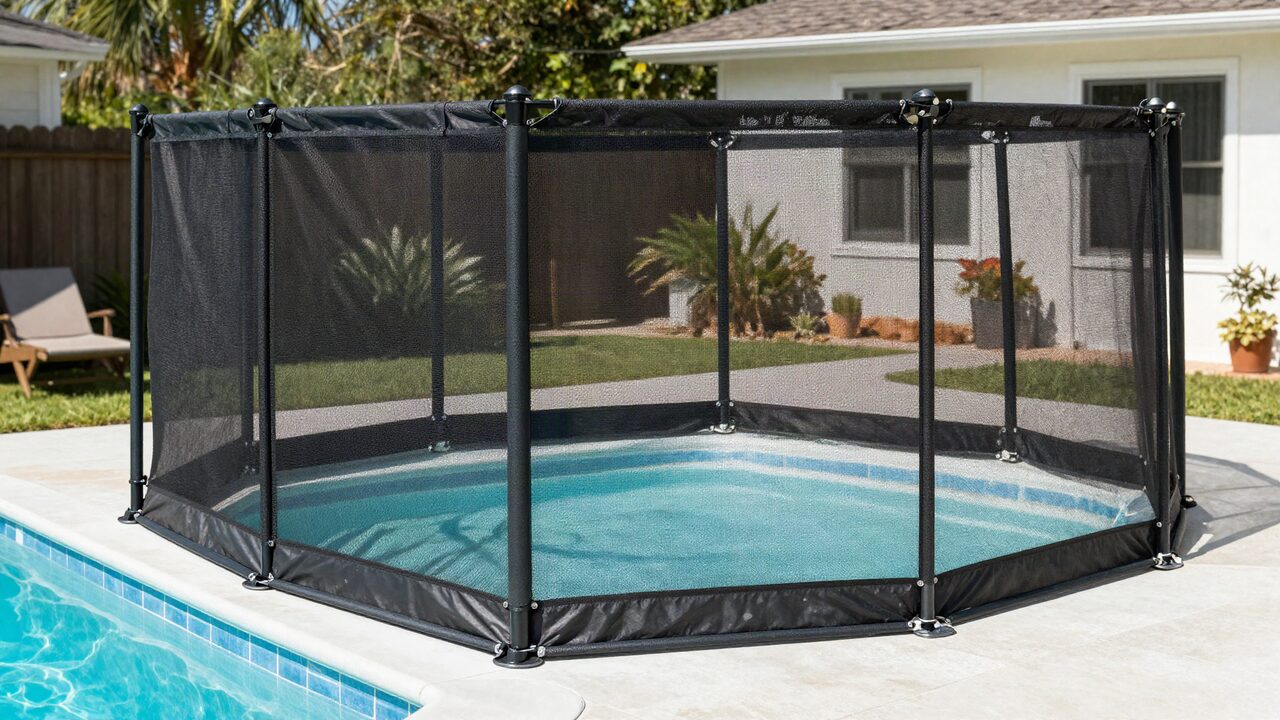
- A four-sided barrier. A fence that separates the pool from the house, not just the yard from the street. Removable mesh fencing works on many decks.
- Gates that close on their own. Test every gate at every turnover. A gate propped open with a chair is the most common failure.
- Door and pool alarms. Alarms on doors leading to the pool, and a pool alarm in the water when the pool is not in use.
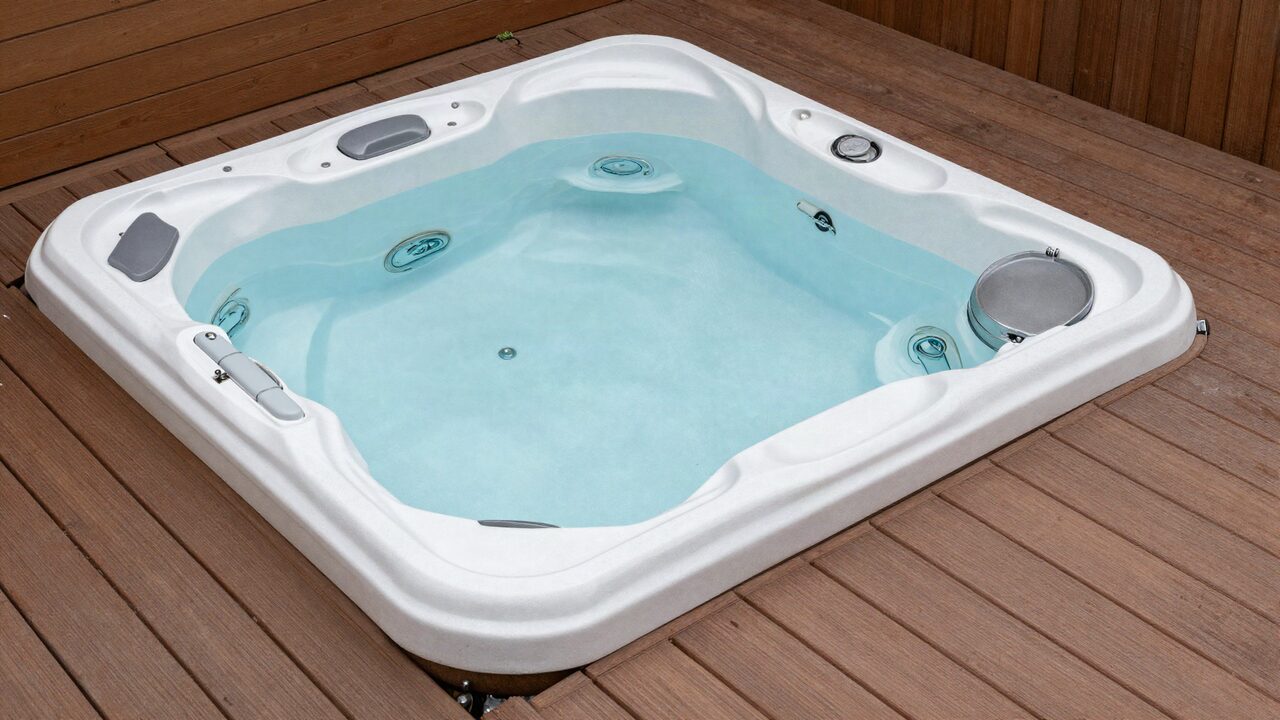
- A locking hot tub cover. Locked whenever no adult is using the tub. Check the straps and clips at each turnover.
- Drain covers checked on a schedule. Record the date and the person who checked.
- A heater set to 104 degrees or lower. The CPSC says "Hot tub water temperatures should never exceed 104 degrees Fahrenheit" and that "Pregnant women should stick to the 100-degree maximum rule."
- Rescue and contact basics. A reaching pole and ring buoy by the pool, and the home's address and nearest emergency room posted inside.
What this costs is real: fencing, alarms and covers add up, and some features change how the yard looks in listing photos. The alternative cost is larger, and some insurers will not write a pool without them.
Insurance exclusions to close before you rent
A standard homeowners policy may not cover a paying guest hurt in your pool, so get rental coverage that names the pool and hot tub in writing.
The National Association of Insurance Commissioners says "Homeowners policies vary, but usually exclude or provide limited coverage for homeowners running a business in the home," and that a paying guest on a property offered as a rental "might be excluded." The South Carolina Department of Insurance says "A pool is considered an 'attractive nuisance' by the insurance industry" and suggests pool owners consider liability limits of "at least $300,000 or $500,000" and an umbrella for "additional liability protection over and above what you already have on your home."
Questions to ask your broker, in writing:
| Question | Why it matters |
|---|---|
| Does the policy cover short-term rental guests, by name or by use? | Homeowners policies often exclude paying guests |
| Are the pool, hot tub and any slide or diving board listed? | Some policies exclude or condition these features |
| What barrier, alarm or cover conditions does the policy set? | Breaking a condition can give grounds to decline a claim |
| Does the umbrella accept rental use and follow the base policy? | An umbrella with its own pool exclusion leaves the gap open |
| Are guests' children and unregistered visitors covered? | Groups bring people you never screened |
| What happens if the local rules weren't followed? | An unpermitted rental or missing barrier can affect cover |
Platform host protection programs are a backstop with their own limits and exclusions, and they do not follow bookings made elsewhere. Our liability and host protection guide covers them in detail; we won't repeat it here. Our guide to short-term rental insurance for owners covers choosing a policy.
Signs, rules and waivers: what they do and don't cover
Signs, house rules and waivers tell guests the risks and set expectations, but they do not stop a child from reaching the water, and they may not stop a claim.
What they help with:
- Clear expectations. "No lifeguard on duty," "Children must be supervised by an adult at all times," "No glass in the pool area," "Hot tub closed to children under a set age" and posted hot tub temperature limits.
- A record that guests were told. House rules accepted at booking and a short pool agreement signed at check-in show what guests knew.
- Enforcement grounds. Rules about no swimming after a set hour or no unsupervised use give you a basis to end a stay or keep a deposit when they're broken.
What they don't do:
- Replace physical barriers. A sign cannot close a gate. A state or local barrier rule is not met by a sign.
- Bind everyone. A waiver signed by the lead booker may not cover other adults in the group or children, who generally cannot sign away claims in their own name.
- Excuse a known hazard. If a drain cover was broken or a gate latch was failing, a waiver is a weak defense against a claim based on that condition.
- Work the same way in every state. Whether a waiver is enforceable depends on state law and the facts. Ask an attorney in the state where the home is.
Where professional management helps, and where it doesn't
A good manager checks barriers, covers and alarms at every turnover and keeps the records; it does not change who owns the pool or who gets sued.
Management helps most when you live far away, rent to many groups a year, or have both a pool and a hot tub. Turnover checklists, photo records of gates and covers, prompt repairs and screening for occupancy and events all lower risk. Management helps less when the home is simple, you live close by, and you are willing to inspect the pool area yourself before every stay. In that case, a good checklist and the right policy may matter more than a manager's fee.
Our owner services include Cleaning & Maintenance Coordination in both the Essential and Premium packages, and you can compare what each includes on our pricing page.
The bottom line
A pool or hot tub is the feature groups love most and the one most likely to turn a good season into a lawsuit. State rules differ: Florida's chapter 515 sets safety features for new residential pools and hot tubs, Texas's chapter 757 covers multiunit rental complexes and associations rather than stand-alone homes, and for California and Virginia you should check the rule for your address with the local building official. Whatever the law requires, build layers: a four-sided fence, self-closing gates, alarms, a locked hot tub cover, checked drain covers and a heater at 104 degrees or less. Close the insurance gap with a rental policy that names the pool and an umbrella that accepts rental use. Treat signs and waivers as communication, not protection. This is general information, not legal or insurance advice; confirm your obligations with a local attorney and a licensed broker.
Frequently asked questions
Do vacation rental pools need a fence?
It depends on the state and local code. Florida's Residential Swimming Pool Safety Act requires new residential pools, including hot tubs and nonportable spas, to have at least one listed safety feature, such as a barrier at least 4 feet high. Many cities and counties have their own rules. Even where a fence is not legally required, the Consumer Product Safety Commission's Pool Safely campaign recommends a fence of at least four feet on all sides.
Does Texas require a pool fence at a single-family vacation rental?
Texas Health and Safety Code Chapter 757 applies to pools owned or maintained by a multiunit rental complex or a property owners association. Its definition of multiunit rental complex excludes single-family homes that are not part of a condominium project. That does not mean no rule applies: check your city's building code, your HOA rules and your insurer's requirements.
Is a hot tub treated like a pool under these laws?
Often, yes. Florida's chapter 515 defines a swimming pool to include hot tubs and nonportable spas, and exempts portable spas with a qualifying safety cover. Texas Chapter 757 defines a pool to include a permanent hot tub or spa over 18 inches deep.
Does a liability waiver protect a vacation rental owner from a drowning claim?
Not reliably. A waiver can show that guests were told the risks and the rules, but whether it holds up depends on state law and the facts, and it may not bind people who did not sign it, such as children. Ask an attorney in your state before you rely on one. This is general information, not legal advice.
Will my homeowners insurance cover a guest who is hurt in the pool?
Maybe not. The National Association of Insurance Commissioners says homeowners policies usually exclude or limit coverage for running a business in the home, and that a paying guest might be excluded. Get a policy written for short-term rental use that names the pool and hot tub, and consider an umbrella.
What hot tub temperature is safe for guests?
The Consumer Product Safety Commission says hot tub water temperatures should never exceed 104 degrees Fahrenheit, and that pregnant women should stick to a 100-degree maximum. Set the heater accordingly and check it with a separate thermometer.
Sources
- Florida Statutes chapter 515: Residential Swimming Pool Safety Act
- Texas Health and Safety Code chapter 757: Pool Yard Enclosures
- Virginia Administrative Code 12VAC5-460-90: Fences
- CDC: Drowning facts
- Pool Safely (CPSC): Safety tips
- CPSC: CPSC warns of hot tub temperatures
- NAIC: Renting out your home? You need insurance coverage
- South Carolina Department of Insurance: Pools and insurance