Quick answer
A good turnover for a large vacation rental follows the same order every time: walk through and photograph the home, strip the beds, then clean the kitchen, bathrooms, bedrooms, living areas and outdoor space, restock, and finish with a final check. Keep three sets of linens per bed so laundry never holds up the next arrival.
Key takeaways
- A large-home turnover runs in a fixed order: walk-through and photos first, then strip, kitchen, bathrooms, bedrooms, living areas, outdoors and a final check.
- Keep at least three sets of linens per bed and three towel sets per guest at maximum occupancy, so one set is on the beds, one is in the wash and one is spare.
- Do the damage check before anything is cleaned, with dated photos, because evidence disappears once the crew starts.
- Plan the time from the guest count, not the bedroom count, and block a buffer night when the gap between guests is too short for a 16-guest home.
- Write the checklist down and have the crew photograph each finished room, so quality does not depend on who cleaned.
In this guide
Why large homes need their own checklist
A home that sleeps 15 or 16 people is not a bigger condo; it is a different job, so it needs a written checklist built for its size.
Everything multiplies. Five or six bedrooms mean five or six beds to strip and make, often plus bunks, sofa beds or air mattresses. Four bathrooms means four showers to scrub and four sets of towels. The kitchen has fed a whole group for several days. And large homes usually come with the extras that sell them, such as a pool, a hot tub, a game room or a theater, each with its own cleaning and safety steps.
A written list does two things. It keeps quality the same whoever cleans, and it gives you a record when a guest says something was missing or a crew member says something was already broken. The rest of this guide is that list, in the order we suggest working.
The turnover at a glance
Work top to bottom and dirty to clean: start the laundry first, because it takes longest, and finish with floors and the final walk.
| Step | What it covers | Why this order |
|---|---|---|
| 1. Walk-through and photos | Every room, before touching anything | Records damage and missing items while the evidence is still there |
| 2. Strip and start laundry | All beds, towels, kitchen linens | Laundry is usually the longest step |
| 3. Kitchen | Dishes, appliances, fridge, trash | Heaviest mess; frees space for clean supplies |
| 4. Bathrooms | Showers, toilets, sinks, mirrors, floors | Needs time for products to work |
| 5. Bedrooms | Dust, make beds, check drawers and under beds | Beds go on once linens are dry |
| 6. Living areas and extras | Living room, game room, theater, laundry room | Lower risk, faster |
| 7. Outdoors | Patio, grill, pool or hot tub area | Can run in parallel with indoor work |
| 8. Restock and final check | Supplies, settings, lights, locks, photos | Confirms the home matches the listing |
Step 1: the damage check comes first
Do the damage check before any cleaning starts, because once the crew is working, the evidence is gone.
Have whoever walks in first take dated photos or a short video of every room as the guests left it. Then go through a short list:
- Walls, doors and floors: new marks, holes, scratches or water stains
- Furniture: rips, burns, broken legs, anything moved from its place
- Electronics: TVs, remotes, game consoles, the Wi-Fi router, smart locks
- Kitchen: chipped or missing dishes, damaged pans, appliance faults
- Linens: stains, burns or missing towels, counted against your par
- Outdoor: grill condition, pool or hot tub cover, patio furniture
- Signs of a rule breach: smoking, extra guests, pets not on the booking
Report anything before it is fixed or thrown away. If you list on a platform, damage claims have their own process and deadlines. Airbnb, for example, describes its host damage protection on its AirCover for Hosts page, and the steps and time limits are in its Help Center, so check the current rules there and file quickly.
Linen par levels for a large home
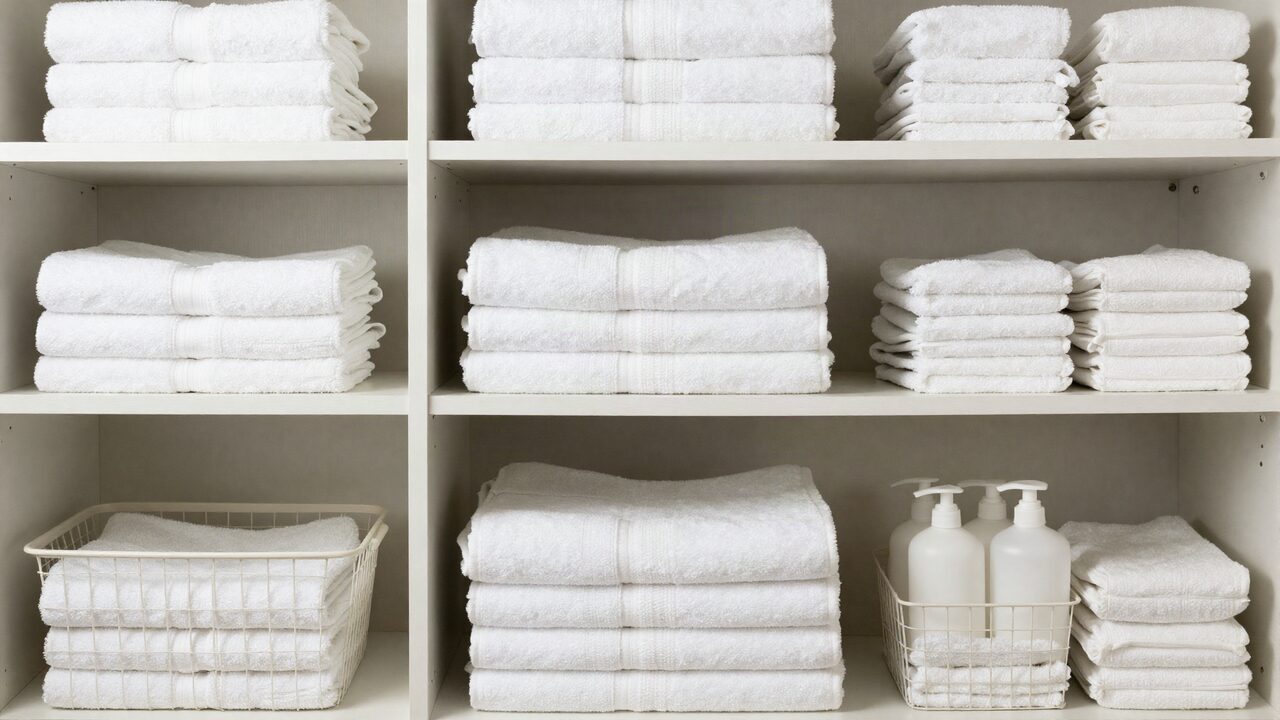
Par is the number of sets you own for each bed and each guest, and for a large home three is the working minimum.
The logic is simple: one set is on the beds, one set is in the wash, and one is clean on the shelf for the next turnover. With back-to-back stays and a 16-guest home, there is rarely time to wash, dry and fold everything before the next group arrives, so the spare set is what keeps you on schedule.
| Item | Par to keep | Notes |
|---|---|---|
| Sheet sets | 3 per bed, 4 for busy homes | Include bunks, sofa beds and air mattresses |
| Pillowcases | 3 per pillow | Plus a few spares; they stain fastest |
| Mattress and pillow protectors | 2 per bed | Wash protectors on a set schedule, not only when stained |
| Bath towels | 3 per guest at max occupancy | Plan for 16, not the average group |
| Hand towels and washcloths | 3 per bathroom sink, 3 per guest | Dark washcloths for makeup removal save white ones |
| Pool or beach towels | 2 per guest | Only if the home has a pool, hot tub or lake |
| Kitchen towels | 6 to 10 per stay | Large groups cook a lot |
| Blankets and throws | 1 extra per bed | For cold sleepers and the living room |
White linens are easier to manage at scale. They can all be washed together, mismatched pieces are not obvious, and stains are visible, which means the crew catches them before a guest does.
Room-by-room checklist
Each room has a short list of the things guests notice first, and those are what the crew checks before moving on.
Kitchen
- Run and empty the dishwasher; hand wash pans and anything left out
- Clean the stovetop, oven front, microwave inside, and the coffee maker
- Empty the fridge and freezer of guest food; wipe shelves and door seals
- Wipe counters, cabinet fronts, handles and the table and chairs
- Count dishes, glasses and cutlery against the inventory for the guest count
- Empty every bin, wash it if needed, and put in a fresh liner
Bathrooms
- Scrub showers, tubs, toilets and sinks; clear hair from drains
- Clean mirrors, fixtures and the shower glass
- Check the toilet flushes properly and the drains run freely
- Restock toilet paper, hand soap, shampoo and conditioner if provided
- Put out a full towel set for each guest assigned to that bathroom
Bedrooms
- Make beds with fresh linens; check protectors for stains
- Look under beds and in every drawer and closet for left items
- Dust surfaces, lamps and headboards; check bulbs work
- Reset hangers, luggage racks and extra blankets
Living areas, game room and theater
- Vacuum sofas and under cushions, then reset cushions and throws
- Test remotes and the TV; put game pieces, cues and paddles back
- Dust shelves, wipe tables and check for spills on rugs
Outdoors
- Clean the grill grates and empty the grease tray
- Wipe patio furniture and reset it to its photo positions
- Check the pool or hot tub is clean, the cover is on and the gate latches
High-touch surfaces need attention at every turnover. CDC guidance on cleaning facilities says cleaning with soap or detergent removes most germs, says to clean surfaces before sanitizing or disinfecting, and recommends disinfecting mainly where someone has been ill. If you do disinfect, use a product approved for the surface, keep it wet for the full contact time on the label, and never mix products.
Safety and systems checks
A turnover is also the moment to check the things that protect guests, and the list is short enough to do every time.
- Test smoke and carbon monoxide alarms on a schedule. The U.S. Fire Administration says to test smoke alarms monthly and to replace alarms 10 years from the manufacture date.
- Check fire extinguishers are present and the first aid kit is stocked.
- Set the thermostat to your arrival setting, and confirm heat or air conditioning works.
- Test the Wi-Fi and post the network name where guests will look for it.
- Check the smart lock battery and that the code for the next group works.
- Lock the owner's closet and any rooms guests should not use.
Report anything that is not working right away. Guests notice a broken air conditioner or a dead Wi-Fi router within the first hour, and they remember it in their review.
Timing between guests
Plan turnover time from the number of guests the home sleeps, not the number of bedrooms, and leave a buffer when the gap is too short.
The common window between a morning check-out and an afternoon check-in works for a small home with one cleaner. For a home that sleeps 16, the same window usually means a crew of several people, laundry already done from the spare set, and a clear plan for who does what. Time your own first few turnovers from arrival to final photo, note how the guest count and length of stay changed the job, and use those numbers to set your crew size.
Other ways to protect the schedule:
- Ask guests in the check-out message to start the dishwasher, take out trash and leave used towels in one place.
- Block a night between stays after holidays, big groups or long stays, when the home takes longer.
- Schedule deep cleans (oven, windows, carpets, mattress protectors) between bookings on a calendar, not during turnovers.
- Keep backup cleaners on a list for the days your usual crew cannot come.
Restocking and the final check
The last step confirms the home looks like the listing photos and has what the next group needs.
Restock from a locked owner's closet: toilet paper, paper towels, hand and dish soap, dishwasher pods, trash bags, laundry detergent, coffee and filters, and any welcome items the listing promises. Then walk the home once more as a guest would: lights off, blinds set, furniture in its photo positions, doors locked, and a photo of every finished room sent to the owner or manager.
Those final photos are worth the extra five minutes. They show the next guest's starting condition if there is a dispute, and they let you check quality without visiting.
When to hand this off
If you are spending your weekends on turnovers or chasing cleaners, a manager can run this for you. Our owner services cover how we work, and both packages on our pricing page include cleaning and maintenance coordination. For the wider question, read what a vacation rental manager does and whether to self-manage or hire a manager. Setting up a home from scratch? Our guide to furnishing a vacation rental for groups covers what to buy before the first turnover.
The bottom line
Turn a large home over in the same order every time: photos and a damage check first, laundry started early, then the kitchen, bathrooms, bedrooms, living areas and outdoors, and a restock and final walk last. Keep three linen sets per bed and three towel sets per guest at maximum occupancy. Time your real turnovers, staff the crew to fit the gap between guests, and block a night when the gap is too short.
Frequently asked questions
How long does it take to turn over a large vacation rental?
It depends on the home, the crew size and how the last group left it. A five or six bedroom home sleeping 15 or 16 guests is a much bigger job than a two bedroom condo, and laundry is usually what sets the pace. Time your own first few turnovers, then plan the crew and the gap between guests from those numbers.
How many sets of sheets do I need per bed in a vacation rental?
A common rule of thumb is three sets per bed: one on the bed, one in the wash and one ready on the shelf. Large homes with back-to-back stays often keep a fourth set for stains and losses.
How many towels should a vacation rental have?
Plan for maximum occupancy, not the average group. Three full towel sets per guest, plus pool or beach towels if the home has a pool or lake access, keeps you covered when stays run back to back.
Should the cleaner or the owner do the damage check?
The person who walks in first should do it, which is usually the cleaner. Give them a short list, ask for dated photos of every room before cleaning starts, and have them report anything broken, missing or stained before they fix or throw anything away.
Do I need to disinfect every surface at every turnover?
No. CDC guidance says cleaning with soap or detergent removes most germs, and recommends disinfecting mainly where someone has been ill. Clean high-touch surfaces at every turnover, and follow the product label when you do disinfect.
What should I restock at every turnover?
Toilet paper, paper towels, hand soap, dish soap, dishwasher pods, trash bags, laundry detergent, coffee and filters, and any welcome items you promise in the listing. Keep a locked owner's closet with backups so the crew never runs out mid-clean.