
Quick answer
A college friends reunion weekend works best when you settle the dates first, choose a city most people can reach easily, and book one large house with a private bedroom for each couple or family. Plan one shared dinner and one outing, then leave the rest of the weekend open, because the conversations are the point.
Key takeaways
- Pick the city after the dates: poll two or three weekends first, then choose the place most people can reach in one flight or a half-day drive.
- Count every person, partners and kids included, before you look at houses, and book a home whose maximum guest count covers all of them.
- Give each couple or family a door that closes, and put the late-night crowd and the early sleepers on different floors where you can.
- Plan one shared dinner and one outing, and leave the rest of the weekend open for the long conversations you came for.
- Collect money early with a clear split, and say up front what partners and kids pay.
In this guide
Start with the dates, not the place
Choose the weekend before the city, because dates are the hardest thing to agree on when friends live in different states and have different school calendars and work schedules.
Send a short poll with two or three candidate weekends, spaced a few weeks apart. Ask people to mark each one as "yes", "maybe" or "no", and set a deadline of about a week. A free scheduling poll or a simple shared spreadsheet both work. What matters is that everyone answers the same question at the same time, so the group is not negotiating in a long chat thread.
A few things to check before you send the poll:
- School calendars. If kids are coming, avoid weekends when several families have exams, tournaments or school events.
- Holiday weekends. A Monday holiday gives an extra day for travel, but flights and houses cost more and book earlier.
- The one person who can't move. If one friend has a fixed constraint, such as a work rotation or a custody schedule, build around it first.
Once a weekend has the most "yes" answers, lock it in and stop polling. Our guide to picking dates for a group trip covers polls, deadlines and tie-breaks in more detail.
Pick a city everyone can reach
The best city is the one with the lowest total travel effort for the whole group, not the one with the best restaurants.
Write down where each person is coming from and how they will travel. Then compare two or three cities on the total for the group: flight times, number of connections, flight cost and drive time from the airport. A city with a large airport and nonstop flights from most home cities often wins, even if nobody picked it first.
| Question | Why it matters |
|---|---|
| How many people can fly nonstop? | Connections add hours and missed-flight risk, especially with kids. |
| How far is the house from the airport? | A long drive after a late flight eats into the first evening. |
| Is a car needed? | A house outside downtown usually means renting one or two cars for the group. |
| Who is driving in? | Drivers can bring the heavy items: coolers, games, a portable crib. |
| What is the weather that weekend? | Outdoor plans need a backup if rain or heat is likely. |
Some groups rotate the city each time, so the travel burden falls on different people. Others pick a city near where most of the group lives now. Either works if you explain the choice in the first message.
Count everyone, then choose the house
Count every person who will sleep at the house, partners and kids included, before you look at homes.
College reunions grow. The original eight friends become eight couples, and then there are kids. A house that sleeps 10 is too small for a group of 14, and squeezing in extra people is not an option: at JekkyStay homes, only the booked number of guests may stay, and each home has a maximum. Five of our homes take up to 16 overnight guests, and the Antioch home takes up to 15. The primary guest on the booking must be at least 21 on the check-in date.
Once you have the count, look at the layout, not only the bedroom number:
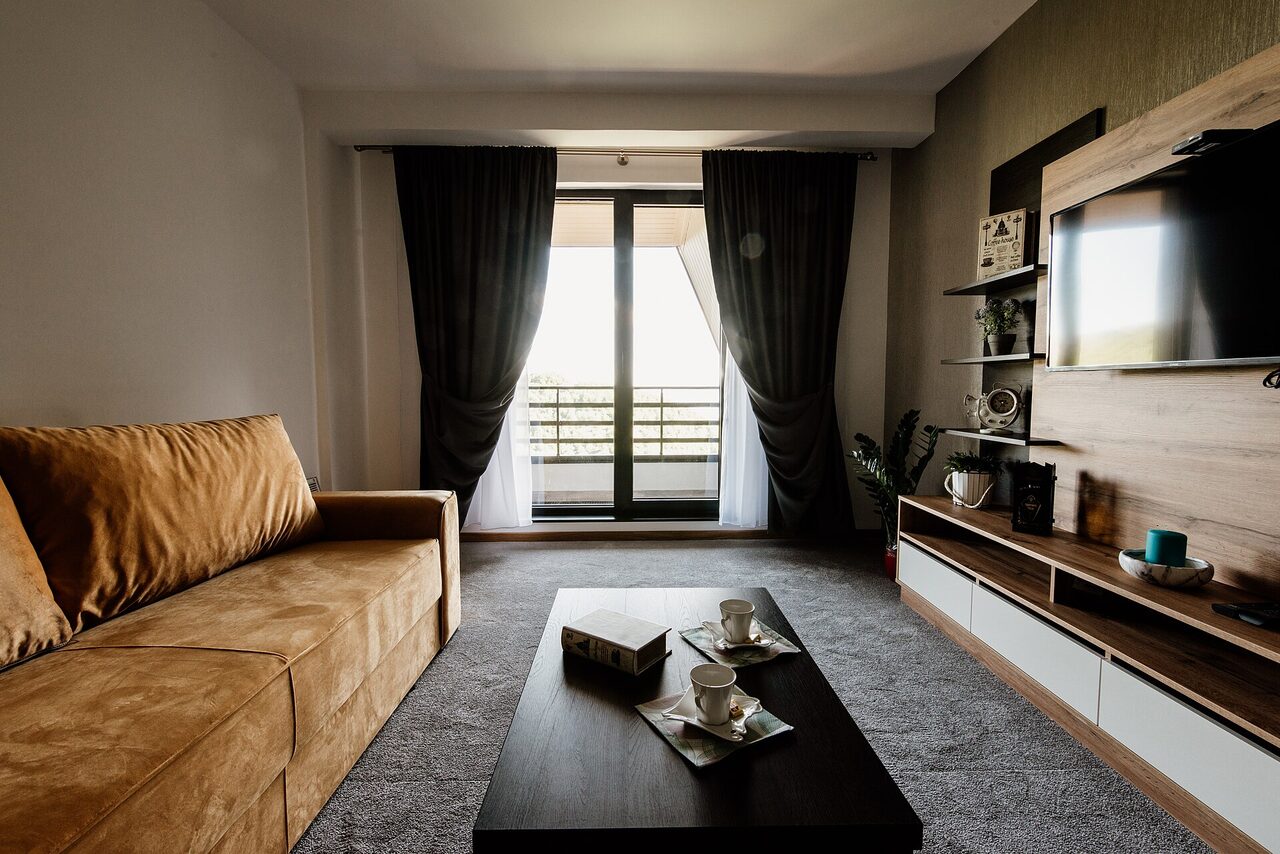
- A door for each couple or family. Adults who shared a dorm at 19 still want their own room now.
- Bathrooms. Fewer than one bathroom for every three or four people makes mornings slow.
- Floors. A home with bedrooms on more than one level lets the early sleepers and the late talkers stay apart.
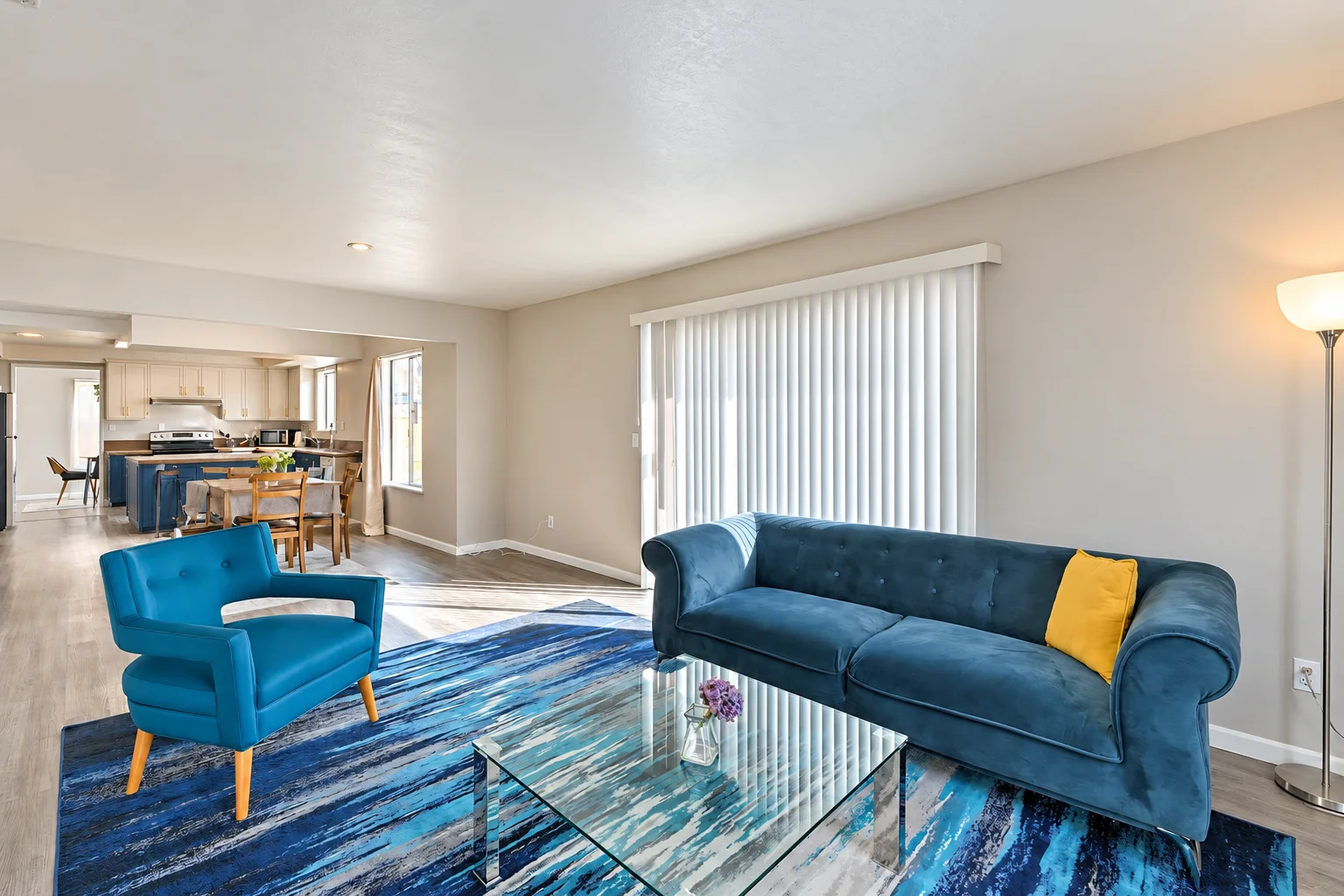
- Shared space. A big kitchen, a long dining table and somewhere to sit outside are where the weekend actually happens.
Our guide to assigning bedrooms on a group trip has a simple method for handing out rooms without hurt feelings. To see what each of our homes offers, browse homes for groups: the Sacramento home has gated one-acre grounds with outdoor dining, the Roseville home has a movie theater and a covered California room, the Houston home has a hot tub and a game room, the Lake Anna home has lake access and a screened porch, and the Kissimmee home has a private screened pool.
Make room for partners and kids
Decide in the first message whether partners and kids are invited, because it changes the house, the budget and the schedule.
There is no right answer. Some groups keep it to the original friends. Many invite everyone, because people with young children often can't come otherwise. If the whole family is coming, plan for it:
- Give families with small children the bedrooms farthest from the living room, so bedtime is not interrupted by the group.
- Plan one adults-only evening. A partner or two can take turns watching the kids at the house, or you can split the evening into two shifts.
- Set a kids' corner with games and a screen, so children have a place that is theirs.
- Tell partners what to expect. A weekend of old stories can feel long to someone who wasn't there, so mix in an activity everyone can share.
For ideas on keeping children happy at the house, see our guide to keeping kids busy at a vacation rental. If families with babies are coming, our guide to a group trip with babies and toddlers lists what to ask the host.
Keep the schedule light
Plan one anchor each day and leave the rest open, because people came to catch up, not to follow an itinerary.
A light weekend for a reunion of 10 to 16 people might look like this:
| Day | Plan |
|---|---|
| Friday | Arrivals through the evening. Simple food at the house: pizza, a taco bar or a pot of chili. |
| Saturday morning | Slow breakfast, then one outing: a hike, a winery, a game or a walk through town. |
| Saturday evening | The main event: a long dinner at the house or one restaurant booking for the whole group. |
| Sunday | Brunch at the house, a group photo, and departures. |
The Saturday dinner is the moment to plan carefully. Cooking at the house is often easier than finding a restaurant table for 14, and nobody has to drive home. Assign the menu to two or three volunteers, or split it by course. Our group meal plan guide has shopping lists and a cooking rota.
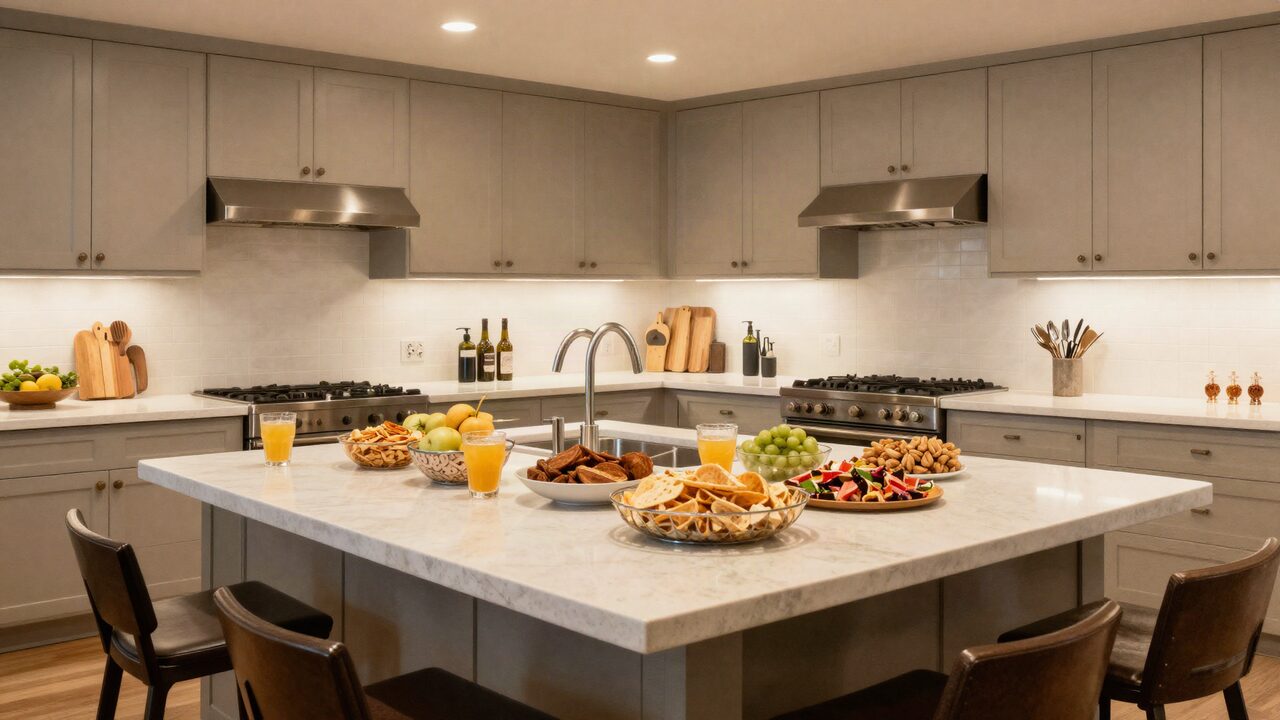
If you set out snacks for the afternoon, the CDC's food safety guidance says never to leave perishable food out for more than 2 hours, or 1 hour above 90°F. Put cheese, dips and cut fruit out in small batches and keep the rest in the fridge.
A few ideas that work for college groups without much planning:
- A photo night. Ask everyone to send five old photos ahead of time and play them on the TV after dinner.
- A walk back in time. If the reunion is near your old campus, a walk past the dorms and old haunts takes an hour and costs nothing.
- A game you used to play. A card game, a trivia round about your college years, or a tournament on the house's pool or ping pong table.
- An evening outside. If the house has a fire pit or outdoor seating, it is the natural place to end the night. The U.S. Fire Administration says to keep fire pits at least 10 feet from the home or anything that can burn, to watch children closely while a fire is lit, and to put the fire out completely before you leave the yard. Check the house rules on outdoor fires first.
Settle the money early
Agree on how to split the cost before anyone books, because money is the most common source of friction on a group trip.
The house is usually the largest shared cost. Common ways to split it:
- Per bedroom. Each couple or family pays for their room. Simple, and fair when rooms are similar.
- Per adult. Every adult pays the same, and kids are free or pay a reduced share.
- Per household. Each household pays the same, whatever its size. Easy, but singles end up paying more per person.
Say what partners and kids pay in the same message as the dates. Collect deposits as soon as the house is booked, so one person isn't carrying the whole cost for months. Keep food and drink in a separate shared pot, settled at the end with a shared expense app. Our guide to splitting costs on a group vacation rental walks through deposits, cancellations and what happens if someone drops out. Read the cancellation policy before you book, and share it with the group.
A simple planning timeline
Work backward from the weekend, because flights and large homes get scarcer and more expensive as the date gets closer.
- Five to six months out: send the date poll and agree who is invited.
- Four to five months out: pick the city, count heads and book the house.
- Three months out: collect deposits and ask people to book flights.
- One month out: assign bedrooms, plan the Saturday dinner and share the house rules.
- One week out: send arrival times, the grocery plan and a packing note.
Our group getaways page has more on planning a weekend for friends in one of our homes. For a reunion built around someone's big birthday, see our guide to planning a milestone birthday weekend.
The bottom line
Settle the dates first, then choose the city that is easiest for the whole group to reach. Count every person, partners and kids included, and book a house whose maximum guest count covers all of them, with a private bedroom for each couple or family. Plan one dinner and one outing, agree on the money before anyone books, and leave the rest of the weekend for catching up.
Frequently asked questions
How far ahead should we plan a college reunion weekend?
Four to six months is comfortable when people live in different cities and need to fly. Start with a date poll, then book the house as soon as the group settles on a weekend, because large homes book early for holidays and summer.
How do we pick a city when everyone lives somewhere different?
List where each person is flying or driving from, then compare two or three cities on total travel time and cost for the whole group. A city with a large airport and nonstop flights from most home cities usually wins, even if it is nobody's favorite.
Should partners and kids come to a college reunion?
Decide as a group and say it in the first message. Many groups invite everyone and plan one adults-only evening. If kids come, the house needs separate bedrooms for families and a quiet spot for early bedtimes.
How many people can stay in one JekkyStay home?
Five of our homes take up to 16 overnight guests and the Antioch home takes up to 15. Only the booked number of guests may stay, so count partners, kids and anyone arriving late before you book.
Can we have friends over who are not staying at the house?
Check the house rules before you invite anyone. At JekkyStay homes, no parties or events are allowed unless JekkyStay approves them in writing, so ask before you plan a gathering beyond the people on the booking.
How should we split the cost of the house?
The simplest split is per bedroom or per adult, with kids free or at a reduced share. Agree on it before anyone pays, collect deposits early, and keep shared food costs in a separate pot.