Quick answer
Before a group trip with babies and toddlers, ask the host in writing about cribs and high chairs, how any pool or hot tub is fenced or covered, where the stairs are, and which bedrooms stay quiet and dark for naps. If the listing doesn't mention baby gear, plan to bring it.
Key takeaways
- Ask the host in writing whether the home has a crib, play yard or high chair. If the listing does not mention one, assume you need to bring it.
- A baby needs a crib, bassinet or play yard with only a fitted sheet. A sofa bed, air mattress or adult bed is not a safe sleep space.
- If the home has a pool or hot tub, ask how it is fenced or covered, and plan an adult on water duty whenever toddlers are awake.
- Ask which bedrooms are quiet and dark for naps, and where the stairs are, before you assign rooms.
- Split shared baby gear across families, and give each family a door that closes.
In this guide
Why the questions matter more with little ones
A house that is perfect for twelve adults can be hard work with three toddlers, so ask before you book rather than after you arrive.
Most vacation homes are set up for adults and older kids. A listing shows bedrooms, beds and a pool, but rarely says whether there are stairs without a gate, a hot tub without a lock or a bedroom next to the game room. Those details decide whether parents of small children get a vacation or spend the trip on guard duty.
Send your questions in one message to the host and keep the answers in writing. Share them with every family in the group, so nobody packs a travel crib that turns out to be waiting at the house, or leaves one at home because they assumed there would be one.
The questions to send the host
Use this list as your message to the host, and add anything specific to your group.
| Ask about | Why it matters | If the answer is no |
|---|---|---|
| Crib, play yard or bassinet | A baby needs a sleep product made for infants. | Bring a play yard for each baby. |
| High chair or booster seat | Meals at a big table are easier with a seat at the right height. | Bring a portable high chair or a clip-on seat. |
| Pool and hot tub enclosure | Drowning is a leading cause of death for children ages 1 to 4. | Plan constant adult water duty, and ask about covers and locks. |
| Stairs and gates | Toddlers climb, and many group homes have more than one level. | Bring a gate, and give families rooms on the main floor if possible. |
| Quiet, dark bedrooms | Naps and early bedtimes need a room away from the noise. | Bring blackout covers and a white noise machine. |
| Bathtub | Bathing a baby in a shower is hard. | Bring a small inflatable or folding baby bath. |
| How infants count toward the guest limit | Your booking should match the group that arrives. | Adjust the booking before you travel. |
Cribs and safe sleep
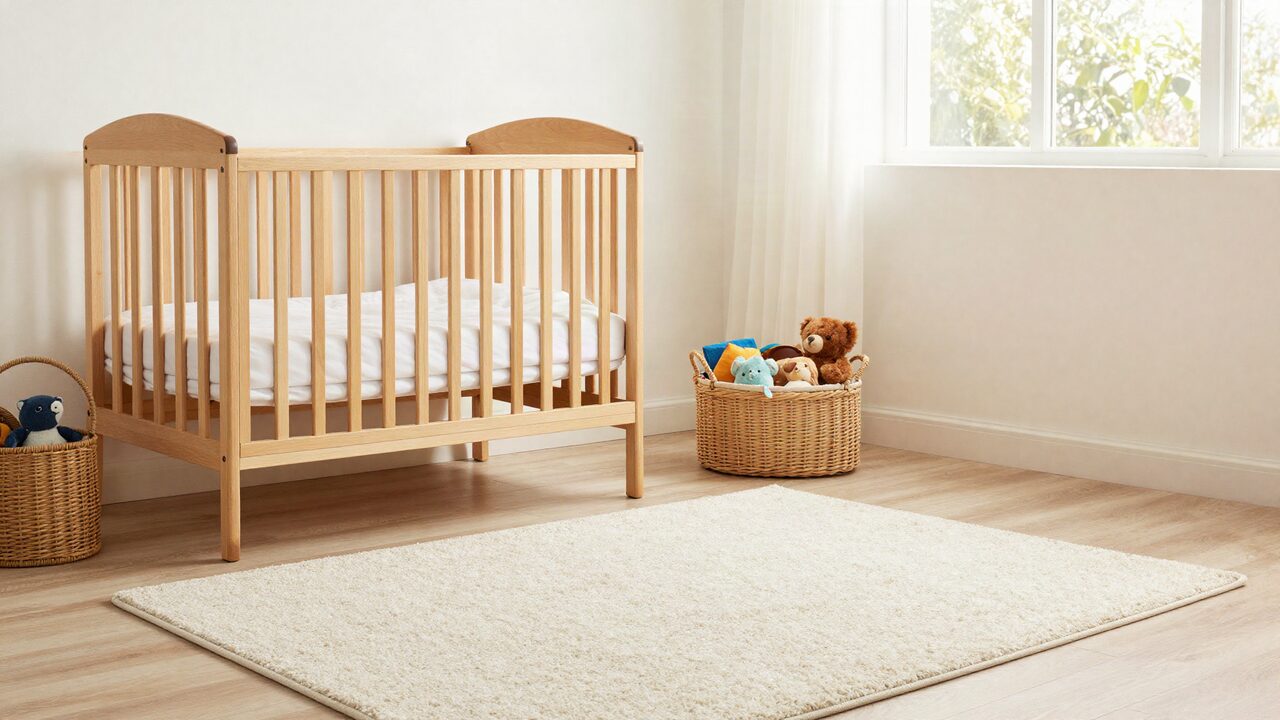
Plan for every baby to sleep in a crib, bassinet or play yard with nothing but a fitted sheet, because an adult bed, sofa bed or air mattress is not a safe sleep space.
The CDC's safe sleep guidance, based on the American Academy of Pediatrics recommendations, says to place a baby on their back for all sleep, naps included, on a firm, flat surface that is not tilted, such as a safety-approved crib mattress with a fitted sheet. It says to keep blankets, pillows, bumper pads and soft toys out of the sleep area, and to keep the crib or bassinet in the parents' room, ideally until the baby is at least 6 months old.
The Consumer Product Safety Commission puts it as "bare is best": only a fitted sheet in a crib, bassinet or play yard. It also says inclined products with an angle greater than 10 degrees should never be used for infant sleep, and that a baby who falls asleep somewhere else should be moved to a crib, bassinet, play yard or bedside sleeper.
On a group trip, that means:
- One sleep space per baby. Two babies can't share a play yard.
- Room for the play yard. Ask the host for the size of the bedrooms you plan to use, and check there is floor space beside the parents' bed.
- Your own sheets. Bring fitted sheets made for your play yard's mattress.
- No improvised beds. Don't build a sleep space out of cushions, a sofa or a spare mattress on the floor, however tired everyone is.
None of our current home listings include a crib, play yard or high chair, so families booking with us should plan to bring them or ask us before booking. See the details for each home on our stays page.
Pools, hot tubs and water
If the home has a pool or hot tub, ask exactly how it is enclosed and covered, and plan an adult on water duty whenever toddlers are awake.
The AAP's water safety guidance for young children is direct. A young child can drown in an inch or two of water, quickly and silently. The AAP recommends a fence at least 4 feet high on all four sides of a pool, with no gap under it and no gaps between slats wider than 4 inches, and a gate that is self-closing and self-latching, opens away from the pool and has its latch at least 54 inches from the ground. It says fencing is estimated to prevent more than half of young children's pool drownings, and that 69% of drownings among children 4 and younger happened during non-swim times.
For swim time, the AAP recommends touch supervision: an adult within arm's length of a toddler, in the water with them. It also says to cover and lock hot tubs and spas right after each use.
Questions to ask the host about water:
- Is the pool fenced on all four sides, separate from the house? Or does the house open straight onto it?
- Do the doors to the pool area have alarms or high locks?
- Does the hot tub have a locking cover?
- Is there a lake, pond or canal near the yard?
Our Kissimmee home has a private screened pool and a spa, and its house rules say children must be supervised around the pool and spa. Our Lake Anna home has lake access and an inflatable hot tub, and our Houston home has a hot tub. Ask us how each is enclosed or covered before you book with toddlers.
Bath time needs the same care. The AAP says most child drownings inside the home happen in bathtubs, often during a brief lapse in supervision, and that children should not bathe alone until at least age 6. Don't leave an older cousin in charge of a toddler in the tub.
Nap-friendly bedrooms
Give families with babies the bedrooms farthest from the kitchen, living room and game room, because the group will be loudest exactly when the little ones need to sleep.
Ask the host which bedrooms are on a quieter side of the house, which have room-darkening shades, and which share a wall with a game room or theater. Our Kissimmee home lists room-darkening shades. In homes where the game room or movie loft is upstairs, such as our Houston and Roseville homes, a bedroom on the other floor may be quieter at nap time.
A few habits help a group with several nappers:
- Agree on a quiet window in the early afternoon, and plan the loud games for after it.
- Bring a portable white noise machine for each family.
- Pack blackout covers that attach to windows with suction cups or tape.
- Keep a baby monitor in each room, labeled with the family's name, so signals don't get mixed up.
For more on fair room assignments, see our guide to assigning bedrooms on a group trip.
Stairs, cabinets and a quick childproofing sweep
Ask where the stairs are before you book, then spend 15 minutes on a childproofing sweep when you arrive.
Many large homes have more than one level. Our Roseville, Houston, Lake Anna and Kissimmee home listings all mention stairs. Bring a pressure or clamp gate if your toddler is walking or crawling, and ask the host whether you can fit one at the top and bottom of the stairs.
On arrival, walk through the rooms your children will use:
- Move cleaning products, medicines and dishwasher pods up and out of reach. The AAP's childproofing guidance says most poisonings happen when parents or caregivers are home but not paying attention, and to keep medicines in their original containers with safety caps.
- Check for window blind cords and tie them up high.
- Look for heavy furniture or TVs that a climbing toddler could pull over, and keep children away from them.
- Find the first aid kit and fire extinguisher, and ask the host where they are if you can't see them.
- Put each family's medicines in a separate labeled bag, so a grandparent's pills never end up on a low table.
A baby and toddler gear list
Split shared gear across families before you travel, so the cars and suitcases aren't full of three copies of everything.
| Item | Per family or shared |
|---|---|
| Play yard or travel crib, with fitted sheets | One per baby |
| Portable high chair or booster seat | One per baby or toddler |
| Stair gate | Shared, one or two for the house |
| Outlet covers and cabinet latches | Shared kit |
| Baby monitor | One per family |
| White noise machine and blackout covers | One per family |
| Folding baby bath | Shared if the home has no tub |
| Car seats | One per child, for every car the group uses |
| Stroller | One per family, or a shared double |
| Bibs, plastic plates and cups | Shared |
| Swim diapers and life jackets for lake trips | Per child |
| Medicines, thermometer and the pediatrician's number | Per family |
For keeping the older kids busy while the little ones nap, see our guide to keeping kids busy at a vacation rental. Our family reunions page covers planning a stay for several generations in one of our homes.
The bottom line
Before a group trip with babies and toddlers, send the host one written message about cribs, high chairs, pool and hot tub enclosures, stairs, bathtubs and quiet bedrooms. If baby gear isn't listed, bring it. Every baby sleeps on their back in a crib, bassinet or play yard with only a fitted sheet, and an adult is always on water duty when toddlers are awake. Split the shared gear across families, and give each family a room that closes and stays quiet at nap time.
Frequently asked questions
Do vacation rentals provide cribs and high chairs?
Some do and many don't. None of our current home listings include a crib or high chair, so plan to bring your own or ask us before you book. For any rental, ask the host in writing and get the answer before you pack.
Can a baby sleep in a pack-and-play at a vacation rental?
Yes. CPSC lists play yards with cribs, bassinets and bedside sleepers as products intended for infant sleep. Use only a fitted sheet, put the baby on their back, and keep pillows and blankets out of the sleep space.
Is a vacation home with a pool safe for toddlers?
It can be, with the right setup and constant supervision. The AAP recommends a fence at least 4 feet high on all four sides of a pool, a self-closing, self-latching gate, and touch supervision within arm's length of a toddler at swim time. Ask the host how the pool is enclosed and plan adult water duty.
What should we ask a host before booking with a baby?
Ask whether there is a crib, play yard or high chair; how the pool or hot tub is fenced or covered; where the stairs are; which bedrooms are quiet and dark; whether there is a bathtub; and how infants count toward the guest limit.
How do we handle naps on a group trip?
Give families with babies the bedrooms farthest from the living room and kitchen, bring a portable white noise machine and blackout covers, and plan outings around the nap schedule. Agree on quiet hours in the afternoon if several small children nap at the same time.
Do babies count toward a vacation rental's maximum guests?
It depends on the home. Tell the host how many babies and toddlers are coming and ask how they count before you book, so your booking matches the group that arrives.