Quick answer
To winterize a vacation rental between bookings, keep the heat on at 55°F or higher, insulate exposed pipes, close and cover outdoor spigots, and store or cover outdoor furniture. Keep the pool and hot tub circulating, and check the home after every hard freeze, before the next group arrives.
This guide is for owners whose homes stay on the calendar through winter, like a lake house rented for holiday reunions, not a cabin closed until spring. Most winter damage in a rental happens on empty nights, when no one is there to notice a cold room or a dripping pipe.
Key takeaways
- A rental that stays on the calendar all winter needs a between-bookings routine, not a full shutdown: keep the heat on low, protect exposed pipes and check the home after every hard freeze.
- Insurer and county guidance agree on keeping the thermostat at 55°F or higher when the home is empty; a smart thermostat with temperature alerts tells you when that fails.
- Disconnect garden hoses, shut off and drain outdoor spigots you can reach, and add insulated faucet covers before the first freezing night.
- Pools and hot tubs usually stay running in winter: the circulating water is the protection, so a power or pump failure is the real risk.
- After a freeze, check every faucet for flow, look under sinks and in the crawl space, and know where the main shut-off is before a guest needs it.
In this guide
Why winter is different for a rental
A rental is empty for stretches of every week, and that is when freezes do their damage.
A family home has people in it most nights. Someone hears the furnace stop, feels a cold bathroom or sees water on the floor. A rental can sit empty from a Sunday checkout to a Friday arrival. If the heat fails on a Tuesday night, the first person to find the burst pipe may be the guest who opens the door on Friday.
Two other things raise the stakes. Guests change the thermostat, and some leave it on the lowest setting when they check out to "save energy". And a winter booking is often a holiday booking, which means a big group, a full house and no easy way to move them if the home is out of action.
That is why the routine below is built around the gaps between bookings rather than a single fall checklist. For the full year of tasks, see our vacation rental maintenance calendar.
Pipes: the main risk
Protect any pipe that sits in cold air, because that is where freezes start.
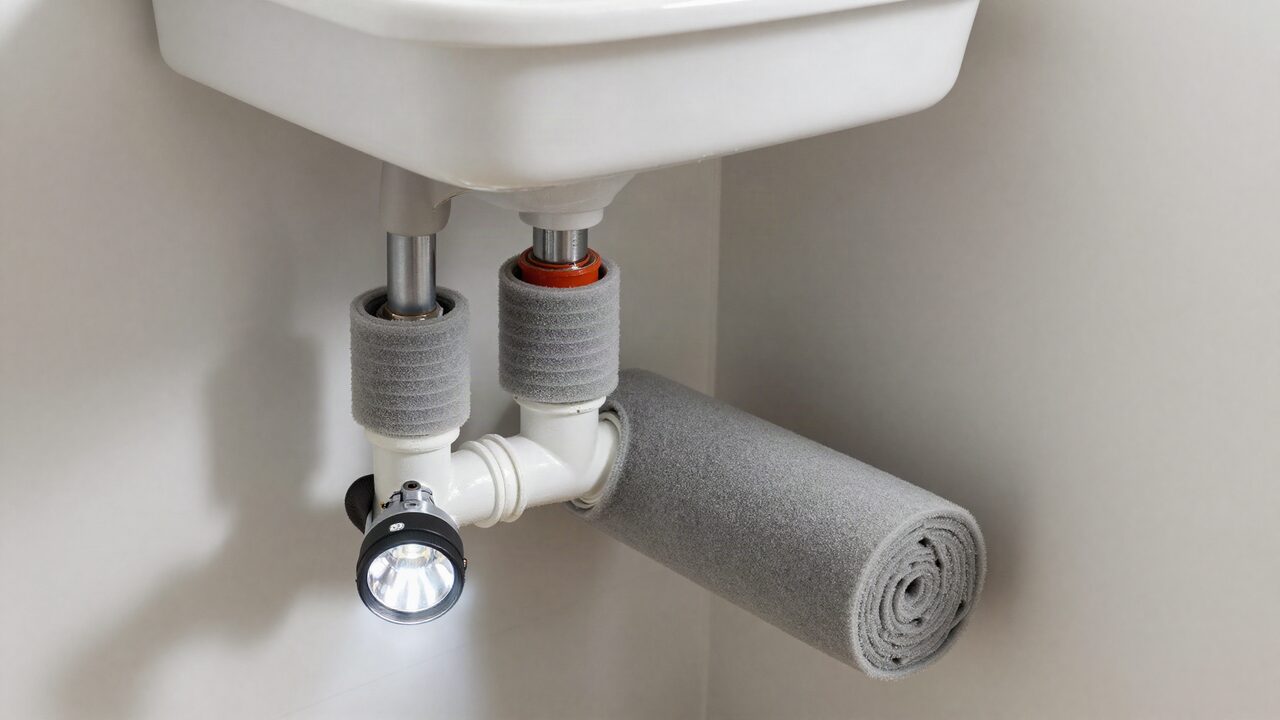
Tower Hill Insurance lists the basics: "Add foam sleeves or pipe wrap to plumbing in unheated areas." It also suggests heat cables with a built-in thermostat for the highest-risk spots. Arlington County, Virginia, gives the same advice and adds sealing drafts and insulating walls and attics near pipes.
Walk the home and find the pipes most likely to freeze:
- Pipes in a crawl space, unheated garage or basement.
- Kitchen and bathroom pipes on outside walls.
- Pipes running through an attic.
- Outdoor spigots, outdoor showers and outdoor kitchens.
- The supply line to an ice maker or a laundry room on a cold side of the house.
Outside, Tower Hill's advice is short: "Disconnect hoses, shut off exterior valves if accessible, and install insulated faucet covers." A hose left attached traps water in the spigot, which can freeze and split the pipe inside the wall.
On nights forecast to drop well below freezing, two more steps help. Tower Hill says to "open cabinet doors under sinks to help warm air circulate around your pipes," and both sources suggest a slow drip to keep water moving: Tower Hill from faucets on exterior walls, Arlington County from the faucet farthest from the main valve. In an empty rental you or your local contact will need to set these up before the cold night and reset them before the next check-in.
Thermostat settings for empty nights
Keep the heat on low between bookings, never off.
Tower Hill says to "keep your thermostat set to at least 55°F, even when you're away from home." Arlington County's version is to set it "above 55 degrees, especially if you will be away for an extended time." Those are minimums. In a home with a crawl space or pipes on outside walls, or during an unusual cold snap, many owners set it a few degrees higher for the empty nights.
A smart thermostat earns its cost in a rental. It lets you:
- Set the empty-night temperature from anywhere after checkout.
- Lock a minimum and maximum, so guests can't turn the heat off or crank it up and leave.
- Get an alert if the indoor temperature drops, which is often the first sign the furnace or heat pump has failed.
Pair it with a water leak sensor or two under sinks and near the water heater. Our guide to smart locks and noise monitors covers other connected devices that help you watch a home from a distance.
| Situation | Thermostat | Other steps |
|---|---|---|
| Normal empty night between bookings | 55°F or higher | Hoses off, spigots covered |
| Hard freeze forecast, home empty | A few degrees higher than usual | Open under-sink cabinets, slow drip on outside-wall faucets |
| Guests in the home | Guests' choice within your locked range | Freeze note in the house manual |
| Home empty for several weeks | 55°F or higher, or a full shutdown by a plumber | Consider shutting off and draining the water |
| After a power cut in freezing weather | Confirm heat came back on | Full freeze check before the next arrival |
Outdoor furniture, decks and docks
Store or cover outdoor furniture so it lasts more than a season and the deck stays safe to walk on.
Cushions, umbrellas and fabric chairs go inside, to a garage, owner's closet or storage box. Tables and hard chairs can stay out under fitted covers, stacked and tied down if the home sits somewhere windy. Leave a few chairs out if guests use the deck in winter, which at a lake house they often do for coffee and sunsets.
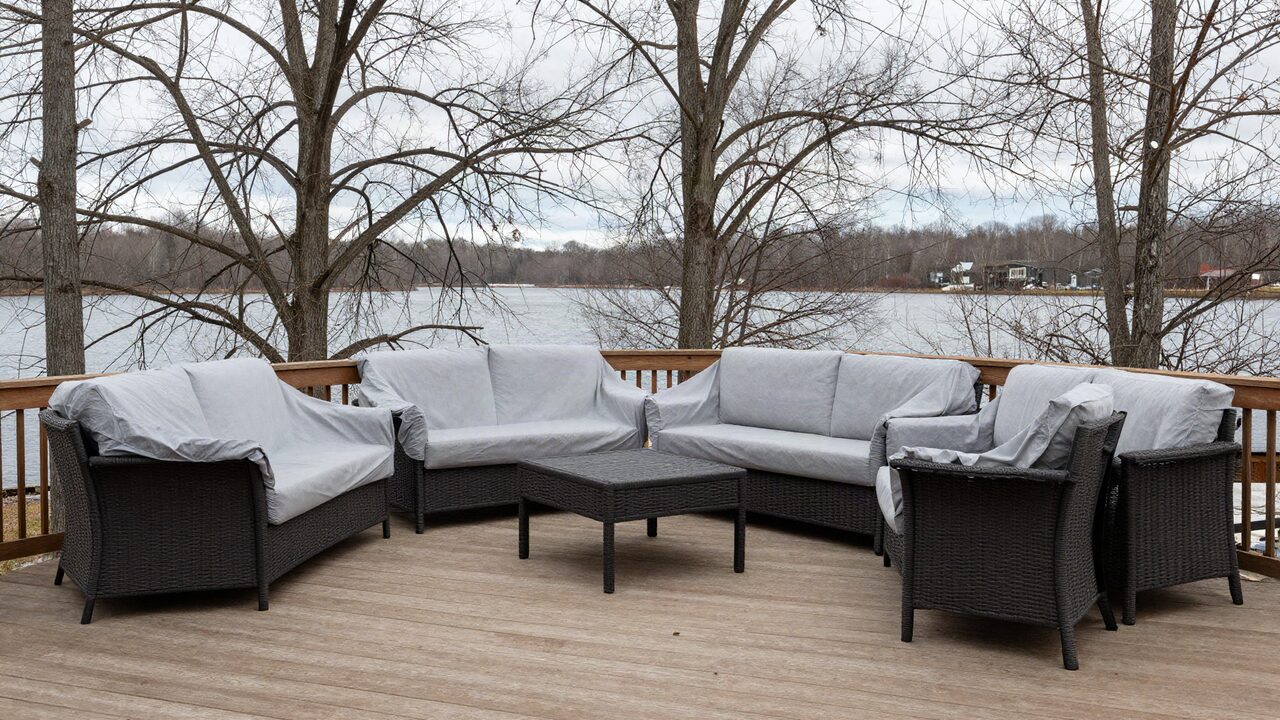
At Lake Anna, the deck and the dock are part of what guests are paying for, even in winter. Our Lake Anna in winter guide explains why the off-season draws reunions and anglers. For the owner, that means keeping steps, railings and dock boards in good repair, clearing leaves that turn slick, and checking that outdoor lights work, because winter evenings are long. If the home has a boat lift or watercraft, follow the manufacturer's winter instructions and tell guests clearly what they can and can't use.
In the Roseville area and the Sierra foothills east of it, winters are milder, but frosty nights still come, and homes higher in the foothills get colder than the valley floor. The work there is lighter: covers for furniture and grills, hose and spigot covers, and attention to outdoor kitchens, which often have exposed water lines.
Pools and hot tubs in winter
Keep a pool or hot tub circulating through winter unless a professional closes it, because moving water is the protection against freezing.
Many homes in mild climates keep the pool open all year, and many pool systems have a freeze-protection setting that runs the pump when the air temperature drops. The risk is a power cut or a tripped pump on a cold night. After any outage in freezing weather, confirm the pump is running and check exposed pool plumbing and equipment.
A hot tub is a winter selling point, so most rentals keep it heated and covered. A few habits keep it safe:
- Keep the cover locked when not in use. It holds heat in and is a basic safety measure.
- Check the water level and chemistry at every turnover, since a full house of guests uses it hard.
- Never drain it in freezing weather without fully clearing the lines. Water left in the plumbing can freeze and crack it, which is a costly repair.
- If you shut it down for a long gap, follow the manufacturer's manual or hire a spa technician.
For the liability side of pools and spas, including rules, gates and covers, see our guide to pool and hot tub liability.
Checks after a freeze
Check the home after every hard freeze, before the next group arrives, and know what to do if a pipe has frozen.
A short checklist for you, a manager or a local contact:
- Read the thermostat and confirm the heat is running and the home is warm.
- Turn on every faucet, hot and cold, and the showers. Weak or no flow can mean a frozen pipe.
- Look under every sink, behind the washer and around the water heater for drips or damp.
- Check ceilings for stains and floors for soft or warped spots.
- Look in the crawl space or basement with a flashlight.
- Walk outside to the spigots, outdoor shower, pool equipment and hot tub.
- Reset cabinets and faucets to normal and reset the thermostat.
If you find a frozen pipe, Arlington County's guidance is clear: "Shut off the water immediately at the main shut off valve" if you suspect a burst. To thaw it, the county says to warm the air around the pipe "using a hair dryer or wrapping pipes in warm towels," and never to use open flames, kerosene heaters or blowtorches. Tower Hill gives the same order: turn off the main supply and warm the pipe slowly. Once it thaws, Arlington says to "slowly turn water back on" and check all pipes and joints for leaks, and to call a plumber if you suspect a burst or can't find the frozen section.
Mark the main water shut-off and the breaker panel with a tag, and put both in the cleaner's and the house manual's instructions. When something goes wrong at night, the minutes spent finding the valve are the minutes that do the damage.
Guests, the house manual and insurance
Tell guests what you need from them in winter, and make sure your insurance and your routine match.
A short winter page in the house manual covers it: keep the heat at or above a set temperature, leave dripping faucets alone during a freeze warning, keep the hot tub cover locked, and call right away if anything is cold, leaking or not working. Guests who book directly with JekkyStay also have our Stay Promise: "If the home isn't as described, or something important stops working, such as the air conditioning or heat, hot water, Wi-Fi or the pool, tell us. If we can't fix it within 24 hours, we refund the nights affected or move your group to a similar home." That promise is only as good as the winter routine behind it, which is why we treat freeze checks as part of the turnover.
Read your policy's terms on freeze damage and vacancy, and ask your insurer or broker what they expect from you when the home is empty in winter. Our guide to short-term rental insurance lists the questions to ask.
Who does the work
You can run this routine yourself if you live close by; if you don't, you need someone local on call.
A winter routine is not hard, but it depends on someone being there the day after a freeze. Owners who live an hour or more away usually rely on a cleaner, a handyperson or a manager. If you hire a manager, ask how they handle freeze warnings, who checks the home, and how fast they respond.
Both JekkyStay management packages include "Cleaning & Maintenance Coordination" and "24/7 Guest Communication". To talk about a home in one of our markets, see our owner services or get a quote.
The bottom line
Winterizing a rental that stays booked is a routine, not a shutdown. Keep the heat at 55°F or higher on empty nights, sleeve exposed pipes, close and cover outdoor spigots, cover or store outdoor furniture and keep the pool and hot tub circulating. After every hard freeze, have someone walk the house before the next group arrives. The cost is small compared to one burst pipe in the middle of the holiday season.
Frequently asked questions
What temperature should I set the thermostat in an empty vacation rental in winter?
Tower Hill Insurance and Arlington County, Virginia both advise keeping it at 55°F or higher when nobody is home. In a very cold snap, or in a home with pipes on outside walls or in a crawl space, many owners set it a few degrees higher. Never turn the heat off between winter bookings.
Do I need to drain the pipes between winter bookings?
Usually not, if the home stays heated and booked. Draining the whole system is for a home that will sit empty for weeks or months. Between bookings, keep the heat on, protect exposed pipes, close outdoor spigots and check the home after hard freezes.
Should I drain the hot tub for winter?
Not if guests will use it. A hot tub that stays heated, covered and circulating is usually safer in a freeze than one that was drained badly, because water left in the lines can freeze and crack them. If you do shut it down, follow the manufacturer's instructions or hire a spa technician.
What should I do if a pipe freezes in my rental?
Shut off the water at the main valve if you suspect a burst, then warm the pipe slowly with a hair dryer or warm towels. Never use an open flame. Once it thaws, turn the water back on slowly and check every pipe and joint for leaks, or call a plumber.
Does a rental in a mild climate like Roseville need winterizing?
A lighter version, yes. Frosty nights still happen in the Sacramento Valley and the foothills, and the homes most at risk are the ones with exposed pipes, outdoor kitchens or pool equipment. Hose covers, pipe sleeves and a freeze check on the pool pump cover most of it.
Who checks the home after a freeze if I live far away?
A property manager, a cleaner on a set schedule or a trusted local contact. Write a short freeze checklist they can follow, and give them the location of the main water shut-off and the breaker panel.