
Quick answer
Parties are banned on both major platforms, and the owner carries the risk. Airbnb prohibits open-invite parties and disruptive gatherings of any size, Vrbo prohibits any event it judges disruptive, and cities can fine owners or revoke their rental permits for repeated nuisance complaints. Large group homes face the most scrutiny, so the work is screening well, setting clear rules and responding fast.
Key takeaways
- Airbnb bans open-invite parties and disruptive gatherings of any size, and Vrbo bans any event it decides is disruptive, even when the booking came from another site.
- The platform can suspend or remove your listing for a guest's party, so the risk lands on the owner, not only the guest.
- Cities add their own layer: Houston can revoke a rental registration for excessive nuisance violations and bans advertising a rental as an event space, and Roseville requires owners to respond within 30 minutes of a complaint.
- Large homes draw more scrutiny, so screen on the trip's purpose, the group's makeup and local same-day bookings, not on age or family size alone.
- Clear house rules, a disclosed noise monitor and a fast, calm response stop most problems before neighbors call the city.
In this guide
- What the platforms ban, in their own words
- Why the owner carries the risk
- City nuisance rules, fines and permit revocation
- How large group homes get flagged
- Screening without turning away real families
- House rules and devices that prevent most problems
- What to do when a party starts
- Where professional management helps, and where it doesn't
- The bottom line
What the platforms ban, in their own words
Both platforms ban disruptive gatherings and both can act against the host's listing, not only the guest's account. The wording below is from the policy pages as they read on November 15, 2026.
Airbnb. The Community Disturbance Policy says: "we do not allow open-invite parties, disruptive gatherings, or other community disturbances during an Airbnb reservation." Disruptive gatherings are banned "regardless of size," and open-invite gatherings include "parties advertised publicly or on social media." Hosts may not advertise a listing as party friendly, and they may not facilitate "severe or repeated disruptive gatherings or disturbances."
The policy also names what counts as a disturbance: "Excessive noise," "Excessive trash," "Trespassing," "Smoking nuisances," "Parking nuisances," "Neighborhood vandalism," and "Serious injuries or reckless behavior." On enforcement, it says: "If we determine that any community member violated this policy, we take appropriate action." That ranges from education and warnings to suspending or removing listings or accounts, and in severe or repeated cases, such as a chronic disturbance in a neighborhood, a listing can be removed.
Vrbo. Vrbo's policy is published by its parent, Expedia Group, as the Community Disturbance and Nuisance Policy. It says: "Any event that we determine to be disruptive or is otherwise in violation of this policy is not allowed." Its list includes "Any event that violates the host's house rules," "Any event that violates occupancy limits, applicable local laws, or public health limits on safe gathering size," "Any event that causes neighborhood disruption or nuisance," and "An event where the guest posted open invitations to the event, such as on social media."
Two lines matter most for owners. Vrbo lists "Events are a frequent occurrence at a property, are disruptive to the neighborhood" and "Any event where the hosts or guests did not take action to mitigate the disruption to the neighborhood." Vrbo says it will "investigate and take appropriate action, including suspension or termination," and that applies even when the booking was made on another platform.
| Airbnb | Vrbo | |
|---|---|---|
| What is banned | Open-invite parties, disruptive gatherings of any size, other community disturbances | Any event Vrbo determines is disruptive or breaks the policy |
| Small gatherings | Banned if disruptive, regardless of size | Banned if they break house rules, occupancy limits or local law |
| Party-friendly listings | Not allowed | Frequent disruptive events at a property are listed as a violation |
| Host duty | May not facilitate severe or repeated disturbances | Expected to take reasonable steps and to act when an event happens |
| Possible action | Warnings, suspension or removal of listings or accounts | Suspension or termination, even for bookings made elsewhere |
Why the owner carries the risk
A guest who throws a party may lose an account; the owner can lose a listing, a permit and a neighborhood's goodwill. That is the uneven part of event risk.
Look at the language again. Vrbo treats a host who "did not take action to mitigate the disruption" as part of the problem. Airbnb can remove a listing for a "chronic disturbance in a neighborhood." Neither platform needs a court finding or a police report to act. If your home becomes known as the house where parties happen, the platform can decide you are the problem, and you have little leverage to argue. For more on what a platform suspension does to a business that depends on one channel, see our guide to what to do if Airbnb suspends your listing.
The second cost is damage. Party damage is the kind of claim that tends to be messy: missing evidence, disputed causes and a guest who denies everything. Our guide to vacation rental damage claims covers how to document a claim, and our insurance guide for owners covers why platform protection is not a substitute for your own policy.
City nuisance rules, fines and permit revocation
Cities usually enforce through the permit: register the home, keep a contact who answers, and lose the right to rent if complaints pile up. The rules below are from each official page opened on November 15, 2026. Rules change, so check your own city before relying on any of them.
| Place | What the official page says | Why it matters for events |
|---|---|---|
| Houston, TX | Annual registration of $275 per rental; a 24-hour emergency contact number; rentals may not advertise as event spaces; the city "may revoke a certificate of registration for non-compliance with City code or excessive nuisance violations"; operating without a certificate can bring "a fine between $100 - $500 for each day of the violation" | Marketing a large home for events breaks the ordinance, and repeated complaints can end your registration |
| Roseville, CA | A permit and business license; a 10% transient occupancy tax; "All owners are required to respond to the residence within 30 minutes of a complaint" | A slow response to a noise complaint is a permit problem in itself |
| Unincorporated Sacramento County, CA | "No public or commercial events permitted"; one rental party at a time; maximum occupancy of two adults per bedroom | An event at the home is a permit violation, whatever the platform allows |
A few patterns hold across most cities that regulate rentals:
- A local contact who answers. Roseville sets 30 minutes; Houston requires a 24-hour emergency number. A neighbor who can't reach anyone calls the city instead.
- Occupancy tied to bedrooms. Sacramento County caps occupancy at two adults per bedroom. A big group that brings extra friends for the evening can push you over the line.
- Complaints become a record. Several cities route complaints through 311. Each logged call is part of the file a city reviews at renewal.
How large group homes get flagged
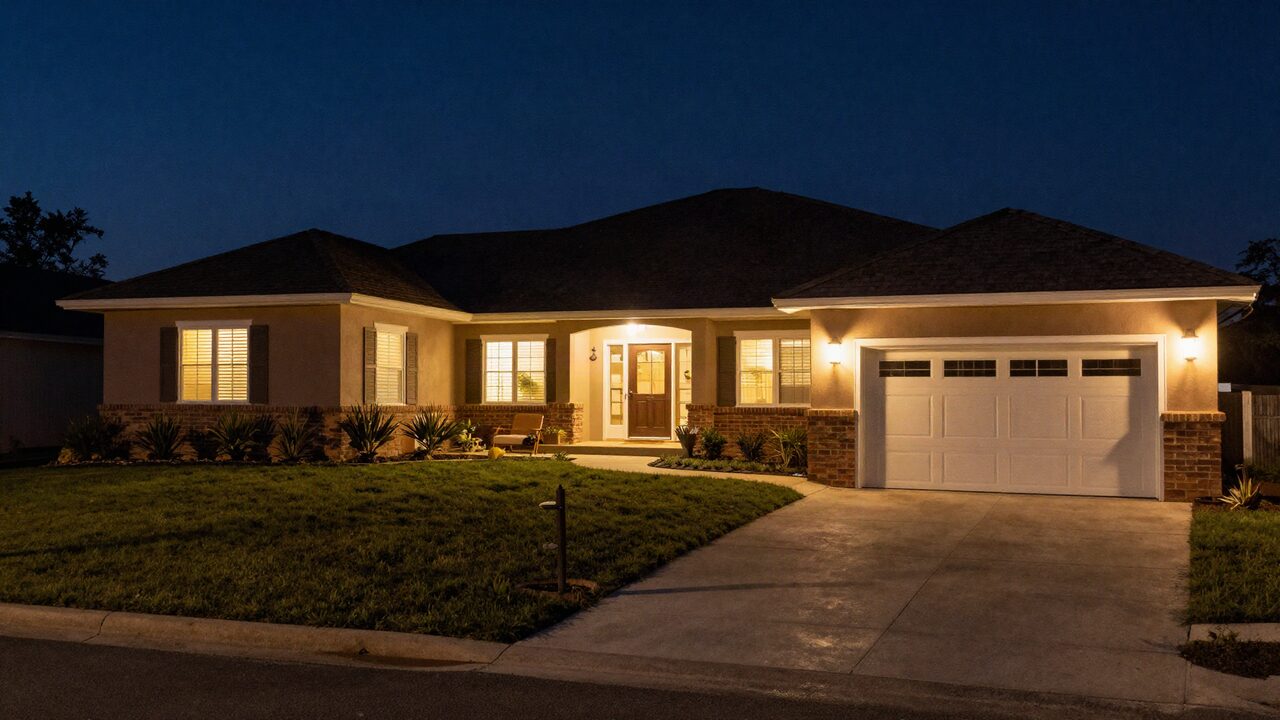
A six-bedroom house hosting 14 people on a Saturday looks, from the outside, much like a party, even when it is a family reunion. Large homes get flagged in three places: the platform's screening, the neighbors, and the city.
Platform screening. Airbnb runs automated screening on reservation attempts. In an August 16, 2022 post, it said its anti-party technology weighs signals including "history of positive reviews (or lack of positive reviews)," "length of time the guest has been on Airbnb," and "length of the trip, distance to the listing, weekend vs. weekday." The same post describes an older rule, in place in North America since 2020, aimed at guests under 25 with no positive reviews booking locally. Blocked guests can still book a private room or a hotel room. In an October 27, 2025 post about Halloween, Airbnb said its system blocked or redirected about 38,000 people in the US and 6,300 in Canada from booking entire homes over Halloween 2024, and that "fewer than approximately 0.035 percent of stays worldwide" led to an allegation of a party in 2024. Those are Airbnb's own figures.
Neighbors. Neighbors notice cars more than noise. A driveway and street full of cars on a Friday night is the first thing that prompts a complaint. Airbnb's own list of disturbances includes "Parking nuisances," and many cities cap parking at rentals.
The city. Complaints, unpermitted listings and online ads all reach code enforcement. Houston's ban on advertising as an event space means a listing that says "perfect for parties" or "event venue" is itself a problem, before any guest arrives.
Screening without turning away real families
Good screening asks every group the same questions and judges the answers, not the guest's age or the size of the family. Most large-home bookings are reunions, weddings, holidays and team trips, and those are the guests you want.
What to ask every booking, in the same words:
- What is the reason for the trip?
- Who is coming: families, couples, a team, children?
- What is the most people who will be at the home at one time, overnight guests and visitors together?
- Will anyone outside the group visit, and when?
- Have you read the house rules on quiet hours, visitors and parking?
Vrbo's policy suggests the same thing in plainer form: if a booking looks risky, "reach out to the guest and confirm the purpose of their trip."
What tends to signal risk:
| Lower risk | Higher risk |
|---|---|
| Several nights, booked weeks ahead | One Friday or Saturday night, booked the same day |
| Guests traveling from out of town | A local guest booking the biggest home nearby |
| A named occasion with details (a reunion, a wedding weekend) | Vague answers, or no answer, about the purpose |
| A guest count that matches the bed count | More guests than beds, or a count that keeps changing |
| Questions about cribs, the kitchen or nearby parks | Questions about speakers, maximum capacity or how late the pool is open |
No single signal decides it. A local family hosting out-of-town relatives is a normal booking; a one-night local booking with vague answers deserves a closer look. Set a minimum stay for weekends. Airbnb's host tips suggest "Set a 2-night minimum for stays." It removes most one-night party bookings at the cost of some short trips.
For the full screening and payment side, see our guide to guest screening and chargebacks.
House rules and devices that prevent most problems
Clear rules set before booking, plus a disclosed noise monitor, stop most parties before they start. Airbnb's host tips say: "Use your house rules to set maximum overnight guests and indicate quiet hours," and suggest stating "No parties or events" in the listing.
A rule set that works for a large group home:
- A maximum number of overnight guests, and a separate limit on daytime visitors.
- Quiet hours, with the outdoor areas, pool and hot tub closed during them.
- A parking limit with the number of cars allowed and where they go.
- A plain statement: no parties, no events, no open invitations.
- What happens if the rules are broken, in calm language.
Our guest-facing guide to vacation rental house rules for groups shows how these rules read from the guest's side, and the house rules template gives wording you can adapt.
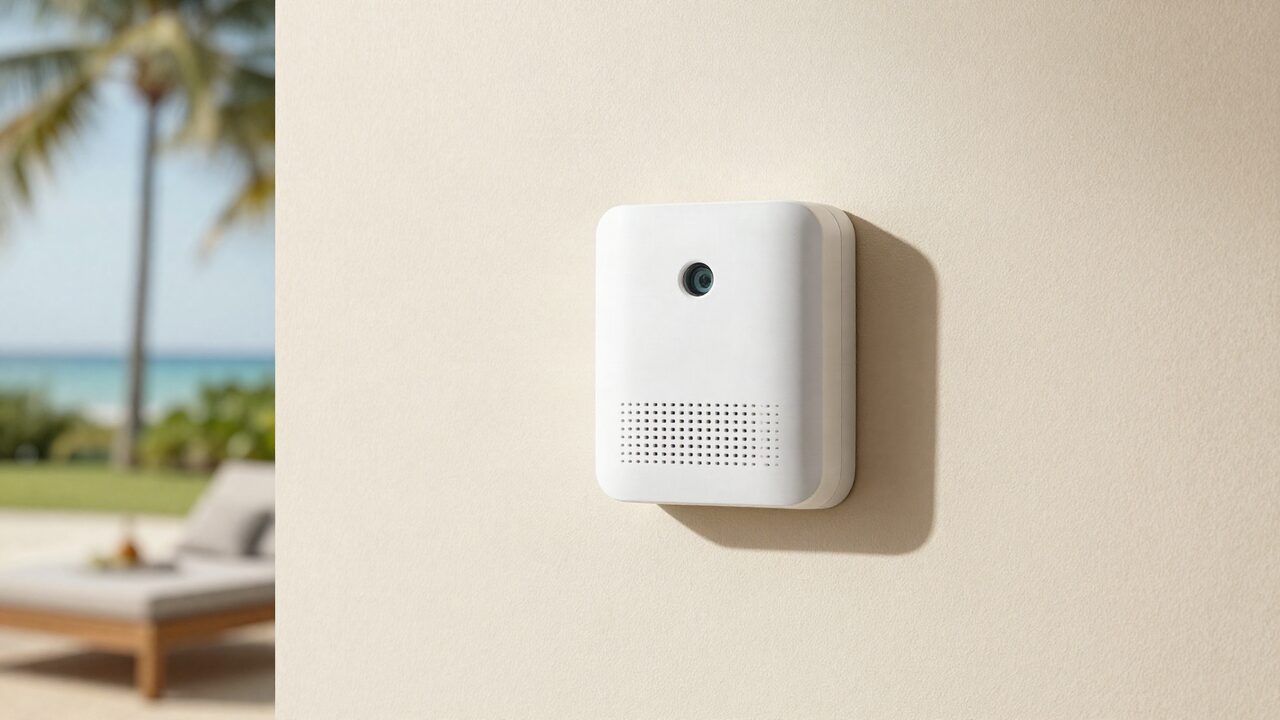
On devices, Airbnb's tips say "Noise decibel monitors and exterior security cameras can help alert you if a disruptive party does happen," and require you to disclose either one in the listing. Use a monitor that measures volume without recording sound, and set the first alert to send a friendly message, not a penalty. Our guide to smart locks and noise monitors covers placement and disclosure. A lock code that expires at checkout also matters: it stops a group from handing the code to extra visitors after the stay.
What to do when a party starts
Act early, stay off the property and keep a record. Airbnb's tips say "Early intervention can be key to preventing a party from getting out of control" and "Never confront a guest in person."
- Message the guest through the platform and ask them to stop. Keep it short and factual.
- Contact the platform's support team and share evidence: noise readings, neighbor messages, exterior video from a disclosed camera.
- If anyone is at risk, call local emergency services first.
- If the guests don't respond, Airbnb says it "can help you cancel the reservation," and after cancellation, local non-emergency services may help get guests to leave.
- Call the neighbor who complained, tell them what you did, and log the time of every step for the city file and any damage claim.
Where professional management helps, and where it doesn't
A manager helps most with the response: answering a neighbor at midnight, messaging guests within minutes and keeping the record. It helps less if your city or HOA rules make a large group home a poor fit to begin with. No manager can fix a home on a street where every weekend booking draws a complaint, or a permit that caps occupancy below what the house sleeps.
If you self-manage, the hard part is being reachable at 11pm on a Saturday for years. Roseville's 30-minute response rule is a good test: if you can't meet it reliably, plan for a local contact or a manager. Our comparison of self-managing or hiring a manager walks through that choice honestly.
JekkyStay manages large group homes for owners. Both packages on our owner pricing page include 24/7 Guest Communication, Smart Home Integration and Cleaning & Maintenance Coordination, and the Premium package adds a Dedicated Property Manager. See how we work with owners, or get a quote for your home.
The bottom line
Airbnb and Vrbo both ban disruptive gatherings, and both can act against the owner's listing for a guest's party. Cities add fines, response-time rules and permit revocation. Large group homes draw the most scrutiny, so ask every group the same questions about the trip, set clear rules and a weekend minimum, disclose a noise monitor, and answer every complaint fast. That keeps families booking and the neighbors on your side.
Frequently asked questions
Does Airbnb allow parties at all?
Airbnb's Community Disturbance Policy says it does not allow open-invite parties, disruptive gatherings or other community disturbances during a reservation, and that disruptive gatherings are banned regardless of size. A quiet family dinner is not a party, but noise, trash, parking problems or a gathering advertised on social media can all count as a disturbance.
Can an owner lose a listing because of a guest's party?
Yes. Airbnb lists warnings and suspension or removal of listings or accounts among its actions, and Vrbo's policy says it will investigate and take action, including suspension or termination. Both apply to hosts as well as guests, so a pattern of complaints can cost you the listing.
Can I allow a small event, such as a birthday dinner, at my rental?
You can set a written rule for small, approved gatherings, but local law and the platform policy still apply. Vrbo counts any event that breaks the house rules, occupancy limits or local law as prohibited, and some cities and counties ban public or commercial events at rentals outright. Check your city's rules first and put the guest limit in writing.
Are noise monitors allowed in a vacation rental?
Airbnb's tips for hosts say noise decibel monitors and exterior security cameras can help alert you to a party, and that you must disclose either one in the listing. Use a device that measures volume without recording sound, and keep it out of bedrooms and bathrooms.
How do I screen out party bookings without turning away families?
Ask every group the same questions about the trip: the reason for the visit, who is coming, and how many people will be at the home at any time. Watch for local, last-minute, one-night weekend bookings with vague answers, and judge the answers rather than the guest's age or the size of the family.
What should I do if a party starts during a stay?
Do not go to the home to confront the guests. Message them through the platform, ask them to stop, and contact the platform's support team with evidence such as noise readings or neighbor messages. If anyone is at risk, call local emergency services first.
Sources
- Airbnb Help Center: Community Disturbance Policy
- Airbnb Resource Center: tips to help prevent disruptive parties
- Airbnb Newsroom: new anti-party technology in the US and Canada (Aug 16, 2022)
- Airbnb Newsroom: anti-party system for Halloween (Oct 27, 2025)
- Expedia Group (Vrbo): Community Disturbance and Nuisance Policy
- City of Houston: short-term rental ordinance announcement
- City of Roseville: short-term rental permits
- Sacramento County: short-term rental permits