Quick answer
A group trip itinerary everyone enjoys has one anchor activity a day that the whole group does together, real free time around it, and room to split into small groups by interest. Build each day around that anchor, protect a shared dinner, and leave the rest open.
Key takeaways
- Plan one anchor activity a day that the whole group does together, and book it ahead.
- Leave at least half of each day unplanned. Free time is what keeps a group of 12 from wearing each other out.
- Split into small groups by interest for part of each day, then meet again at a set time and place.
- Make the shared house dinner a fixed part of the plan; it is the one meal everyone can attend.
- Put the plan in one shared place, such as a shared calendar and a shared map list, so nobody has to ask the organizer.
In this guide
Why most group itineraries fail
Most group plans fail because they try to fit too much in, and the whole group moves at the pace of its slowest member.
Twelve people take longer to do everything than four. Getting out the door, parking, finding a table, using the restroom and agreeing on the next stop all scale with the size of the group. A plan that would work for a couple, with four stops a day, becomes a day of waiting for a group.
The second reason is that one person plans the trip they want. The organizer loves museums, so there are three museums. The teenagers check out by noon and the grandparents are tired by two. Nobody says anything, and the trip feels long.
The fix is a simple structure that you repeat every day:
| Part of the day | What happens | Who goes |
|---|---|---|
| Morning | The anchor activity | Everyone |
| Midday | Lunch, then rest or free time | Everyone eats; then free |
| Afternoon | Optional outings | Small groups by interest |
| Evening | Shared dinner at the house | Everyone |
This leaves the group together for the two things that matter most, the anchor and the dinner, and gives everyone room in between.
Pick one anchor activity a day
An anchor activity is the one thing the whole group does together each day, and it should be chosen from what most people want.
Start by asking everyone for one thing they really want to do on the trip. Use a poll in the group chat or a short shared list. Then look for overlaps. If six people want the water and four want a museum, a morning on the lake and a museum option the next day covers both.
Good anchors for a mixed group have a few things in common:
- Everyone can do them: a theme park, a boat day, a ballgame, a scenic drive, a big outdoor market.
- They have a clear start time, so the group has a reason to be ready.
- They are worth booking ahead, so you lock in tickets, tables or a boat for the whole group.
- They end by early afternoon, which leaves time for rest and small groups.
Book the anchors as soon as the dates are set. Tickets, tours and tables for 10 or more go first, and some venues have group rates or group desks. Check the current price on their site before you share costs with the group.
Leave real free time
Free time is part of the plan, not a gap in it, and it is what keeps a group from wearing each other out.
Plan roughly half of each day and leave the other half open. In a large home, free time is easy: some people nap, some sit by the pool, some take the kids to a park, and someone starts dinner. Nobody needs to organize it.
Free time matters most for groups with young children or older relatives. A daily rest window after lunch protects both. Our guide to multigenerational family trips covers pacing for groups with grandparents and toddlers in more detail.
Split into small groups by interest
For part of each day, split into small groups of three to six people by interest, then meet again at a set time and place.
Splitting is what lets a group with very different tastes enjoy the same trip. The golfers play nine holes, the shoppers go downtown, the kids go to the pool, and the person who wants a quiet afternoon gets one. Everyone comes back to the house with something to talk about at dinner.
A few rules make splitting work:
- Each small group has a driver and a return time, agreed before they leave.
- Cars are planned the night before, so nobody is stranded at the house.
- Costs for optional outings are pay-your-own, unless the group agreed otherwise.
- Nobody has to justify skipping. Staying at the house is a valid choice.
Money is where small groups cause friction, so settle the rules before the trip. Our guide to splitting costs on a group vacation rental covers what to share and what to pay separately.
Put the plan in one shared place
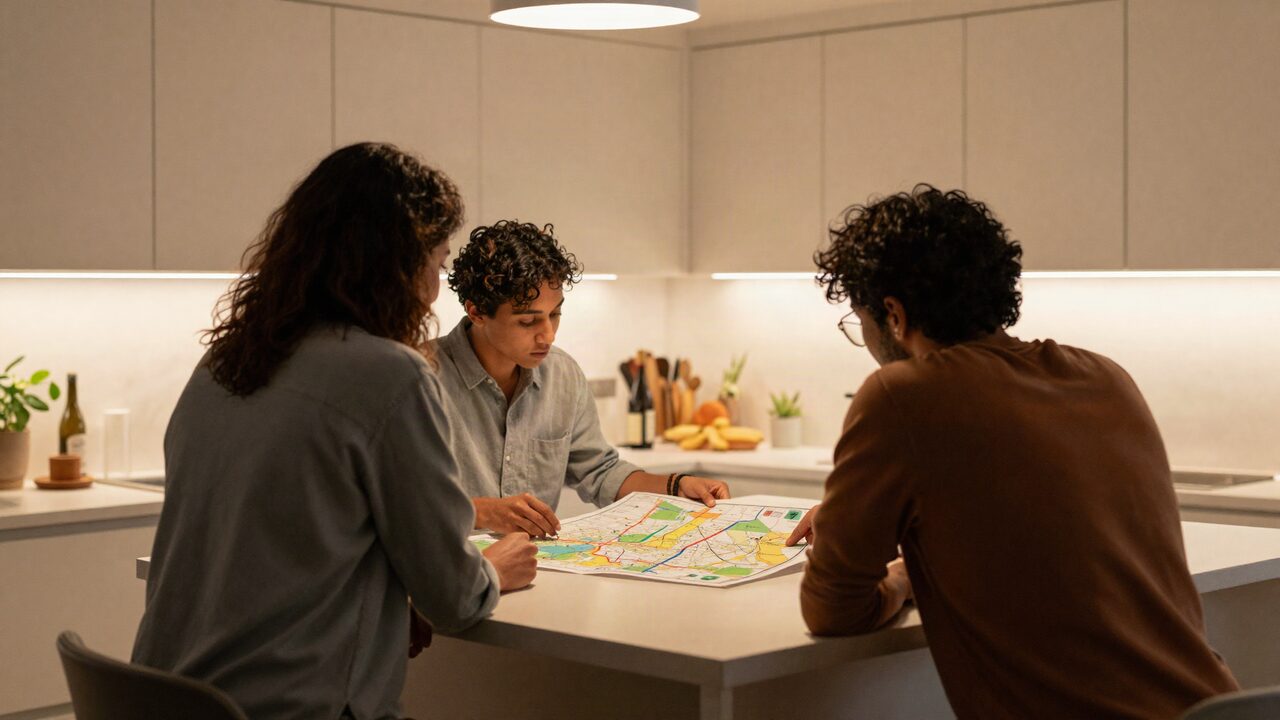
The plan should live in one place everyone can open on a phone, so nobody has to ask the organizer for the address or start time.
A simple setup that works for most groups:
- A shared calendar for times. Google Calendar lets you create a separate calendar for the trip and add events to it. The person who creates it owns it, and only the owner can permanently delete it or transfer ownership.
- A shared map list for places. Google Maps lets you create a list of places, share a link to view it, and invite collaborators so others can add places too. Put the house, the anchors, the grocery store and a few backup restaurants on it.
- A pinned message in the group chat with links to both, the house check-in details and the house rules.

At the house, a printed one-page plan on the fridge or a sticky-note board on the kitchen wall helps too. It answers "what are we doing today?" at breakfast without anyone opening a phone. Share the house rules at the same time, so quiet hours and visitor rules are clear from the first night.
A sample 3-day plan
Example: a Friday to Sunday trip for a group of 12, with eight adults and four kids, staying in one large rental home.
| Day | Morning | Afternoon | Evening |
|---|---|---|---|
| Friday | Travel and arrive | Check in, groceries, settle into rooms | Easy dinner at the house: tacos or pizza |
| Saturday | Anchor: the group's top-voted outing, booked ahead | Rest window, then small groups: pool, shopping, golf or a short hike | Big cooked dinner at the house, games after |
| Sunday | Anchor: a lighter outing, such as a brunch out or a walk on a trail | Pack, clean up, check out | Travel home |
How the plan works:
- Friday has no anchor. Travel and check-in take most of the day for 12 people, and a simple dinner lets late arrivals catch up.
- Saturday is the big day. The anchor runs in the morning while everyone has energy, and the afternoon is free.
- Saturday dinner is the center of the trip. Assign two or three cooks and a cleanup crew so it does not fall on one person.
- Sunday is short. A brunch or easy walk gives the group one more shared outing before checkout.
For a longer trip, repeat Saturday's shape with a different anchor each day, and add a full free day in the middle of anything over four nights. For destination ideas, see our guides to things to do in Sacramento with a large group and things to do in Kissimmee besides the theme parks, and check what's on in each of our cities for this year's events.
Where you stay shapes the plan
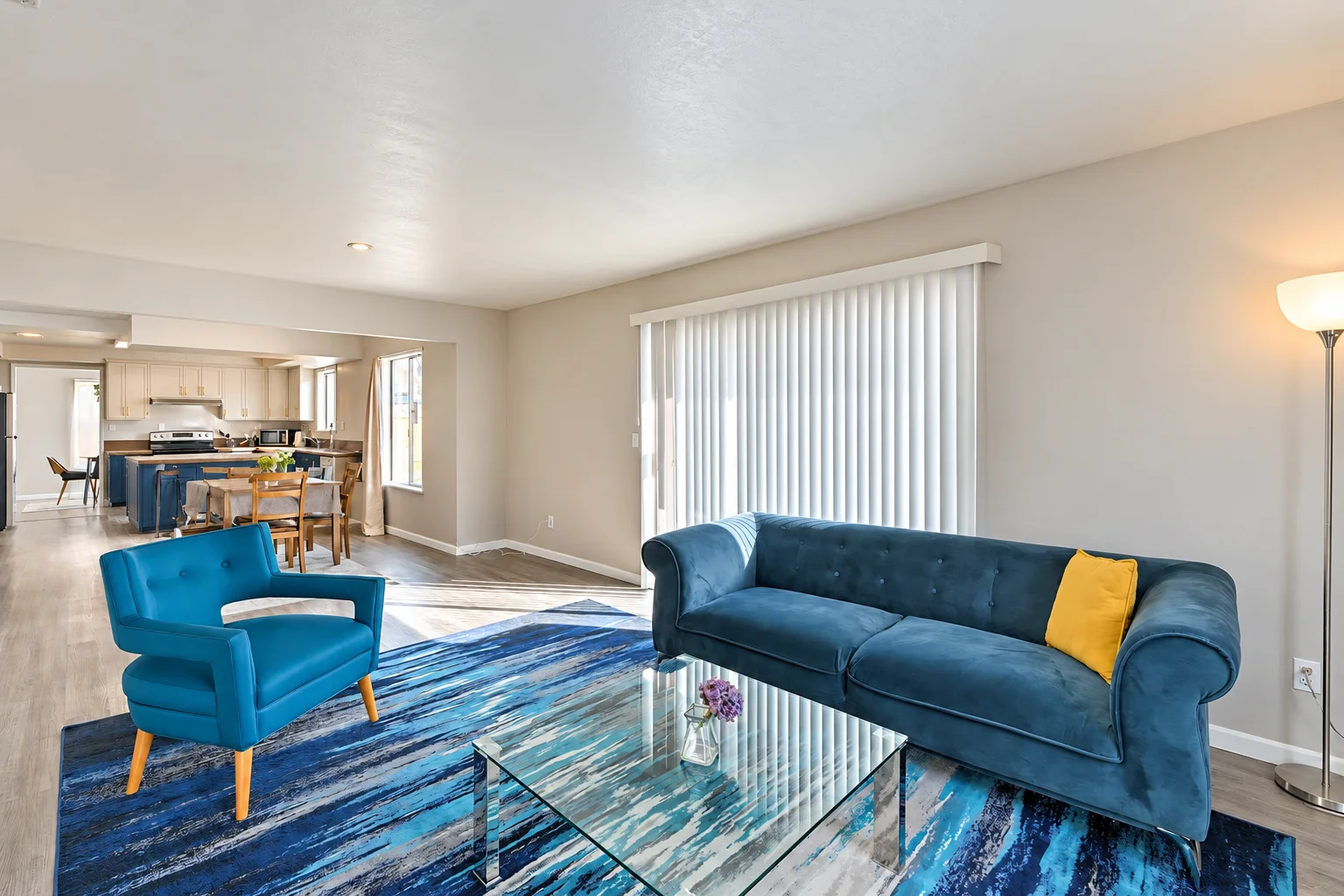
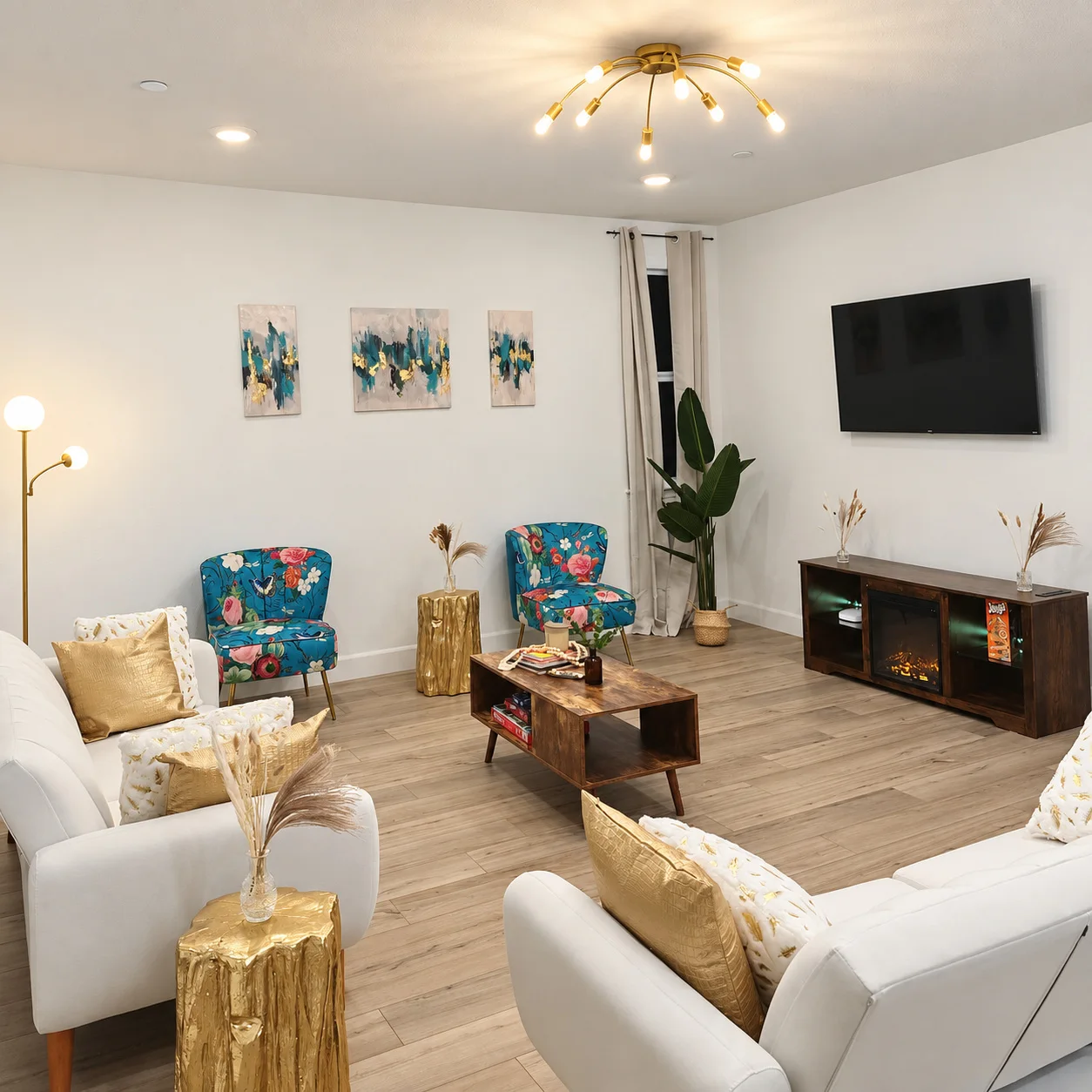
A large home makes this kind of itinerary much easier, because the group has one base for free time and shared dinners.
In hotel rooms, free time means everyone goes to their own room, and dinner means finding a restaurant table for 12. In a house, the kitchen, living room and backyard become the place the group spends its unplanned time, and the shared dinner costs less and lasts longer. A good layout helps too: bedrooms on separate floors let early sleepers rest while others stay up.
Browse our homes for groups, or see our pages for group getaways and family reunions. If you are still choosing a house, our guide to choosing a vacation rental for a large group covers what to check before you book.
The bottom line
A group itinerary works when it does less. Pick one anchor activity a day from what most people want, book it ahead, and leave the afternoon open. Let people split into small groups by interest, protect a shared dinner every night, and keep the whole plan in one shared place. The trip people remember is usually the one where nobody felt rushed.
Frequently asked questions
How many activities should a group trip have per day?
One anchor activity for the whole group, plus one or two optional ones. More than that and the slowest person sets the pace for everyone, and the group spends the day waiting in parking lots.
How do you plan a trip for a group with different interests?
Ask everyone for one thing they really want to do, choose the anchor activities from the overlaps, and split into small groups for the rest. Meet again at a set time, ideally for dinner.
How much free time should a group itinerary include?
Plan roughly half of each day and leave the rest open. For groups with young children or older relatives, keep an afternoon rest window every day.
What is the best way to share a group trip itinerary?
Use one shared place everyone can open on a phone: a shared calendar for times, a shared map list for places, and a pinned message in the group chat that links to both. Google Maps lets you invite collaborators to a list so others can add places.
Should a group book activities in advance?
Book the anchor activities and any group dinner out in advance, because tables and tickets for 10 or more go first. Leave optional activities unbooked so small groups can decide on the day.
How do you handle costs for group activities?
Agree before the trip which costs are shared, such as the house and groceries, and which are pay-your-own, such as optional outings. Track shared costs in one place and settle up at the end.