Quick answer
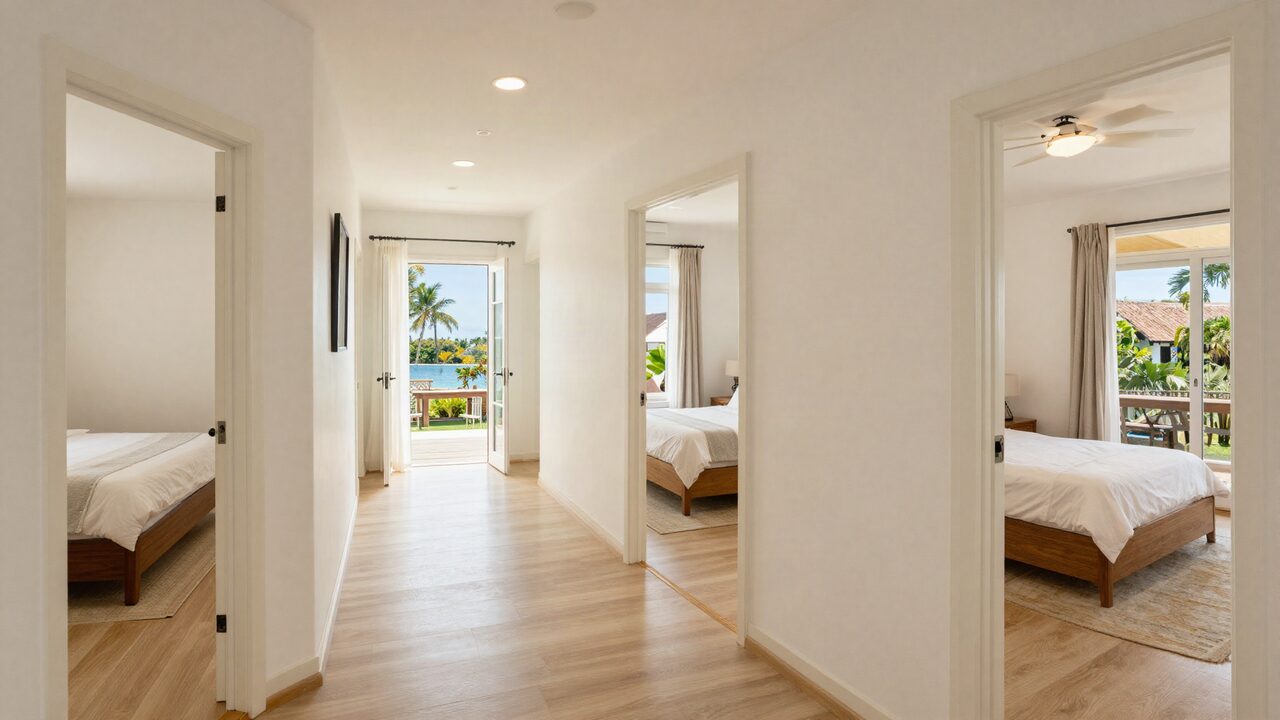
Most groups need one bedroom per couple, one per single adult who wants privacy, and one for every two or three kids, plus one spare. For a typical family group of 10 to 12, that means four to six bedrooms. Count bedrooms with doors, not total beds, and check the bathroom count too.
Key takeaways
- Count one bedroom per couple, one per single adult who wants privacy, and one for every two or three kids, then add one spare.
- Bedrooms matter more than beds: sofa beds and air mattresses add sleeping spots, not privacy.
- Give snorers and light sleepers rooms at opposite ends of the house, ideally on different floors.
- Bunk rooms stretch a house for families, but the CPSC warns against children under 6 on an upper bunk.
- Check the home's maximum occupancy and bathroom count alongside the bedroom count.
In this guide
The quick table by group size
Here is a starting point for common group sizes, assuming a mix of couples, a few single adults and some kids.
| Group size | Typical mix | Bedrooms to look for | Bathrooms to look for |
|---|---|---|---|
| 6 | 2 couples, 2 kids | 3 | 2 |
| 8 | 3 couples, 2 kids | 4 | 2 to 3 |
| 10 | 4 couples, 2 kids | 4 to 5 | 3 |
| 12 | 4 couples, 2 single adults, 2 kids | 5 to 6 | 3 to 4 |
| 14 | 5 couples, 1 single adult, 3 kids | 6 | 4 |
| 16 | 5 couples, 2 single adults, 4 kids | 6 to 7 | 4 to 5 |
| 20 | 6 couples, 2 single adults, 6 kids | 8 or more, or two homes | 5 or more |
Adjust the row to your group. Ten friends who are all single adults need many more rooms than ten people who are four couples and two toddlers. Use the counting method below for your actual list of names.
How to count: a simple method
Write down every person, sort them into sleeping units, and give each unit a room.
- Couples: one bedroom each. Couples expect a door and a bed for two.
- Single adults: one bedroom each if they want privacy. Two friends or siblings may be happy to share a room with two beds.
- Babies and toddlers: in their parents' room, with a crib or travel cot. Ask the host whether one is provided.
- Kids roughly 4 to 12: two or three to a room, grouped by age, or four in a bunk room.
- Teenagers: two to a room, or on sofa beds if they volunteer. Many teens prefer a shared room with cousins to a room with their parents.
- Grandparents and anyone with mobility needs: a ground floor bedroom close to a bathroom.
- One spare: for a snorer, a late joiner, a baby who will not settle, or someone who needs a nap.
Beds versus bedrooms
A listing that "sleeps 16" may have five bedrooms plus sofa beds and air mattresses, so read the bed list, not just the headline number.
Sleeping capacity counts every place a body can lie down. Bedrooms count doors. The gap between those two numbers is where group trips go wrong: the guests who end up on the living room sofa bed sleep with no privacy, go to bed only after everyone else does, and wake up when the first person makes coffee.
Look at three numbers together:
- Bedrooms: how many units can have their own room.
- Beds by type: king, queen, double, twin, bunk, sofa bed, air mattress. A queen in every room suits couples; twins and bunks suit kids and friends.
- Maximum occupancy: the limit the host and the local rules set. Never plan to go over it, even with air mattresses.
For example, JekkyStay's Sacramento home has seven bedrooms, four bathrooms and a maximum of 16 guests, which suits a large family that wants most couples in their own rooms. Our Kissimmee home takes up to 16 guests across six bedrooms, one of them a four-bed bunk room, which suits families with several kids.
Couples, kids, singles and snorers
Each kind of guest has different needs, and a good room plan handles all of them at once.
Couples want a bed for two and a door. Give the largest rooms or en-suite bathrooms to the couples who are paying the most, or rotate them across trips. Settle this before arrival, not in the hallway with luggage.
Kids usually sleep best near their parents but have more fun with cousins. A kids' room next to the parents' room gives both. Keep babies in their parents' room.
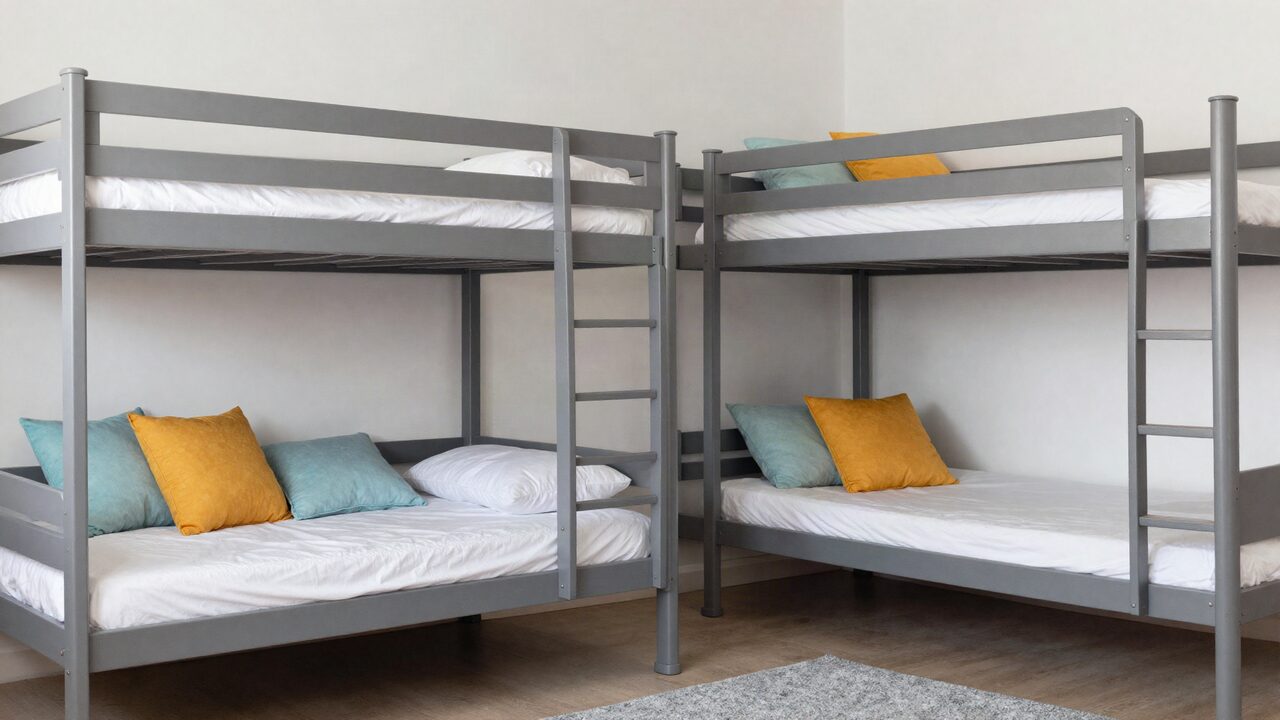
Bunk rooms are a great way to fit more kids into fewer bedrooms. The U.S. Consumer Product Safety Commission has long urged parents not to let children under 6 sleep on an upper bunk, and the industry standard it cites requires guardrails on both sides of the top bunk. Put the youngest kids on the bottom.
Single adults often get squeezed. A friend group of single adults, or an aunt traveling alone at a family reunion, deserves a room as much as a couple does. If two singles agree to share, make sure the room has two beds.
Snorers are the most common reason a room plan falls apart. The Sleep Foundation says "more than a quarter of adults experience snoring on a regular basis," so in a group of 12 adults you should expect several. Put known snorers at one end of the house and light sleepers at the other, ideally on different floors. Ask people ahead of time; most will tell you.
Grandparents need a ground floor room near a bathroom, away from the late-night games. Our guide to multigenerational family trips has more on planning for several ages at once.
Bathrooms, parking and common space
The bedroom count is only half of the fit; bathrooms, parking and shared space decide how the trip feels each day.
Bathrooms: a common rule of thumb is one bathroom for every three to four people. A house with 14 guests and two bathrooms means a line every morning. On a wedding day or a morning with an early start, that line becomes a problem.
Parking: count cars, not people. Ask how many cars fit in the driveway and garage, and whether street parking is allowed.
Common space: a group of 16 needs a dining table or a kitchen island where most of them can sit at once, plus a second space such as a game room or patio so not everyone is in one room.
When one house is not enough
For groups above about 20, or groups with many single adults, two nearby homes can work better than one very large one.
Very large homes are rare, and they often come with stricter rules on events and occupancy. Two homes on the same street or a short drive apart give everyone a bedroom and can cost about the same per person. Pick one home as the gathering place for dinners and keep the other quieter for families with small kids.
When you have the count, our guides to choosing a vacation rental for a large group and splitting costs on a group rental cover the next steps. You can also browse our homes for groups or see what we offer for family reunions.
The bottom line
Count people, not beds: one bedroom per couple, one per single adult who wants privacy, one for every two or three kids, and a spare for the snorer or the late arrival. Check the bed types, the maximum occupancy and the bathroom count before you book. For most family groups of 10 to 16, that means a home with five to seven bedrooms and at least three or four bathrooms.
Frequently asked questions
How many bedrooms do I need for 10 people?
Usually four or five. Ten people made up of four couples and two kids fit in five bedrooms comfortably, or four if the kids share with a cousin or sleep in a bunk room. Ten single adults who want their own space need closer to eight.
How many bedrooms do I need for 15 people?
Usually six or seven. Count couples, single adults and kids separately, then add a spare room for a snorer, a late arrival or a baby who needs a quiet space.
Do sofa beds count as a bedroom?
No. A sofa bed in the living room adds a place to sleep but no door and no privacy, and that person is the first one up when the kitchen opens. Use sofa beds for teenagers, short stays or guests who do not mind, not as a substitute for a room.
Can kids share a room on a group trip?
Yes, and most kids enjoy it. Two or three children of similar ages per room works well, and a bunk room can take four. Keep babies and toddlers with their parents, and keep children under 6 off upper bunks, as the CPSC advises.
Where should a snorer sleep in a shared house?
In a room at the far end of the house from light sleepers, ideally on a different floor, with the door closed. Bring earplugs or white noise for anyone nearby.
How many bathrooms does a group need?
A common rule of thumb is one bathroom for every three to four people. With fewer than that, stagger showers and agree on a morning order, especially on a wedding or event day.