
Quick answer
Due diligence on a short-term rental means checking six things before your contingency ends: the rental rules for that parcel, the house itself, the seller's records, your own insurance quotes, the utility history and the HOA documents. Each one can change the numbers, and any one of them can be a reason to walk away.
Key takeaways
- Use the contingency period for six checks: rules, a full inspection plus specialist add-ons, the seller's records, real insurance quotes, utility history and HOA documents.
- A standard home inspection is visual and not technically exhaustive; pools, spas and radon are often outside it unless you add them in writing.
- Ask for the seller's booking data straight from the platform and the tax filings that match it, not a spreadsheet summary.
- Airbnb says an account can't be transferred and reservations can't be moved to a new host, so plan for a new listing with no reviews.
- Rerun the deal with your own quotes and costs before the contingency ends, and walk away if the numbers or the rules don't hold up.
In this guide
- Why a rental purchase needs more checking
- Step 1: confirm the rules for this parcel
- Step 2: inspect the house and its rental features
- Step 3: verify the seller's records
- Step 4: get real insurance quotes
- Step 5: pull the utility history
- Step 6: read every HOA document
- Put it back into the numbers
- The bottom line
Why a rental purchase needs more checking
A short-term rental is a house and a small business at the same time, so you are checking both.
A normal buyer asks whether the house is sound and fairly priced. A rental buyer also has to ask whether the business can legally run there, whether the income the seller shows is real, and whether the costs will look the same once the home is in your name. The answers come from different places: the city, an inspector, the seller's platform accounts, insurers, utility companies and the HOA.
Most of this has to fit inside the inspection or due diligence period in your purchase contract. Negotiate enough days to book specialists and get quotes, and put the document requests in writing early.
| Check | What you are confirming | Who it comes from |
|---|---|---|
| Rules | A short-term rental is allowed at this parcel, with the permits and taxes it needs | City or county planning, tax offices, HOA |
| Inspection | The house and its rental features are sound | Licensed inspector plus specialists |
| Seller records | The income and costs are real | Seller's platform data, bank and tax records |
| Insurance | You can insure it as a rental, at a price the deal can carry | Insurers and brokers |
| Utilities | The real running costs with guests in the home | Utility bills, service accounts |
| HOA | The association allows rentals and is financially sound | HOA documents and disclosures |
Step 1: confirm the rules for this parcel
Start with the rules, because the rest of the work is wasted if a rental is not allowed.
Our guide on how to check a city's short-term rental rules before you buy walks through zoning, permits, caps and tax registration in detail, so this checklist only covers what to do with it during escrow:
- Get a written answer from the planning office on whether a short-term rental is allowed at this parcel, and keep it.
- Ask whether the seller's permit or registration transfers to a new owner. In many places it does not, and a new owner must apply.
- Check for a waitlist or cap that would stop you getting a new permit.
- List every tax account the business needs and when you must register.
Airbnb's responsible hosting page for the United States tells hosts to "look up any local taxes or business license requirements that may apply," along with permitting, zoning, safety and health rules. That is your job as the buyer, not the seller's.
Step 2: inspect the house and its rental features
Book a full home inspection, then add specialists for anything a standard inspection leaves out.
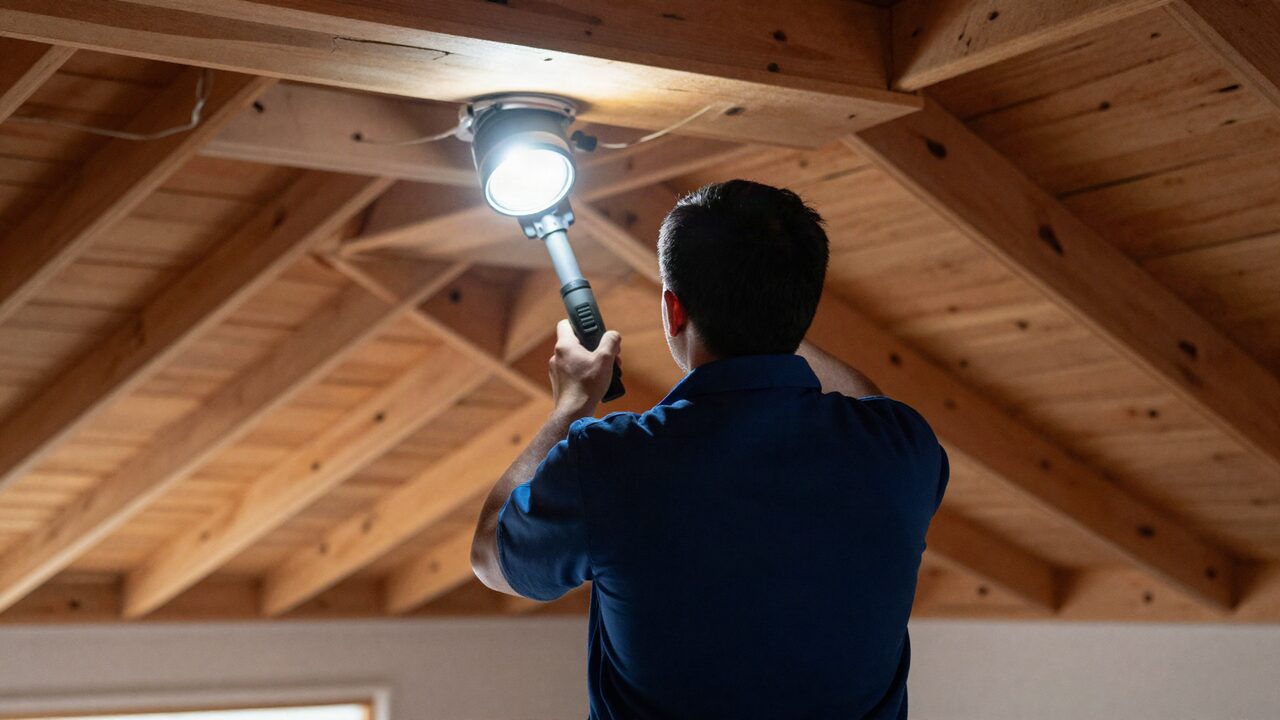
Know what a general inspection does and does not do. InterNACHI's Home Inspection Standards of Practice say an inspection is "not technically exhaustive" and "will not identify concealed or latent defects." The inspector is not required to determine "the service life expectancy of any component or system," to "inspect swimming pools or spas," or to "walk on any roof surface." The inspector inspects the roof "from ground level or the eaves" and is not required to enter attics that are not readily accessible or unsafe.
That means a rental buyer usually needs more than one visit. Common add-ons:
- Pool and hot tub. A specialist checks the equipment, heater, pump, surfaces, barriers and alarms. Pools and hot tubs are where much rental liability sits.
- Roof. A roofer gives an age estimate and remaining life, which also matters for insurance in many states.
- HVAC. A technician checks age and condition. A large rental runs its systems hard, and failure during a booking is a refund.
- Sewer line. A camera scope finds root intrusion or breaks. Group stays put heavy load on plumbing.
- Septic and well, where the home has them. Ask for pumping and test records too.
- Radon. ASHI's Radon Mitigation Systems Standard says it does not apply to a home inspection under the ASHI Standard of Practice "unless the inspector and the client expressly agree in writing to include this additional inspection." If radon testing is advised in your area, add it in writing.
- Wood-destroying organisms, where lenders or local practice call for it.
- Fire and life safety. Smoke and carbon monoxide alarms, egress windows in bedrooms and extinguishers, checked against local rental rules.
On choosing an inspector, ASHI's consumer page notes that "thirty-four of the 50 states in the U.S. require home inspectors to be licensed" and recommends researching candidates before you decide. Ask for a sample report, ask what is excluded, and attend the inspection if you can.
Step 3: verify the seller's records
The seller's numbers are a claim, and your job in escrow is to check them against records the seller did not type.
Ask for these, ideally as a contract condition with a deadline:
- Platform data. Payout reports or a screen share of each host dashboard showing reservations, nights, rates, cancellations and payouts for at least the last 12 to 24 months.
- Bank deposits that match the payouts.
- Lodging tax filings for the same period. Taxable receipts should line up with the bookings.
- The tax return schedule for the property, such as Schedule E, if the seller will share it.
- Expense records: cleaning, supplies, repairs, software, management fees, utilities, insurance and HOA dues.
- Reviews and guest messages, to spot recurring complaints about noise, parking, the pool or neighbors.
- Maintenance records and warranties for the roof, HVAC, water heaters, pool equipment and appliances.
- The furniture and contents list, and whether it is included in the price.
- Future bookings, with what happens to each one at closing.
That last item matters. Airbnb's help article on merging accounts or transferring ownership says "there isn't a way to transfer ownership of an Airbnb account to a different host" and that "reservations can't be transferred to a new host or account." In practice, a buyer usually starts a new listing with no reviews, and the seller's future bookings have to be handled by written agreement between the two of you. Price in a ramp-up period; our guide to the ramp-up year for a new short-term rental covers what that can look like.
Step 4: get real insurance quotes
Get written insurance quotes for the home as a short-term rental before your contingency ends; the seller's premium is not your premium.
Ask at least two insurers or a broker for a quote that names the use, the number of guests, the pool or hot tub, and the liability limit you want. Ask about deductibles, wind or hurricane deductibles where they apply, exclusions for rental use, and any requirements such as roof age or alarm systems.
We cover why premiums and property taxes can jump after a sale in our guide to insurance and property tax shocks for rental investors, so we won't repeat it here. For due diligence, the point is simple: put your quoted premium and an estimated tax bill on your purchase price into the numbers, not the seller's figures.
Step 5: pull the utility history
Ask for 12 months of utility bills, because a rental full of guests uses more power, water and gas than a family home.
Request bills for electricity, gas or propane, water and sewer, trash, internet, and pool heating if separate. Look for:
- Seasonal peaks, such as summer air conditioning or a heated pool in winter.
- Who pays what. Some trash and water services charge differently for rental use.
- Account transfers. Find out which accounts need a deposit or a new contract in your name, and how long internet installation takes in that area.
- Propane or oil tanks, whether they are owned or leased, and the fill history.
Step 6: read every HOA document
If the home is in an HOA, its documents can limit or ban rentals regardless of what the city allows, so read them in full.
Ask for the declaration or covenants, bylaws, rules, any rental or leasing policy, the budget, the reserve study, recent meeting minutes, the current and any planned special assessments, and any litigation the association is part of. Look for minimum stay rules, caps on the number of rentals, registration or fees for rentals, guest and parking limits, pool access rules for renters, and any amendment in progress.
Some states require disclosure before you sign. Florida Statutes section 720.401, for example, requires a disclosure summary for buyers in many homeowners' associations, telling them that there are recorded restrictive covenants "governing the use and occupancy of properties in this community" and that assessments "may be subject to periodic change." If the summary was not given before the contract was signed, the contract is voidable by the buyer, with written notice due within three days after receiving the summary or before closing, whichever comes first. Rules differ by state, so ask your attorney what applies.
Minutes are often the best early warning: they show complaints about renters, planned rule changes and repairs the reserves cannot cover.
Put it back into the numbers
Before the contingency deadline, rerun the deal with what you found, not with the listing's figures.
Use your quoted insurance, a tax estimate on your purchase price, the real utility pattern, HOA dues and any special assessment, repair costs from the inspection, and a ramp-up period for a new listing with no reviews. The investor tools include a deal analyzer and a vacation rental income calculator to run the numbers again, and our guide to stress-testing a rental deal shows how to test a weaker year.
If the numbers no longer work, you have three choices: ask for a repair credit or price reduction, ask for more time, or walk away inside the contingency. Walking away from a deal you have spent money checking is not a loss; it is what the checking was for.
This is general information, not tax, legal or investment advice. Work with a local real estate attorney, a CPA and a licensed inspector before you buy.
The bottom line
A short-term rental purchase needs six checks before the contingency ends: rules for the parcel, a full inspection with specialist add-ons, the seller's records against platform and tax data, your own insurance quotes, a year of utility bills and every HOA document. Put what you find into the numbers, and be ready to renegotiate or walk away.
Frequently asked questions
What should I check before buying a short-term rental?
Confirm the rental is allowed at that parcel, get a full home inspection with add-ons for the pool, hot tub, roof, sewer line and radon where relevant, verify the seller's income from platform data and tax records, get real insurance quotes, review a year of utility bills, and read every HOA document for rental limits and assessments.
Does a home inspection cover the pool and hot tub?
Often not. InterNACHI's Standards of Practice say the inspector is not required to inspect swimming pools or spas. Hire a pool and spa specialist, or confirm in writing that your inspector will include them.
Can I take over the seller's Airbnb listing and reviews?
Generally no. Airbnb's help article on merging accounts or transferring ownership says there isn't a way to transfer ownership of an Airbnb account to a different host, and that reservations can't be transferred to a new host or account. Plan to launch a new listing.
How do I verify a seller's rental income?
Ask for platform payout reports or screen recordings from the seller's host dashboards, bank deposits that match them, lodging tax filings and the Schedule E or business return for the property. Numbers should agree across sources. A spreadsheet alone is not proof.
How long is a due diligence period?
It is whatever you negotiate in the purchase contract, and it varies by state and market. Short-term rental purchases need more checks than a normal home purchase, so ask for enough days to book specialists and get insurance quotes.
Is this checklist legal advice?
No. This is general information, not tax, legal or investment advice. Work with a local real estate attorney, a CPA and a licensed inspector before you buy.
Sources
- InterNACHI: Home Inspection Standards of Practice
- ASHI: Choosing a home inspector
- ASHI: Radon Mitigation Systems Standard
- Airbnb Help Center: Merging accounts or transferring ownership
- Airbnb Help Center: Responsible hosting in the United States
- Florida Statutes section 720.401: disclosure to buyers in an HOA community