Quick answer
A group's backup plan for winter storm delays has four parts: decide in advance how you will choose to delay, let early arrivals open the house while late ones rebook, read the rental's cancellation policy before the forecast turns, and buy travel insurance early if you want cover for weather.
Key takeaways
- Make the plan before the storm: who travels through a snowy hub, who holds the house details, and how the group will decide whether to delay.
- Treat late arrivals as normal. With keyless entry, early arrivals open the house and late ones come in when they land.
- Read your booking's cancellation policy before the forecast turns. Deadlines are fixed in the property's local time and do not move for weather.
- Travel insurance is the tool built for trips cut short by weather, but plans differ in what they cover, so read the policy before you buy.
- Weather is the airline's call, not the host's: rebooking and refunds for a cancelled flight go through your airline.
In this guide
Why winter storms hit groups harder
A storm that delays one traveler is an inconvenience; a storm that delays four of twelve travelers reshapes the whole first day of the trip.
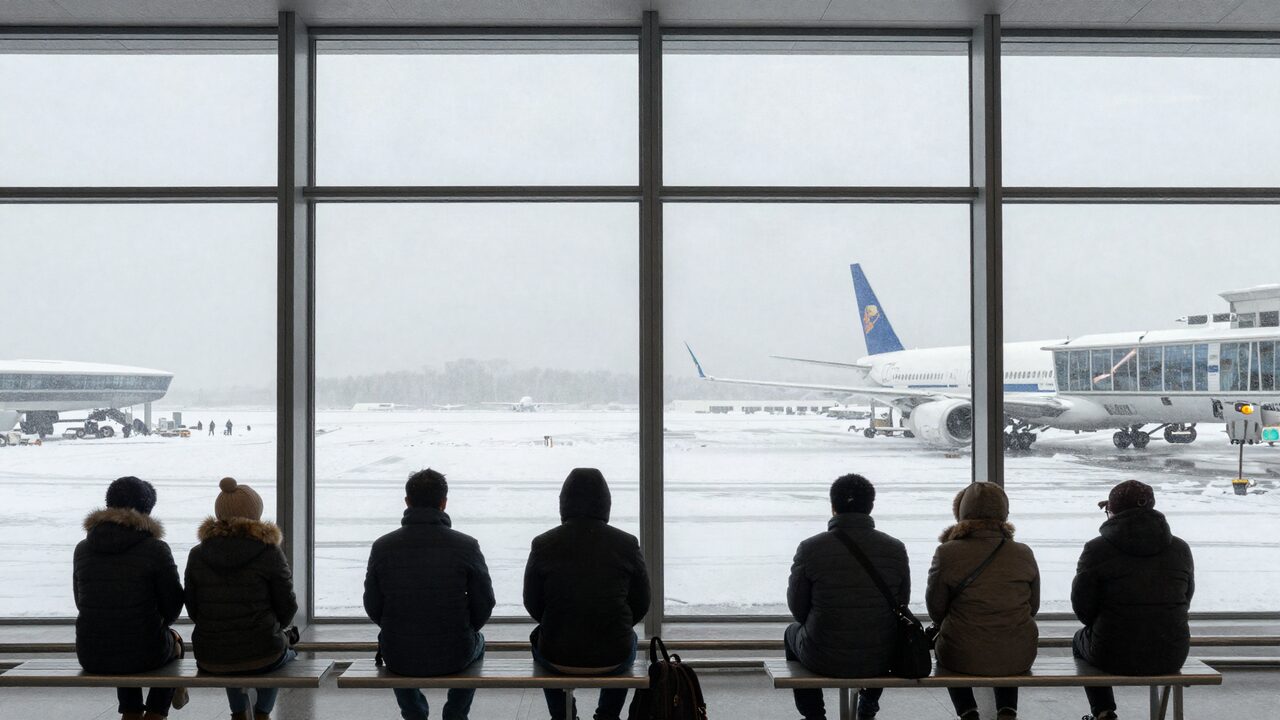
Groups fly from different cities. A family reunion in Houston or Kissimmee might have cousins coming through Chicago, Denver, New York and Boston, which are exactly the hubs a winter storm closes. Even if your destination is sunny, a ground stop at one connecting airport can strand part of the group overnight while the rest have already landed.
That is why the plan needs to be about the group, not just each person's ticket. Three things go wrong most often:
- Nobody knows who is affected until hours after the first cancellation.
- The house details sit with one person who is stuck in a different airport.
- The group argues about whether to delay the trip on the night the storm arrives, with no agreed rule.
All three are fixed with a short conversation a week or two before departure.
Map who travels through a snowy hub
List every traveler's route, and mark anyone connecting through an airport that often gets snow, so you know in advance who is most likely to be late.
A simple table in the group chat does the job:
| Traveler or family | Departs from | Connects through | Snow risk on route | Backup |
|---|---|---|---|---|
| Family A (Example) | Minneapolis | Nonstop | High at origin | Next morning nonstop |
| Family B (Example) | Atlanta | Charlotte | Low to moderate | Later connection |
| Family C (Example) | Boston | Chicago | High at both | Different hub, or a day early |
| Family D (Example) | Dallas | Nonstop | Low | None needed |
The names and routes are invented to show the method. Replace them with your own.
Families on high-risk routes have three choices before the trip: fly a day early, pick a nonstop or a connection through a warmer hub, or accept the risk and know the backup. A morning flight usually leaves more chances to rebook the same day than the last flight out.
Watch the forecast and agree on a rule
Agree on the decision rule before the storm, so the group isn't negotiating at midnight.
The National Weather Service issues three levels of winter alerts, which Ready.gov explains:
| Alert | What it means | What the group does |
|---|---|---|
| Winter Weather Advisory | Snow, freezing rain or sleet expected to cause significant inconvenience | Check flights twice a day; pack the arrival bag |
| Winter Storm Watch | Severe conditions are possible, usually issued 12 to 48 hours ahead | Look at rebooking options; decide who might go a day early or late |
| Winter Storm Warning | Hazardous winter weather is occurring or about to, usually issued 12 to 24 hours ahead | Follow the airline's instructions; don't drive into it |
A workable group rule: under a watch on someone's route, that family looks at its airline's options and reports back in the chat by a set time. Under a warning, nobody drives through it to make a check-in time, and the group shifts the first night's plans instead.
The National Weather Service warns that blowing snow in a blizzard can make roads impassable. Ready.gov's advice for a winter storm is to stay off the roads if at all possible, to keep a full tank of gas, and to carry a car emergency kit with jumper cables, sand, a flashlight, warm clothes, blankets, bottled water and snacks. If part of your group is driving to the house instead of flying, put that kit in every car.
Staggered arrivals and check-in timing
When half the group is late, the early half opens the house and the late half comes in on its own schedule.
Most vacation rentals now use self check-in, which makes staggered arrivals much easier than a hotel block with a front desk. At JekkyStay, our FAQ says: "We send check-in details before you arrive. Our homes use keyless entry, so you can arrive on your own schedule within the check-in window." Your booking shows the check-in time and the window for your home.
To make that work for a delayed group:
- Share the house details with everyone. The door code, directions, parking notes and Wi-Fi go to every adult in the group, not just the person who booked.
- Name a backup lead. If the person who booked is stuck, a second person handles the arrival and talks to us.
- Post new arrival times in the group chat as soon as anyone rebooks.
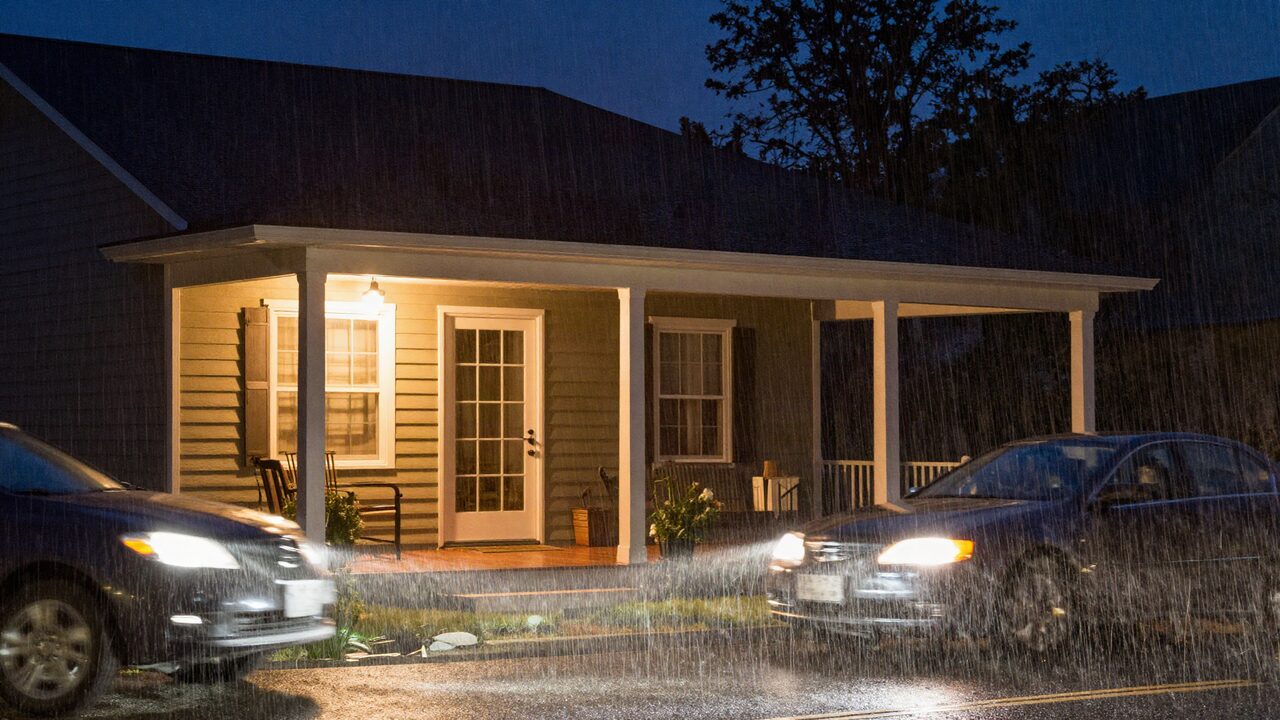
- Give late arrivals a soft landing. Leave a porch light on, leave the bedroom they were assigned free, and set aside a plate of dinner.
- Move the big first-night meal to the second night if a third of the group won't make it.
Our guide to vacation rental check-in and check-out covers door codes, early check-in and checkout tasks in more detail.
If your trip is to Houston, our home there is in north Houston near Greenspoint, a short drive from IAH, which helps when a rebooked flight lands late. Our guide to group stays near IAH airport has more on arriving there.
Read the cancellation policy before the forecast turns
The rental's cancellation policy is set when you book, and weather does not usually change it, so read it before you need it.
Cancellation deadlines at most rentals are fixed dates, not judgment calls. At JekkyStay, our cancellation policy page says new bookings use Strict for stays of 1 to 27 nights:
| When you cancel | Refund of accommodation charges |
|---|---|
| Within 48 hours of booking and at least 14 days before check-in | Full refund |
| At least 7 days before check-in (if not eligible for a full refund) | 50% |
| Less than 7 days before check-in | No refund |
| After check-in | No refund |
The same page says the cleaning fee is fully refunded during the free-cancellation period and otherwise follows the accommodation refund percentage, taxes are refunded for unused nights, and deadlines use the property's local time and scheduled check-in time. Stays of 28 nights or more have separate terms.
Most important: the page says the policy saved with your signed rental agreement applies to your reservation. If you booked earlier or the home's terms differ, check your booking's policy rather than this summary.
What this means for a storm: a delay of a day or two, with the rest of the group arriving on time, is usually better handled by late arrival than by cancelling. If the whole trip falls apart within the last week, the rental's refund may be limited, which is where travel insurance comes in.
JekkyStay's two promises cover different problems from weather. The Check-in Promise: "If your group can't get into the home at check-in and we can't get you in within one hour of your call, we refund your first night." The Stay Promise: "If the home isn't as described, or something important stops working, such as the air conditioning or heat, hot water, Wi-Fi or the pool, tell us. If we can't fix it within 24 hours, we refund the nights affected or move your group to a similar home." Both apply to stays booked directly on jekkystay.com.
Flights: the airline handles weather
When a storm cancels or delays a flight, rebooking and refunds for that flight go through the airline, not the host.
Each airline sets its own rebooking options in a storm, and the U.S. Department of Transportation sets the federal refund rules. Rules change, so read your airline's current policy and the Department of Transportation's aviation consumer pages for the details on refunds when a flight is cancelled or changed. A few habits help regardless of the rules:
- Rebook in the app first. Phone lines fill up fast on storm days.
- Keep every receipt for meals, a hotel night or a rental car while stranded, in case your airline, card or insurer reimburses them.
- Ask about a refund before accepting a credit, if you no longer want to travel.
- Book the group's flights on one record only if everyone will travel together. Separate records let families rebook independently.
Travel insurance basics for a group
Travel insurance is the product designed for trips cut short by weather, but plans vary, so read what a plan covers before you buy.
The Texas Department of Insurance notes that some policies only cover trips canceled for certain reasons such as weather or illness, that you can pay more for "cancel for any reason" coverage, and that your homeowners or renters insurance, or a credit card, may already include some travel coverage. Its advice is to make sure you know exactly what a plan covers before buying, and to weigh the cost of your trip when deciding.
For a group, a few practical points:
- Each family usually buys its own policy, covering its share of the rental and its own flights.
- Buy early, and ask about forecast storms. Before you pay, ask how the policy treats a storm that was already forecast on the day you bought it.
- Check the delay benefit, not only the cancellation benefit. A stranded night is a delay claim, not a cancellation.
- Look at your card's protections before buying a separate plan, if you paid with a travel card.
The bottom line
Before a winter trip, map who flies through a snowy hub, share the house details with every adult, and agree on a rule for when to delay. On the day, let early arrivals open the house and late ones come in on their own schedule. Read your booking's cancellation policy before the forecast turns, and buy travel insurance early if you want cover for weather. If you are still choosing a house, browse our homes for groups, or see our family reunions page for homes that fit the whole family.
Frequently asked questions
What should a group do if a winter storm delays some flights?
Let the people who can travel go ahead and open the house. Late travelers rebook through their airline, post their new arrival time in the group chat, and come in on their own with the door code. Move the first group dinner to the second night if needed.
Can we get a refund on a vacation rental if a storm delays our flight?
It depends on the rental's cancellation policy, which normally does not change for weather. At JekkyStay, the policy saved with your signed rental agreement applies. Read it on your booking, and look at travel insurance if you want cover for weather.
What is JekkyStay's cancellation policy?
Our cancellation policy page says new bookings use Strict for stays of 1 to 27 nights: a full refund when you cancel within 48 hours of booking and at least 14 days before check-in, 50% when you cancel at least 7 days before check-in, and no refund for accommodation charges less than 7 days before check-in. Check your own booking's policy, because the one saved with your agreement is the one that applies.
Does travel insurance cover winter storms?
Some policies do. The Texas Department of Insurance notes that some policies only cover trips canceled for certain reasons, such as weather or illness, and that you can pay more for cancel for any reason coverage. Read exactly what a plan covers before you buy it.
Can late arrivals check in at night?
At JekkyStay homes, yes. Our homes use keyless entry, so each traveler can arrive on their own schedule within the check-in window. Share the door code and directions with everyone in the group before travel day.
Should we drive instead of fly if a storm is coming?
Only if the roads are safe. Ready.gov advises staying off roads if at all possible during a winter storm, keeping a full tank of gas, and carrying an emergency kit with jumper cables, a flashlight, warm clothes, blankets, water and snacks.