
Quick answer
For a travel ball or club team, a hotel block is the right choice when the tournament is stay-to-play, the event is one night or families want a pool and breakfast. Where you can choose, two or three large rental homes usually cost each family less and give the team a kitchen, laundry and one place for dinner.
Start with the tournament's lodging rules, because they can make the decision for you. Then compare the cost per family, the logistics of game days and what parents actually want from the weekend.
Key takeaways
- Check the tournament's lodging policy first. A stay-to-play event can require the team to book its rooms through the official hotels, with fees or removal for teams that don't.
- Where you are free to choose, two or three large rental homes often cost a family less than a hotel room, and they add a kitchen, a washer and a place for team dinners.
- Hotels win for one-night events, teams spread across several brackets and families who want a pool, breakfast and a front desk.
- Run the numbers per family for your dates, with fees, taxes, parking and food on both sides.
- Name one lodging coordinator, collect deposits early and agree in writing on what happens if the team is knocked out on Saturday.
In this guide
Check the stay-to-play rules first
Read the tournament's lodging policy before you price anything, because many events require teams to book through their official hotels.
Stay-to-play means the event contracts a set of hotels, often through a housing company, and teams from outside a set distance must book there to play. The hotels give the event rebates or room credits, which help pay for fields and staff. The rules are specific, and they are enforced.
Two real examples show how this works:
- US Youth Soccer Southern Regional Championship (2025). The stay-to-play addendum says every team "must book a minimum of four (4) rooms per night the team is still in the competition," and states book an average of eight rooms per team. A team could ask to opt out with approval from its state and the tournament director by May 30, 2025, with an assessment of $2,500 per team. A team found outside the program without permission faced an additional $1,000, for a total of $3,500. Local teams registered in the host state with a club headquarters within 100 miles of the main site were not held to the 8-room minimum.
- Defender Hockey Tournaments. Its hotel page says all teams with a home rink more than 75 miles from the tournament rink must book rooms through the tournament, and that failing to follow or circumventing the procedures "will result in removal from the tournament."
These policies change each season, so check the current one for your event.
If your event is not stay-to-play, or your team qualifies as local, you can choose freely. Many league weekends, showcase events and smaller tournaments have no lodging rule at all.
Houses vs. hotel block at a glance
A house suits a team that wants to eat, rest and travel together; a hotel block suits a team that wants services and flexibility.
| Rental homes (2 to 3 houses) | Hotel block | |
|---|---|---|
| Stay-to-play events | Only with permission or an opt-out | Required at many events |
| Cost per family, 2+ nights | Often lower | One room per family adds up |
| Breakfast | Cook together at the house | Often included |
| Team dinner | Around one table at a house | Restaurant reservation for 30 or more |
| Laundry | Washer and dryer in each home | Coin laundry or none |
| Kids together | Teammates under one roof | Spread across floors |
| Pool | Some homes | Usually, with hotel rules |
| Housekeeping | Clean on arrival only | Daily |
| Cancellation | Usually firmer | Often flexible until a cutoff |
| Best for | Weekends of 2 to 4 nights, small rosters | One night, stay-to-play, large clubs |
Cost per family
Price both options per family for your exact dates, because the headline rate hides most of the cost.
| Example cost line | Hotel block | Three rental homes |
|---|---|---|
| Lodging, three nights | 12 rooms at $180 a night: $6,480 | 3 homes at $650 a night: $5,850 |
| Taxes and fees | Example 15%: $972 | Cleaning, fees and taxes: $1,350 |
| Parking | $15 per car per night: $540 | Free driveway parking: $0 |
| Food, three days | Restaurants: $3,600 | Groceries plus one dinner out: $2,400 |
| Total | $11,592 | $9,600 |
| Per family | $966 | $800 |
In this example the houses save each family about $166. Your numbers will differ. Hotel rates spike on big tournament weekends, and rental prices vary by home and season. Breakfast included at a hotel narrows the gap; a team that eats out for every meal widens it.
The coaches' rooms belong in the math too. Some teams cover the coaching staff from the team fund. Decide that before you send the first invoice to families.
For the mechanics of deposits, shares and dropouts, see our guide on splitting costs on a group vacation rental.
Team dinners and game-day mornings
A house makes team meals easy, because the kitchen and the table come with it.
Tournament days start early. In a house, parents can cook eggs and oatmeal for 15 kids at 6:30am and pack coolers with sandwiches, fruit and water for the fields. In a hotel, breakfast may not open until the first game is already warming up, and every snack comes from a gas station or the concession stand.
Dinner is where houses stand out. Booking a table for 30 or more on a tournament Saturday, when every restaurant near the fields is full of other teams, is hard. At a house, the team can do a pasta night, a taco bar or a grill-out, with the players at one table and the parents on the patio. Assign one family per meal so no one spends the weekend in the kitchen.
Laundry and gear
A washer and dryer in the house solves the problem every travel team has by Saturday night: dirty uniforms.
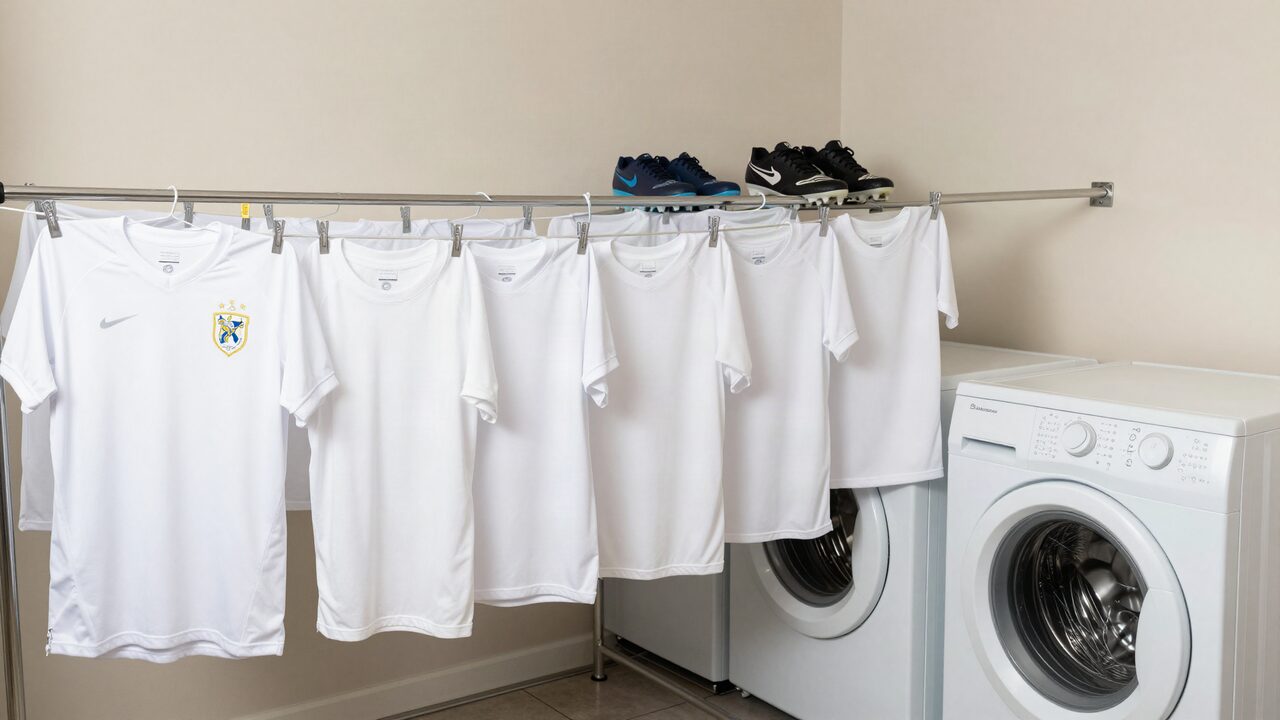
Many tournaments schedule two or three games a day. With a washer in each house, one parent can run a load after the last game and have uniforms ready by breakfast. Hotels with guest laundry usually have one or two machines shared by the whole building, and many have none.
Houses also have room for the gear. Bat bags, hockey bags, coolers, pop-up tents and folding chairs fit in a garage or by the door instead of filling a hotel room. Bring a drying rack and a few towels for cleats, and ask the host if the garage is available for gear.
When a hotel block is the better choice
Choose the hotel block when the rules require it, or when the weekend favors services over togetherness.
- Stay-to-play events. If the event requires it and the opt-out fee is high, the hotel block is the cheaper path.
- One-night events. A rental's cleaning fee and minimum stay rarely make sense for a single night.
- Large clubs. A club sending several teams across age groups may be better in one hotel near the main complex.
- Unpredictable brackets. Hotel rooms often cancel without penalty up to a cutoff, which helps if the team may be knocked out early. Rentals are usually firmer, so agree as a team on what happens if you leave a night early.
- Families who want a break. Some parents want a pool, a free breakfast and a room to themselves. Mixed plans work: a house for most families and a few nearby hotel rooms for the rest.
How to book houses for a team
Name one lodging coordinator, set a deposit deadline and book early, because large homes near tournament complexes go first.
- Confirm the rules. Get the tournament's lodging policy, and any permission to stay outside the block, in writing.
- Count beds, not bedrooms. List every family and how they will sleep, and check each home's maximum occupancy.
- Check the drive. Look at the time from each home to the fields at the hour of your first game.
- Check parking. Count one space per car, plus room for a team trailer if you bring one.
- Read the house rules. Ask about visitors, noise, quiet hours and pets. Our homes welcome up to 3 pets with a $100 pet fee per stay, and service animals are free.
- Collect deposits. Collect each family's deposit before you book, and share the cancellation terms with everyone.
Book directly and you also get our Check-in Promise: "If your group can't get into the home at check-in and we can't get you in within one hour of your call, we refund your first night." Browse our homes for groups, see our page on group getaways, or read our wider comparison of a vacation rental vs. a hotel for groups.
The bottom line
Start with the tournament's lodging policy: at a stay-to-play event, the hotel block is often the only choice, or the cheapest one after the opt-out fee. Where you are free to choose and the weekend runs two nights or more, two or three large homes usually cost each family less and give the team breakfast together, a washer for uniforms and one table for the team dinner. Price both options per family for your dates, name a coordinator and get the rules in writing before anyone pays.
Frequently asked questions
What does stay-to-play mean in youth sports?
It is a tournament rule that teams traveling from outside a set distance must book lodging through the event's official hotels or housing provider. Policies set room minimums, local exemptions and penalties for teams that book elsewhere. Read the policy for your specific event.
Can a team stay in a vacation rental at a stay-to-play tournament?
Only if the policy allows it. Some events offer an opt-out, often with a fee, and some let local families or athletes staying with relatives apply for an exemption. Ask the tournament director in writing before you book a house.
Is a vacation rental cheaper than hotel rooms for a travel team?
Often, for a weekend of two or more nights. Two or three large homes can cost less per family than one hotel room each, and cooking breakfasts and a team dinner saves more. Compare the full cost for your dates.
How many families fit in one rental home?
Plan by beds and bathrooms. A five or six bedroom home with enough real beds can usually take four to six families of three or four. Check the home's maximum occupancy and parking for each car.
How do we split lodging costs among team families?
Most teams split by family or by bedroom. Bigger families pay more for a larger room, and the coaches' share is sometimes covered by the team fund. Collect deposits before booking and agree on the cancellation terms.
What should a team lodging coordinator check before booking?
The tournament's lodging policy, the drive time to the fields at game time, the bed layout, parking, the washer and dryer, house rules on guests and noise, and the cancellation policy.