Quick answer
Utilities in a group vacation home usually run well above a family home's because 14 guests use power, water and internet like three or four households at once. Electricity is the biggest and least predictable line, driven by cooling or heat, the pool pump and pool heat. Budget by month from your own bills, set smart thermostat limits, and decide how pool heat is priced.
Key takeaways
- Electricity is the largest and most variable utility in a group home, driven by air conditioning or heat, the pool pump and pool heat.
- Residential power prices differ widely by state: in August 2026, EIA's preliminary averages ranged from about 15 cents per kWh in Florida to almost 30 cents in California.
- A group of 14 uses water like three or four households at once, so plan for higher water, sewer and trash bills on busy months.
- Smart thermostats with limits and vacancy settings, and a pool heat fee or schedule, are the two biggest levers an owner controls.
- Budget utilities by month from your own bills, not as one annual average, and read them on your owner statement every month.
In this guide
- What drives the bill in a group home
- Electricity: rates differ more than most owners expect
- Pool pump and pool heat
- Water, sewer and trash with 14 guests
- Internet: flat cost, high expectations
- Smart thermostats: the main lever you control
- An Example monthly utility budget
- How to price utilities into your rate
- The bottom line
What drives the bill in a group home
The short answer: occupancy, climate and the pool. A home that sleeps 14 runs more showers, laundry loads, dishwasher cycles and air conditioning hours than a home that sleeps four, and it does so for most nights of a busy month.
Each utility behaves differently:
| Utility | What drives it | How much it swings | What the owner controls |
|---|---|---|---|
| Electricity | Cooling, heat, pool pump, pool heat, laundry | Large, by season and occupancy | Thermostat limits, vacancy settings, pump schedule, pool heat policy |
| Water and sewer | Showers, toilets, laundry, irrigation, pool top-ups | Medium, by occupancy | Low-flow fixtures, leak checks, irrigation timer |
| Natural gas or propane | Gas heat, water heater, gas pool heater, stove | Medium to large in winter | Heater type, pool heat policy |
| Internet | Plan speed | Flat | Plan choice, router placement |
| Trash and recycling | Number of guests, holiday stays | Small to medium | Extra carts, pickup schedule, guest instructions |
If you have one month with a full house in July and one month with a half-empty calendar in September, the electric bill for those months can look like two different homes. That is why an annual average hides the risk.
Electricity: rates differ more than most owners expect
Electricity is the biggest line, and the rate you pay depends heavily on the state. The U.S. Energy Information Administration publishes average residential prices by state every month. Its August 2026 figures, which EIA marks as preliminary, were:
| Market state | Average residential price, August 2026 | August 2025 |
|---|---|---|
| California | 29.75 cents per kWh | 30.92 cents |
| Virginia | 17.64 cents per kWh | 15.85 cents |
| Texas | 15.91 cents per kWh | 15.40 cents |
| Florida | 14.99 cents per kWh | 15.33 cents |
| U.S. average | 18.16 cents per kWh | 17.57 cents |
Two things follow. First, the same air conditioning hours cost roughly twice as much in California as in Florida at these averages. Second, rates move from year to year, in both directions: Virginia's average rose and Florida's fell between August 2025 and August 2026. Your own utility's tariff, including any time-of-use pricing, is what you actually pay, so read your bill rather than the state average.
The main users of power in a group home are cooling and heating, the pool pump, pool heat, the water heater if it is electric, the dryer and the kitchen. ENERGY STAR says almost half of a home's annual energy bill goes to heating and cooling, which is why the thermostat is the first place to look.
Pool pump and pool heat
A pool adds two separate costs: the pump that circulates and filters the water every day, and the heater that guests ask for in cooler months.
The pump runs year round. Its cost depends on its horsepower, how many hours a day it runs and your rate. FPL's pool calculator, for example, asks for the pump's horsepower and daily run hours, which shows that both choices change the monthly cost. A pool professional can tell you the shortest run time that keeps the water clean.
Pool heat is the big seasonal swing. FPL's calculator estimates heating costs for a 14 by 28 foot pool from November through April and notes that the coldest months will be higher. It assumes a heat pump efficiency of 5 and an electric cost of $0.12 per kWh, and a gas heater at 80 percent efficiency. Those assumptions show the main variables: the heater type, the target water temperature, your local energy price and whether the pool is covered at night.
Most owners handle pool heat in one of three ways: include it in the rate all year, include it only in warm months, or charge a pool heat fee for winter stays. Whatever you choose, state it clearly in the listing so the guest knows before booking. Our guide to a heated pool vacation home in Kissimmee in winter covers what guests expect from a heated pool and when they can skip it.
Water, sewer and trash with 14 guests
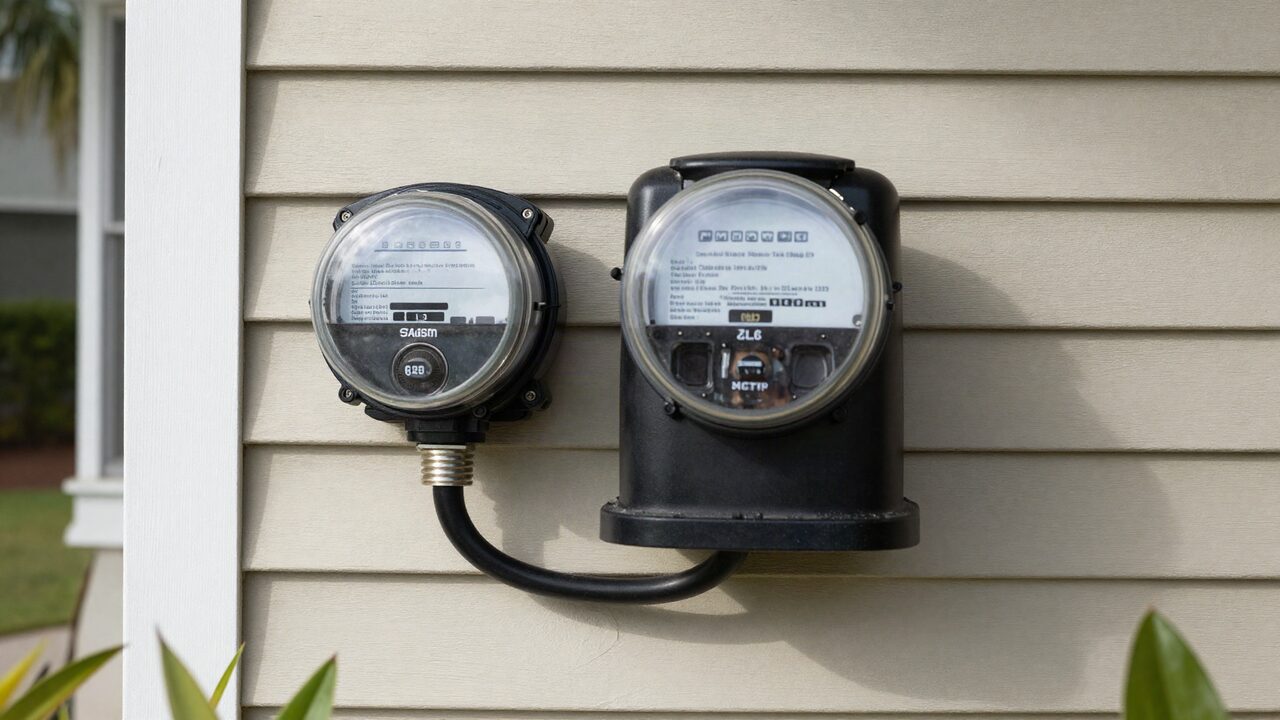
Water use rises roughly with the number of people in the house. EPA WaterSense says the average American family uses more than 300 gallons of water a day at home, and that roughly 70 percent of that use is indoors. A group of 14 is several families under one roof, so a full week can use as much water as several homes.
Sewer charges often follow water use, so a high water month usually means a high sewer charge too. The levers here are simple:
- Check toilets and outdoor taps for leaks at every turnover. A running toilet in a vacant home costs money every day until someone notices it.
- Fit low-flow showerheads and faucet aerators that still feel good to guests.
- Put irrigation on a timer and turn it down in the rainy season.
- Keep an eye on the pool's water level. A sudden drop can mean a leak, not just evaporation.
Trash is the utility owners forget until the cans overflow. A group of 14 on a holiday week can fill the standard carts before pickup day. Ask your hauler or county about an extra cart or extra pickup for busy weeks, and tell guests the pickup day and where the cans go. Overflowing cans lead to neighbor complaints, and in some cities they lead to fines.
Internet: flat cost, high expectations
Internet is the one utility that does not swing much, because most plans are a flat monthly price. The cost to watch is the cost of a poor connection: 14 guests can mean 30 or more phones, laptops and TVs connecting at once.
Choose a plan fast enough for that many devices, place the router centrally or add mesh points so the bedrooms get a signal, and put the network name and password in the house guide. Guests treat Wi-Fi as essential, and so do we. Our Stay Promise for direct bookings reads: "If the home isn't as described, or something important stops working, such as the air conditioning or heat, hot water, Wi-Fi or the pool, tell us. If we can't fix it within 24 hours, we refund the nights affected or move your group to a similar home."
Smart thermostats: the main lever you control
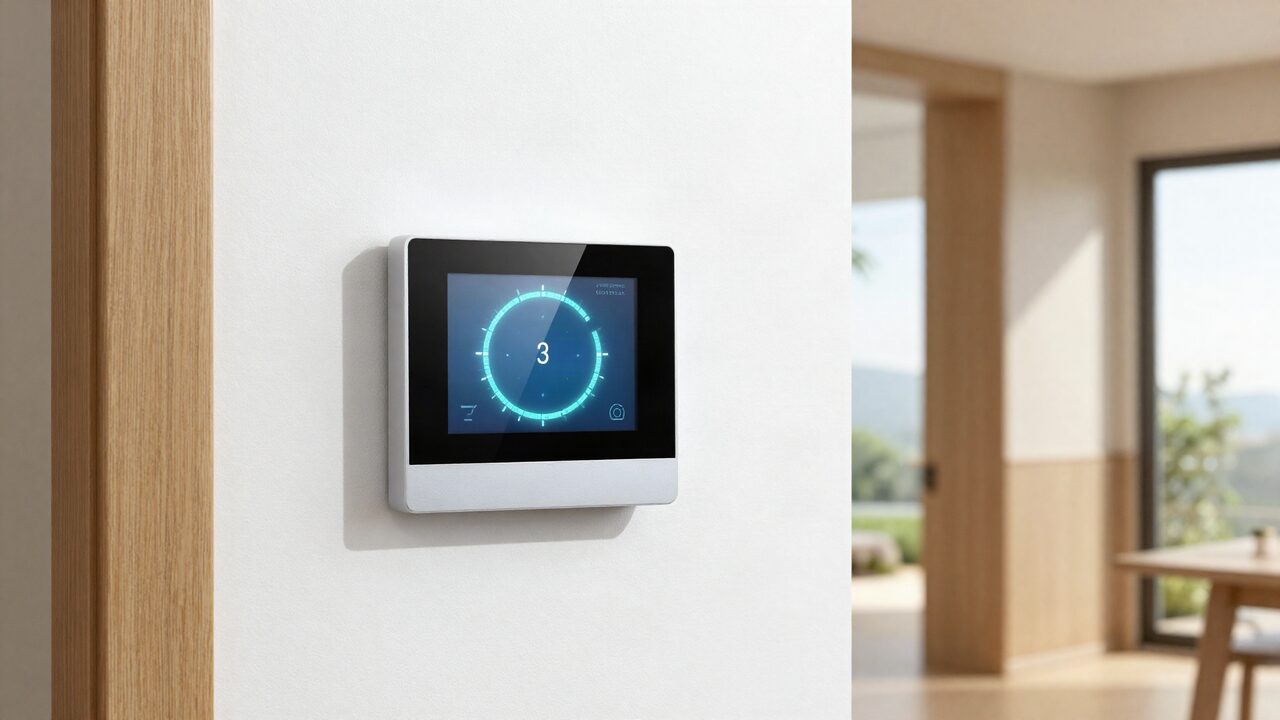
A smart thermostat lets you set limits on how far guests can turn it, change settings remotely and hold the home at an energy-saving setting while it is empty. ENERGY STAR notes that Wi-Fi thermostats can be controlled remotely through a smartphone and can adjust to energy-saving temperatures when a home is empty.
In a rental, set them up like this:
- A comfort range, not a fixed number. Let guests adjust within a sensible band. Lock out settings far outside it, such as cooling the house to the low 60s in August.
- Vacancy settings between stays. Hold the home at a moderate setting while empty, then bring it to a comfortable temperature a few hours before check-in so the group walks into a cool or warm house.
- Alerts. Turn on alerts for unusual temperatures, so you know if the AC fails or a door is left open in a heat wave.
- One per zone. Large homes often have two or three systems. Treat each one separately.
Smart plugs or timers on pool equipment and water heaters, and occupancy settings on exterior lights, add smaller savings. Our owner packages include smart home integration, and our owners page explains how we manage homes day to day.
An Example monthly utility budget
The numbers below are an Example, invented to show how the lines add up. They are not quotes or averages. Use your own bills.
| Line | Example busy winter month | Example quiet fall month |
|---|---|---|
| Electricity, including AC or heat and pool pump | $520 | $310 |
| Pool heat (heat pump) | $260 | $0 |
| Water and sewer | $170 | $90 |
| Internet | $85 | $85 |
| Trash, with one extra pickup | $60 | $40 |
| Example total | $1,095 | $525 |
| Pool heat fees collected from guests | $280 | $0 |
| Example net utility cost | $815 | $525 |
Two lessons come out of an Example like this. The busy month costs about twice the quiet month, so a budget built on the yearly average will look wrong for months at a time. And pool heat only stays neutral if the fee covers it, which depends on your rate and how warm guests set the pool.
These lines appear on your monthly owner statement, either as pass-through costs or bills you pay directly. Our guide on how to read a vacation rental owner statement explains where utilities sit and how to check them.
How to price utilities into your rate
Most guests expect utilities to be included in the nightly rate. A few owners in some markets charge separately for things like pool heat, which guests accept when it is disclosed up front. Keep these points in mind:
- Price the busy months for the busy bills. If July or January costs you far more in power, your rate for those months should reflect it.
- Set minimum stays with turnover in mind. Each changeover brings a laundry run, a cleaning crew and a home cooled or heated from its vacancy setting.
- Disclose optional fees clearly. If you charge for pool heat, state the amount and the dates in the listing, and follow the platform's fee rules.
- Review quarterly. Compare each utility per booked night against the same quarter last year. A jump with flat occupancy often points to a leak, a failing AC unit or a pump running too long.
The bottom line
In a group vacation home, utilities scale with the number of guests and the season, and electricity is the line that moves most. Know your rates, budget by month from your own bills, control the thermostat range and vacancy settings, and decide how pool heat is priced before winter. If you would rather hand the day-to-day to us, see how JekkyStay works with owners and compare our management packages.
Frequently asked questions
How much do utilities cost in a large vacation rental?
It depends on the state's rates, the climate, the size of the home, whether there is a pool and how full the calendar is. Use your last 12 months of bills, month by month, as the base. Our Example later in this guide shows how the lines add up for a six-bedroom home with a pool.
Who pays utilities in a vacation rental, the owner or the guest?
In most short-term rentals the owner pays utilities and builds them into the nightly rate. Some owners charge a separate fee for optional extras such as pool heat. Check the platform's fee rules before adding any charge.
Do smart thermostats save money in a vacation rental?
They help because an owner can set a temperature range guests can't go past, and set the home to a vacancy setting between stays. ENERGY STAR says almost half of a home's annual energy bill goes to heating and cooling, so that is where control matters most.
What is the most expensive utility in a Florida vacation home?
Usually electricity, because of air conditioning, the pool pump and, in winter, pool heat. Florida's residential electricity price was below the national average in EIA's August 2026 data, but a big home with a heated pool still uses a lot of it.
How much water does a group of 14 use?
EPA WaterSense says the average American family uses more than 300 gallons a day at home. A group of 14 is several families under one roof, so expect use well above a typical household's on busy weeks.
Should I cap guest use of the air conditioning?
Set a sensible range rather than a hard cap. Guests who are too hot or too cold leave poor reviews, so most owners lock out extreme settings and let guests adjust within a comfortable band.