Quick answer
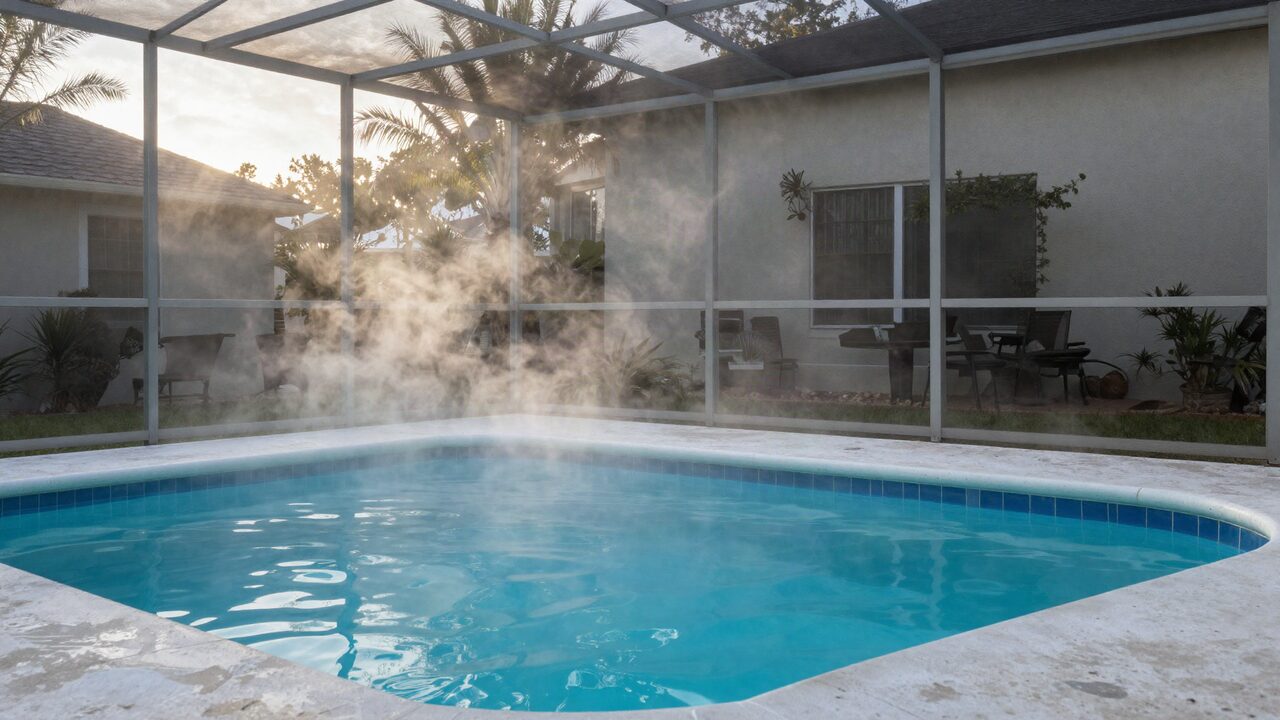
If your group wants to swim in Kissimmee between December and February, yes, you need a heated pool. Orlando's normal winter lows sit around 50 to 53°F, and an unheated pool cools with them, so it often feels cold even on a sunny afternoon. In November and March it depends on the week; by April most swimmers won't need heat.
Key takeaways
- If your group plans to swim from December through February, yes: Orlando's normal lows sit around 50 to 53°F in those months, and an unheated pool cools with them.
- November and March are borderline, and April usually needs no heat for most swimmers.
- Electric heat pumps, a common choice for Florida pools, move heat from the air into the water and work slowest on the cold nights you need them most.
- Pool heat is often a paid add-on for guests; ask the price, the target temperature, the minimum nights and how much notice the host needs.
- A cover or screen enclosure cuts heat loss; a Florida state fact sheet says covering a pool can cut 50% to 70% of heating costs.
In this guide
Which months a heater matters
Heat matters most from December through February, matters some weeks in November and March, and rarely matters from April. The reason is the nights: pool water loses heat after dark, so a run of cool nights pulls the water down even when afternoons feel warm.
Here are the National Weather Service's 1991 to 2020 normals for Orlando, the nearest long-term station to Kissimmee:
| Month | Normal high | Normal low | Average daily temperature | Pool heat for most swimmers |
|---|---|---|---|---|
| November | 78.3°F | 58.2°F | 68.2°F | Useful late in the month |
| December | 73.8°F | 52.9°F | 63.3°F | Needed |
| January | 71.8°F | 49.5°F | 60.6°F | Needed |
| February | 74.9°F | 52.4°F | 63.6°F | Needed |
| March | 78.9°F | 55.8°F | 67.3°F | Useful early in the month |
| April | 83.6°F | 60.7°F | 72.2°F | Rarely needed |
The last column is our reading of those numbers, not a weather service figure. There is no official measure of backyard pool temperatures. What the normals do show is that the average across day and night in January is about 61°F, and an unheated pool spends the winter chasing that average, not the afternoon high.
Our Kissimmee in winter guide covers the rest of the season: cold snaps, crowds and what to pack. This guide is only about the pool.
How pool heat works
Florida pools are heated with an electric heat pump, gas or solar. Each behaves differently in a cold week, which is why it is worth asking which one a home has.
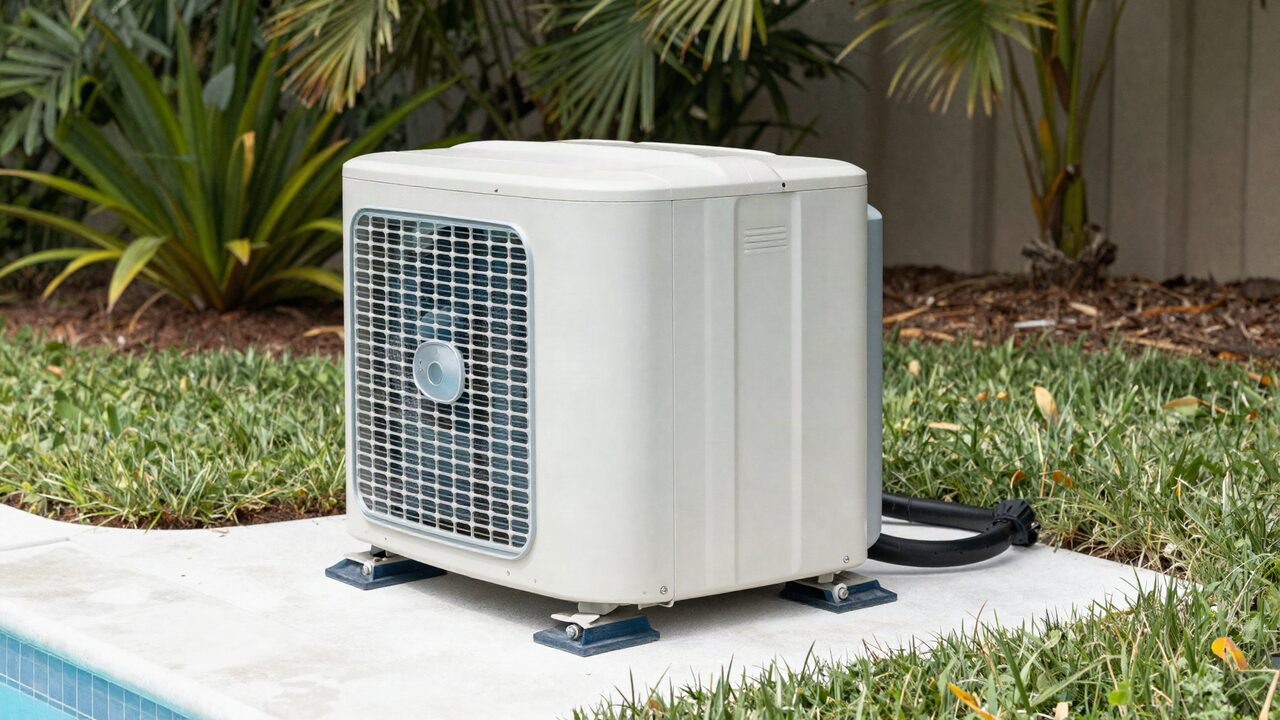
Heat pumps. A heat pump uses electricity to capture heat from the air and move it into the water. A Florida state fact sheet on pool efficiency puts it plainly: heat pumps "do not generate heat." They usually cost more to buy than gas heaters but much less to run. The catch for winter guests is that a heat pump draws on the outdoor air, so it works hardest and slowest on the coldest nights.
Gas heaters. Gas heaters burn natural gas or propane. The same fact sheet says they are most efficient for heating a pool quickly for short periods, and that unlike heat pumps and solar, they can hold a set temperature regardless of the weather. They cost more to run.
Solar. Solar collectors on the roof warm the water on sunny days. The fact sheet calls solar the most cost-effective use of solar energy in Florida, but solar depends on the sun, so it does little on cloudy, cool days or overnight.
| Heater type | How it heats | Good at | Weak spot in winter |
|---|---|---|---|
| Heat pump | Moves heat from the air into the water | Low running cost, steady heat on mild days | Slower on cold nights and during cold fronts |
| Gas | Burns natural gas or propane | Fast heat; holds temperature in any weather | Higher running cost |
| Solar | Sun warms water in roof panels | Very low running cost on sunny days | Little help on cloudy days and at night |
What pool heat costs guests
Pool heat is often a paid add-on at Florida vacation homes, so the question is what your host charges, not what the electric bill is. Hosts set the fee by the night or by the stay, and some require a minimum number of nights so the heater has time to warm the water.
To see why hosts charge for it, look at the running cost. FPL's pool heating calculator estimates the average monthly cost to heat a 14 by 28 foot pool in Central Florida from November through April. Its estimates assume a heat pump efficiency of COP 5 and electricity at $0.12 per kWh, and the calculator notes that the coldest months will be higher.
| Target water temperature | Heat pump, average per month | Gas heater, average per month |
|---|---|---|
| 78°F | $105 | $180 |
| 80°F | $120 | $210 |
| 82°F | $139 | $250 |
| 84°F | $159 | $290 |
Those are averages across six months for an average-sized pool. A large vacation home pool, an attached spa, and electricity rates above the calculator's $0.12 per kWh all push the real figure higher, and December through February cost more than November or April.
How to keep a heated pool warm
The biggest losses come at night and from wind, so a few simple habits make the heater's job easier. FPL's calculator halves its heating estimate when a pool blanket is used nightly, and the Florida fact sheet says covering a pool when it is not in use is the single most effective way to cut 50% to 70% of heating costs.
What a guest group can do:
- Use the cover if the home has one. Put it on at night and take it off when the first swimmers arrive. Follow the host's instructions; some covers are fussy.
- Swim in the afternoon. Pool water is warmest from early afternoon, after the sun has been on it. Plan pool time from about 1 to 4pm.
- Don't change the heater settings. Ask the host to set the temperature. The host knows what the heater can hold, and changing settings mid-stay can make things worse.
- Report a problem early. If the water isn't warming, tell the host the same day. The longer a heater is off, the longer it takes to catch up.
- Keep a warm layer by the pool. Children cool off fast once they get out of the water, even in a heated pool.
Questions to ask before you book
Ask these before you book a Kissimmee home for a winter trip, and get the answers in writing:
- Is the pool heated, and is heat included or extra? If extra, what is the price per night or per stay, and is there a minimum number of nights?
- What kind of heater is it? A heat pump, gas or solar. A heat pump is fine for most weeks; in a hard cold snap it may not keep up.
- What temperature does it hold? Ask for the target in degrees and what happens during a cold front.
- How much notice do you need? Heaters need time to warm a cold pool, so ask when they will start.
- Is the spa heated, and is that included? A spa can be heated separately from the pool. Ask how it works.
- Is there a pool cover? And who puts it on and takes it off?
- What if the heater stops working? Ask how fast they fix it and whether you get a refund for the heat fee.
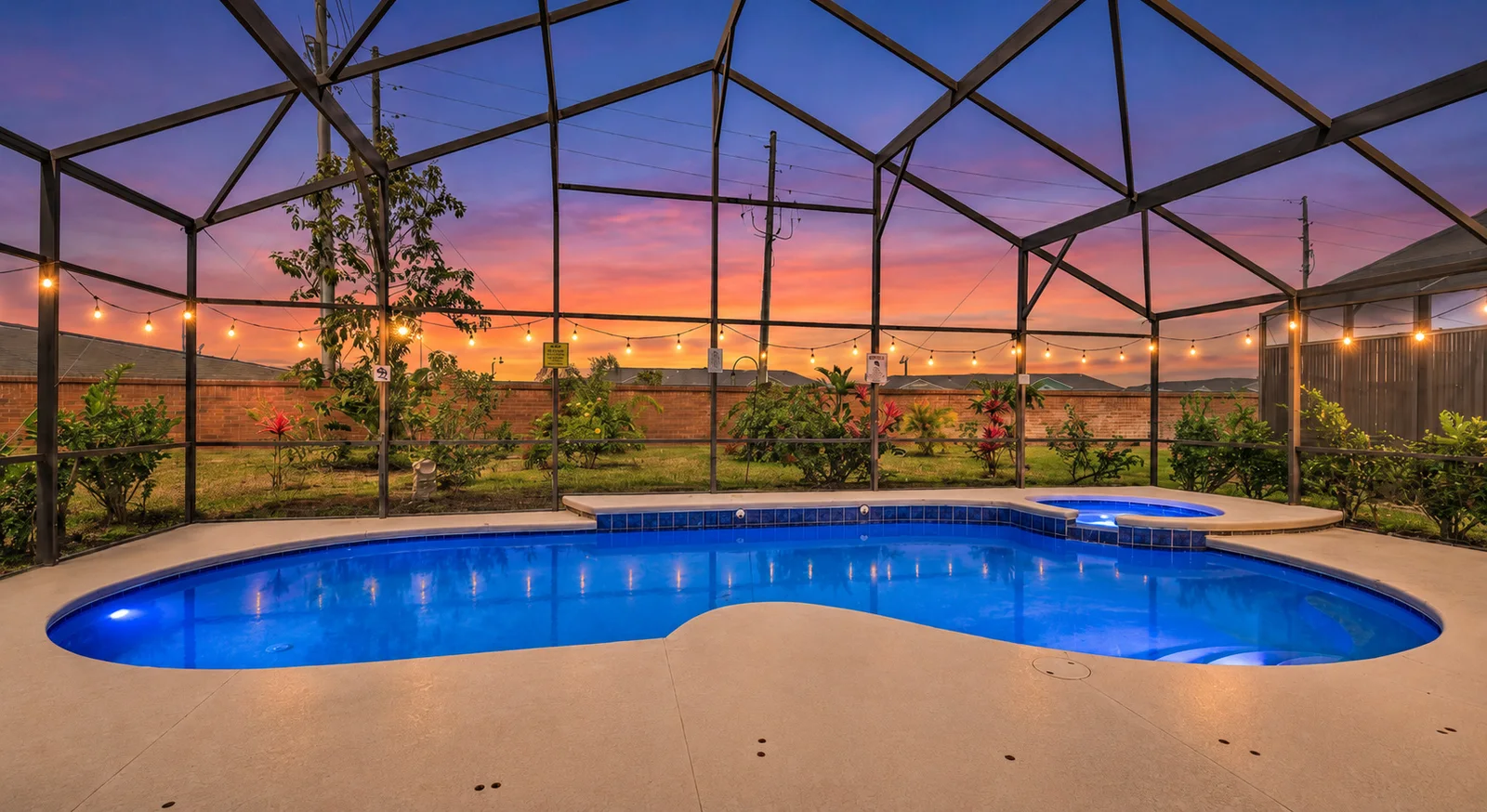
At JekkyStay, the Kissimmee House has a private screened pool and a spa. Ask us about pool heat and any fee for your dates before you book. Children must be supervised around the pool and spa at all times.
For direct bookings our Stay Promise applies to the pool along with everything else important: "If the home isn't as described, or something important stops working, such as the air conditioning or heat, hot water, Wi-Fi or the pool, tell us. If we can't fix it within 24 hours, we refund the nights affected or move your group to a similar home."
When you can skip it
Skip pool heat when nobody in the group really plans to swim, when your trip falls in April or later, or when the pool is mainly for a quick dip and the hot tub will do the rest. Families with young children who live in the pool are the ones who most often regret going without heat in December or January.
If your group is split, a few points help you decide:
- If the trip is mostly theme park days, you may only use the pool on one or two afternoons. Weigh the fee against those.
- If you have rest days planned at the house, heat makes those days. Without it, the pool is a view.
- If the forecast is warm for the whole week, ask whether the host can add heat at short notice if the weather turns.
Our guide to large vacation homes near Disney World covers how to compare homes, and vacation rental amenities guests pay for covers which extras are worth the money.
The bottom line
For a winter trip to Kissimmee, plan on a heated pool if your group wants to swim from December through February, and decide week by week in November and March. Ask whether the pool is heated, what kind of heater it is, what temperature it holds, what it costs and how much notice the host needs. Swim in the afternoon, use the cover at night, and see our Kissimmee homes when you are ready to book.
Frequently asked questions
Is a pool in Kissimmee warm enough to swim in winter without heat?
Often not, for most people. National Weather Service normals for Orlando put January's average low at 49.5°F and the average daily temperature at 60.6°F. An unheated pool loses heat on cool nights and can feel cold even on a sunny 72°F afternoon, especially after a cold front.
Which months need a heated pool in Kissimmee?
December, January and February are the months a heater matters most, with normal highs around 72 to 75°F and lows around 50 to 53°F in Orlando. November and March are borderline and depend on the week's weather. By April, normal highs reach about 84°F.
How much does pool heat cost at a vacation rental?
It depends on the host. Many Florida vacation homes charge pool heat as an add-on, by the night or by the stay, sometimes with a minimum number of nights. Ask for the exact price, the target water temperature and whether the spa is included before you book.
Can a heat pump keep a pool warm during a cold snap?
Not always. Heat pumps capture heat from the air and move it into the water, so they work less well when the air is cold. A Florida state fact sheet notes that gas heaters, unlike heat pumps and solar, can hold a set temperature regardless of the weather.
Is the pool at the JekkyStay Kissimmee House heated?
Ask us before you book. The Kissimmee House has a private screened pool and a spa; contact us for current pool heat availability and any fee for your dates.
How long does it take to heat a cold pool?
Bringing a cold pool up to temperature can take many hours or longer, depending on the pool size, the heater and the weather. That is why many hosts ask for notice before arrival. Ask the host when they will start heating.
Sources
- National Weather Service Melbourne: Orlando January normals, 1991 to 2020 (PDF)
- National Weather Service Melbourne: Orlando December normals, 1991 to 2020 (PDF)
- National Weather Service Melbourne: Orlando February normals, 1991 to 2020 (PDF)
- National Weather Service Melbourne: Orlando March normals, 1991 to 2020 (PDF)
- National Weather Service Melbourne: Orlando November normals, 1991 to 2020 (PDF)
- National Weather Service Melbourne: Orlando April normals, 1991 to 2020 (PDF)
- FPL: monthly pool pump and pool heating cost calculator
- Florida Department of Community Affairs: residential swimming pool efficiency fact sheet (PDF, 2006)