Quick answer
To plan a pickleball trip with friends, pick a destination with several public courts, read each park's reservation and open play rules, and book a house within a short drive of them. Size the group in fours for doubles, pack indoor and outdoor balls, and schedule play in the mornings with rest built in.
Key takeaways
- Size the group in fours: doubles needs four players per court, so 8, 12 or 16 friends fill courts without anyone sitting out for long.
- Look up each court's rules before you go: many public courts are first come, first served, some take reservations, and many cap play when others are waiting.
- Learn paddle stacking before your first open play session, because many parks use a rack to decide who plays next.
- Pack indoor and outdoor balls, court shoes and a spare paddle, and plan a rest day or a short day after two hard ones.
- A rental house within a short drive of several courts gives the group one place to eat, recover and plan the next session.
In this guide
Start with the group and the dates
Decide who is coming and how hard they want to play before you pick a place.
Doubles needs four players per court, so plan in fours. Eight friends fill two courts. Twelve fill three, or two courts with four people resting and rotating in. An odd number works too, but someone will sit out each game, which is fine for a group that likes to rest and talk.
Skill levels matter more than numbers. A group of beginners and a group of tournament players want different trips. Ask everyone, before anything is booked:
- How many hours a day do you want to play?
- Do you want open play with locals, or games only within our group?
- Do you want a clinic or a lesson while we are there?
- What else do you want to do: a lake, a city, good food, golf?
Pick dates with the weather in mind. Outdoor courts in hot places are best early and late in the day, and outdoor play in cold or rainy months depends on indoor courts. Our guide on how to pick dates for a group trip covers polls and deadlines for a group that cannot agree.
Find public courts and learn the rules
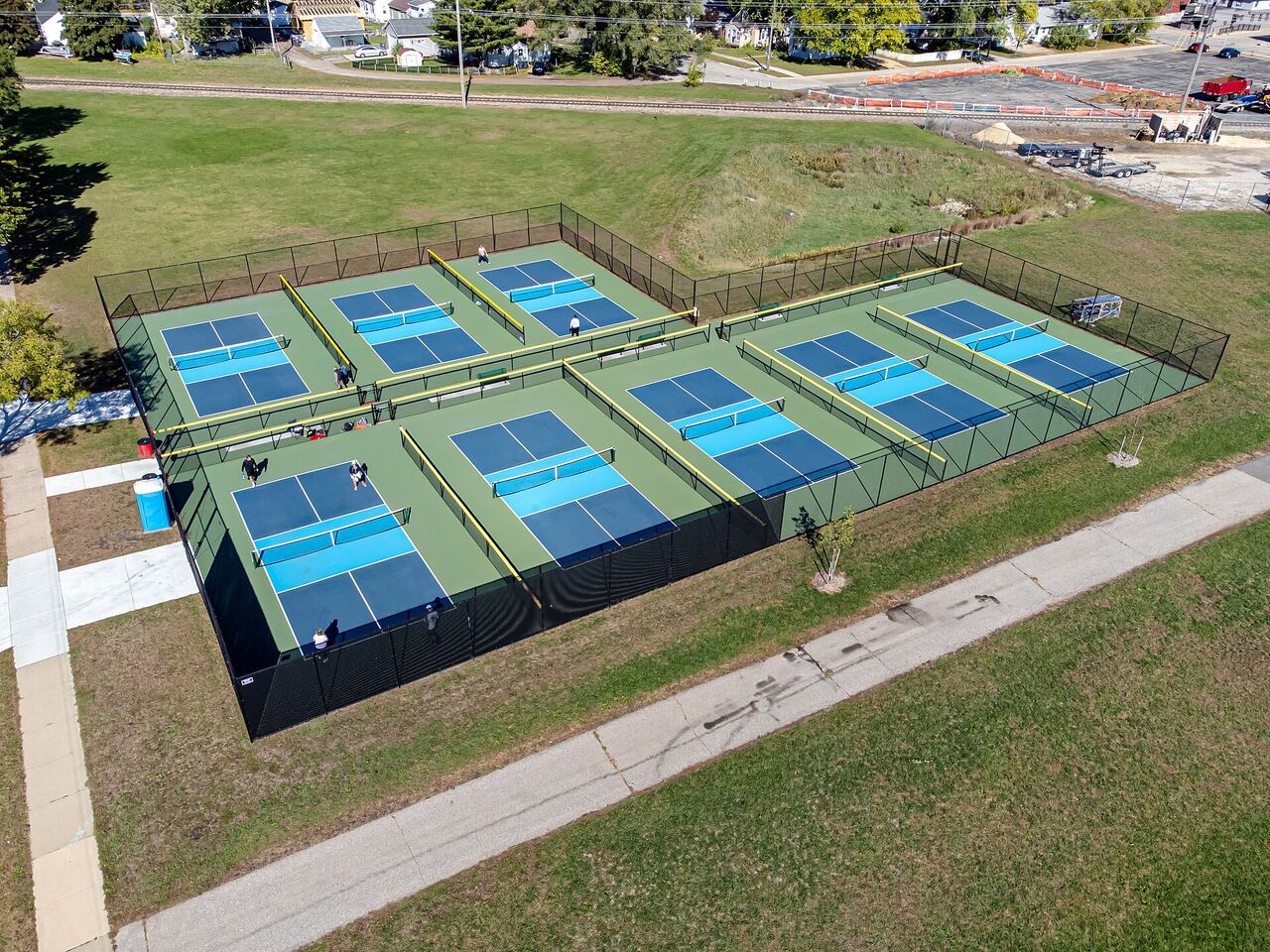
Public courts are the backbone of most pickleball trips, and every city runs them a little differently.
USA Pickleball says courts are found in public parks, recreation centers and dedicated facilities, and its site has a Find A Court page and a Find A Club page to search by location. Use them to shortlist places, then go to each city's parks department page for the details that decide your days: hours, lights, reservations and rules.
Here is how the rules look in practice. Austin's parks department says playing time is first come, first served unless otherwise noted. If others are waiting, it asks players not to exceed 60 minutes of pickleball, and it says no one may occupy more than one court at a time. Most of its neighborhood and district parks list open play seven days a week from 7am to 10pm, and one site, Walnut Creek Sports Park, lists reservations as required. Your destination may work the same way or completely differently, which is why you check.
| What to check | Why it matters for a group |
|---|---|
| First come or reservation | Decides whether you show up early or book ahead |
| Time limits when others wait | A group of 8 may get one hour, not a morning |
| Open play hours | Locals often fill set times; join them or avoid them |
| Lights and closing time | Sets how late you can play after a hot afternoon |
| Number of courts at the site | Two courts for 12 people means a lot of waiting |
| Rules for lessons and leagues | Some cities need a permit for organized play |
| Indoor or outdoor | Changes the ball you bring and your rain plan |
Learn open play and paddle stacking
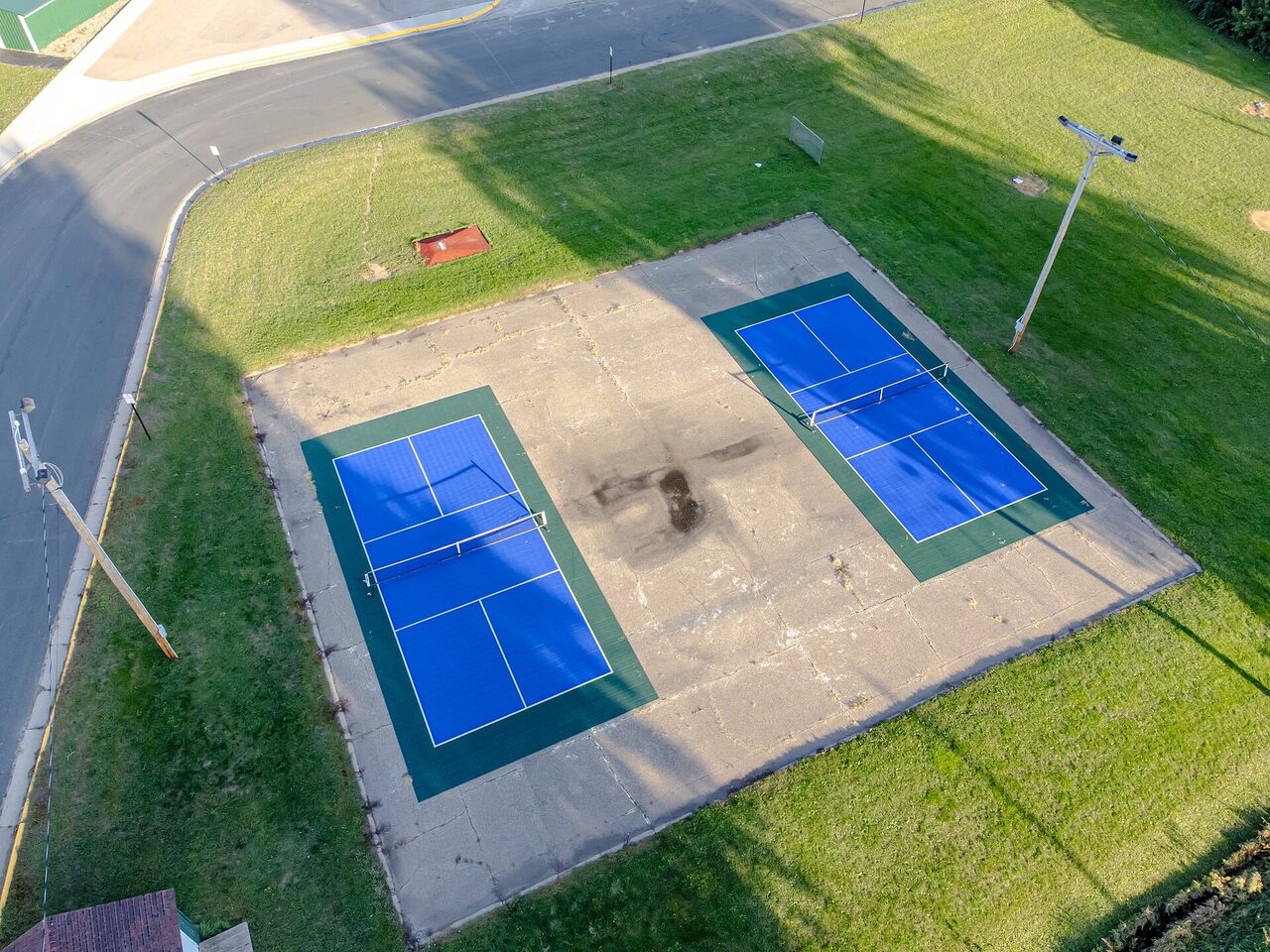
Open play is how most public courts handle more players than courts, and it is a good way for your group to meet locals.
Many parks use paddle stacking. The City of Sandy Springs, Georgia, sets out a common version: waiting players place their paddle in the next open spot on a paddle rack, with only one paddle per player in the rack at a time. The next two players (singles) or four players (doubles) take the next open court, and all players, winners and losers, come off the court when each game ends. Some parks use their own variation, so read the sign at the rack.
For your group, this means two choices. If you want to play only with each other, arrive when the courts are quiet or book a court where you can. If you want variety, join open play, split up and mix with local players. Many groups do both: early private games, then open play later in the morning.
Pack the right gear
The right gear is simple, but a missing ball type or worn shoes can cost the group a day.
USA Pickleball describes the ball as plastic with 26 to 40 circular holes, and says the ball design differs slightly between indoor and outdoor play. Bring both if your plan includes both kinds of courts. Paddles and balls must meet USA Pickleball specifications for tournament play, which matters only if someone plans to enter an event.
| Item | Per person or per group | Notes |
|---|---|---|
| Paddle | Per person, plus 1 or 2 spares | Spares cover a cracked paddle or a friend who wants to try one |
| Outdoor balls | Per group, a dozen or more | Outdoor balls crack over a long trip |
| Indoor balls | Per group, a few | Only if you plan indoor play |
| Court shoes | Per person | Running shoes give less side support |
| Water bottles and a cooler | Per person and per group | Many parks have limited shade |
| Sunscreen, hats, towels | Per person | Mornings on a hard court get hot fast |
| Small first aid kit and tape | Per group | Blisters and scrapes happen |
| Portable net | Per group, optional | Only where the house and local rules allow it |
If you fly, check your airline's carry-on and checked bag rules for sports equipment before you pack the paddles.
Choose a house within reach of the courts
The best base is a house a short drive from more than one court site, so the group has a backup when one park is full or closed.
When you look at homes, map the courts first, then look for houses between them. A home near two or three sites lets you choose each morning based on crowds, wind and shade. Check the drive at the hour you will go, not just the distance.
The house matters as much as the location for a sports trip:
- Bedrooms and beds. Tired players sleep better in real beds. See how many bedrooms you need for a group.
- Parking. Three or four cars may come and go at different times.
- A big kitchen and table. Cooking breakfast and dinner saves money and time, and gets everyone to the courts on schedule.
- Laundry. Court clothes add up fast.
- Outdoor space. A patio or pool is where the group recovers in the afternoon.
Browse homes for groups across our six destinations and check the map against the courts you shortlisted. Our group getaways page covers how we host friend groups. We do not promise that any of our homes is close to pickleball courts, so check the distance yourself for your dates and plans.
Schedule play and rest
The best pickleball trips plan rest as carefully as play, because a group that plays hard on day one is often sore by day three.
A simple structure for a four-day trip:
| Day | Morning | Afternoon | Evening |
|---|---|---|---|
| 1: Arrive | Travel | Check in, shop for groceries | Easy dinner at the house |
| 2: Big day | Private games, then open play | Rest, pool or nap | Group dinner |
| 3: Variety | Clinic or lesson, or a new court | Sightseeing or a short outing | Restaurant night |
| 4: Short day | One last session | Pack and check out | Travel home |
A few habits keep everyone playing:
- Play in the cooler hours and leave the hottest part of the day for rest.
- Rotate partners so nobody plays every game with the same person.
- Set a loose stop time each session. It is easier to agree on "until 11" before you start than during a close game.
- Keep one meal a day at the house. Our group meal plan shows how to share cooking.
Budget and split the costs
Agree on what is shared before anyone books, and settle it the same way for everyone.
Common shared costs are the house, groceries, court fees or reservations, balls and any clinic. Personal costs are travel, paddles and restaurant meals. Court costs vary widely by city and facility, so check the current price on each park or club site rather than guessing. Our guide on how to split costs on a group vacation rental covers deposits, who pays what and what happens if someone drops out. A golf group faces the same planning, and our golf trip with friends guide has more on tee times and budgets.
The bottom line
Plan a pickleball trip in fours, pick a destination with several public courts, and read each park's rules before you go: reservations, open play hours and time limits differ by city. Learn paddle stacking, pack indoor and outdoor balls, and book a house a short drive from more than one court site. Play in the mornings, rest in the afternoons, and keep one easy day so everyone is still playing at the end of the trip.
Frequently asked questions
How many people should go on a pickleball trip?
Plan in multiples of four. Doubles is the usual game and needs four players per court, so 8 or 12 friends can fill two or three courts and rotate partners without waiting long.
Do you need to reserve public pickleball courts?
It depends on the city and the park. Many public courts are first come, first served, and some sites take reservations. Austin's parks department, for example, says playing time is first come, first served unless noted, and lists one site where reservations are required. Check each park's page before you go.
What is paddle stacking in pickleball?
It is how many parks run open play when courts are full. Waiting players put a paddle in the next open spot on a rack, and the next four paddles play the next doubles game. Some parks have all four players leave the court after each game.
How long can you play when others are waiting?
Each city sets its own rule. Austin, for example, asks players not to exceed 60 minutes of pickleball when others are waiting for a court. Look for the rules posted at the court or on the parks department page.
What gear should we bring on a pickleball trip?
A paddle per player plus a spare or two, outdoor and indoor balls, court shoes, water, sunscreen, a towel and a small first aid kit. Ball design differs slightly between indoor and outdoor play, so bring the right ball for the courts you will use.
How many days of pickleball can a group play in a row?
Most recreational groups do better with two playing days and then a lighter day. Plan morning sessions, rest in the afternoon, and keep one evening for a long dinner at the house.