Quick answer
Lake Anna's hot side is the private Waste Heat Treatment Facility, a set of cooling lagoons with warmer water and limited access. The cold side is the larger public reservoir, with the state park, marinas and open water. Groups who want long, warm swim days from the dock lean hot; groups who want boating, fishing and public access lean cold.
Key takeaways
- Lake Anna covers about 13,000 acres: the 9,600-acre reservoir, often called the public or cold side, and the 3,400-acre Waste Heat Treatment Facility, known as the private or hot side.
- Water from the power station's discharge is typically 14 degrees warmer than the water it draws from the lake, and it cools as it moves through the private lagoons.
- The hot side suits groups who want warmer water and a longer swim season; the cold side suits groups who want the state park, marinas, rentals and open water.
- Dominion's pages list no public access points for the private side, so a group is on it only if its home or host is.
- Virginia requires a boating safety course for every operator of a motorboat with a 10 hp or larger engine, on either side.
In this guide
How Lake Anna splits into two sides
Lake Anna is really two connected bodies of water, both owned by Dominion Energy and both tied to the North Anna Power Station. Dominion's Lake Anna page gives the whole lake as about 13,000 acres: "the 9,600-acre Lake Anna reservoir and the 3,400-acre North Anna Waste Heat Treatment Facility."
The power station draws water from the reservoir to condense steam, then sends it back. In Dominion's words, "The discharged water cools in a series of private cooling lagoons, known as the Waste Heat Treatment Facility (WHTF)." As the water flows through the lagoons it cools and "is eventually returned to the main lake." When the station runs at full output, about 2,000,000 gallons of water pass through it every minute.
Dominion's own naming settles the labels: the reservoir is "often called the 'public' side, while the WHTF is known as the 'private' side." Locals add temperature to it, which is where hot side and cold side come from.
Our guide to things to do at Lake Anna answers this in a single FAQ. This guide goes further, so you can decide which side suits your group before you book.
The two sides at a glance
The quickest way to choose is to compare what each side gives a group. Facts in this table come from Dominion Energy, Virginia DWR and Virginia State Parks pages checked on November 18, 2026.
| Cold side (public) | Hot side (private) | |
|---|---|---|
| What it is | The main 9,600-acre reservoir | The 3,400-acre Waste Heat Treatment Facility, a series of cooling lagoons |
| Water temperature | The lake water the station draws in | Discharge typically 14 degrees warmer than intake, cooling as it flows |
| Public access | Private marinas, campgrounds and Lake Anna State Park, per DWR | Dominion's pages list no public access points |
| Swimming | Lake Anna State Park beach, plus private docks | Private docks and shoreline; Dominion's water advice applies |
| Main recreation season | Summer | May 1 to October 31 is the primary season in the lagoons, per Dominion |
| Water level | Normal range 249 to 251 feet | Typically about 8 inches lower during refueling outages and in winter |
| Best for | Boating, fishing, state park days, rentals | Long warm swim days and dock time |
Water temperature: how much warmer is the hot side?
The hot side is warmer because it takes the station's discharge. Dominion says that "by design, the temperature of the discharge water is typically 14 degrees warmer than the intake water," and it measures intake temperature in water drawn directly from the main lake.
That 14 degrees is at the discharge point, not across every cove. The water cools as it moves through the lagoons, so a dock far down the lagoons will be cooler than one near the discharge. Dominion posts current readings on its Waste Heat Treatment Facility page. On the morning of November 17, 2026, it showed 61°F at the intake and 80.5°F at the discharge.
What that means for a group:
- Longer swim season on the hot side. Warmer water stretches the comfortable months at each end of summer.
- Very warm water in midsummer. Dominion calls May 1 to October 31 "the period of primary recreational use in the lagoons," and says this is typically when water temperatures are highest. It adds that "individuals choosing to use the lagoons for recreational purposes should consider these temperatures," and points to the Virginia Department of Health for the health side.
- The cold side is not cold. DWR describes the main reservoir as "thermally enriched." Cold side is a comparison, not a description of chilly water.

Access and rules on each side
The cold side is the one with public access; for the private side, Dominion lists none. That is the practical difference most groups notice first.
On the cold side, Virginia DWR says "outdoorsmen can access Lake Anna at many private marinas, several campgrounds, and at Lake Anna State Park." The department also notes that the boat ramp off Route 522 "has been closed since the Department lost its lease," and that it is working on another free public access point. At the state park, a boat launch is available, boat launching is included for overnight guests, the park is open daily from dawn to dusk, and daily parking fees are always required. The park also rents single and tandem kayaks through the Whenever Watersports app and kiosk. It warns that low lake levels can keep guests from using the boat ramp or the docks in the cabin area.
On the private side, Dominion's pages list no public boat ramps or access points. If your group wants time on the warm water, the reliable route is a home or host whose dock is on it. Do not assume you can boat from one side to the other, and ask your marina before you plan a trip across.
Shoreline rules come from Dominion on both sides. Property owners who want to build or change a dock or other structure along the shoreline must follow Dominion's guidelines and get approval first. Navigation and regulatory markers on the reservoir are requested through Virginia DWR, while markers on the private side follow Dominion's own buoy guidelines.
Swimming on each side
You can swim on both sides, but the public beach is only on the cold side. Lake Anna State Park has an unguarded swimming beach that is available year-round, and its page says swimming elsewhere in the park is not advised. Our guide to Lake Anna swimming and beaches covers the beach, algae checks and life jackets in detail, so they are not repeated here.
On the hot side, swimming is from private docks and shoreline. Dominion says that "all 'no-swimming' advisories for the Waste Heat Treatment Facility have been lifted as of July 25, 2019." Its company biology group samples the lagoons under the Virginia Department of Health's protocol. Its guidance is simple: if the water "is discolored, has an odor, or if there appears to be a film on the water surface," then "swimming is not advised for humans or pets."
Boating and fishing on each side
The cold side is the better fit for groups who plan their days on a boat. It is the larger body of water, and it holds the public access points DWR lists. Dominion describes Lake Anna as 17 miles long with about 200 miles of shoreline. Our Lake Anna boat rentals guide covers renting a pontoon or ski boat.
The same boating law applies on both sides. Virginia DWR requires "all operators (regardless of age) of motorboats with a 10 hp or greater engine" to complete an approved boating safety course, and operators must have the completion card on board. For personal watercraft, all operators 14 and older need the course, and no one under 14 may operate one. In a group of 12, decide in advance who the drivers are and have them take the course before the trip.
For fishing, DWR lists largemouth bass, striped bass, hybrid striped bass and black crappie as the main species of interest at Lake Anna. The striped and hybrid striped bass limit is 4 per day in aggregate, with a 20-inch minimum. DWR notes that striped bass need cool, well oxygenated water in summer and early fall, which is worth knowing before a summer striper trip. Our Lake Anna striped bass fishing guide has the rest.
Which side fits your group?
Choose by how your group wants to spend its days, then pick the home. The house matters more than the label, because the dock, the space and the access come with it.
| If your group wants | Lean toward | Why |
|---|---|---|
| Long swim days with young kids at the dock | Hot side | Warmer water and a longer swim season |
| A day at the state park and its beach | Cold side | The public beach and launch are at the state park |
| Boat rentals, tubing and exploring | Cold side | Larger water and the public access points |
| Striper fishing | Cold side | DWR's fishery management and public access |
| Shoulder-season swimming in spring or fall | Hot side | Discharge water stays warmer than the intake |
| A quiet house with lake access, mostly indoors | Either | Pick on bedrooms and space instead |
When you compare homes, ask each host the same questions: which side is the dock on, how deep is the water at the dock in late summer and at low water, can a boat reach the other side, and where is the nearest launch or marina.
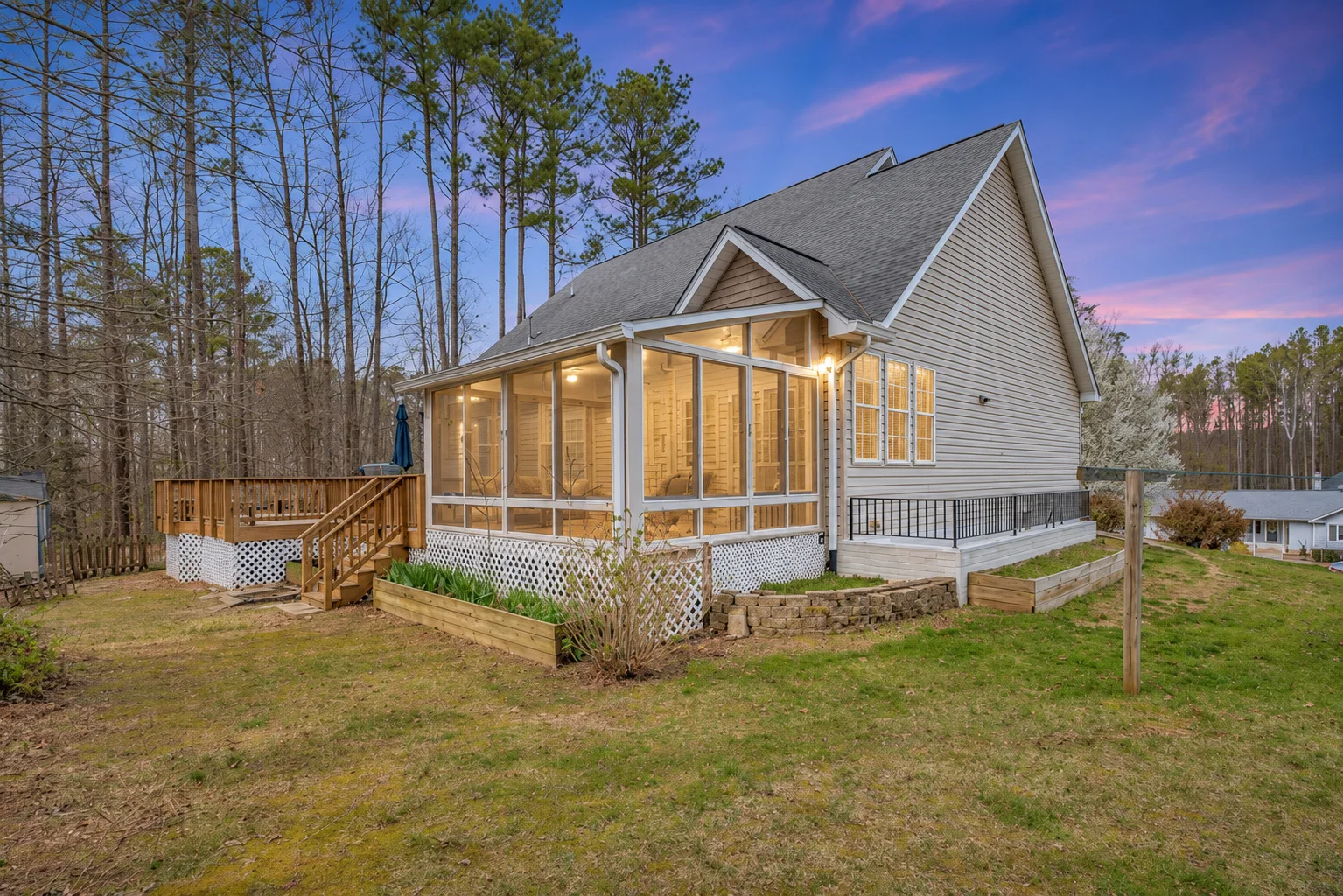
JekkyStay's Lake Anna lake house has six bedrooms, room for up to 16 guests, lake access, a screened porch and a deck. Ask us your side and dock questions before you book, and see our Lake Anna destination page for more on the area. If your group brings dogs, our homes allow up to 3 pets with a $100 pet fee per stay, and service animals are free.
The bottom line
Lake Anna's hot side is the 3,400-acre private Waste Heat Treatment Facility, where the power station's discharge runs typically 14 degrees warmer than the lake before it cools and returns. The cold side is the 9,600-acre public reservoir with the state park, marinas and most boating. Choose the hot side for long, warm dock days; choose the cold side for boating, fishing and public access. Either way, check Dominion's posted temperatures and water level before you go, skip water that looks or smells off, and make sure every boat driver has taken Virginia's boating safety course.
Frequently asked questions
What is the difference between the hot side and the cold side of Lake Anna?
The cold side is the 9,600-acre main reservoir, which Dominion Energy calls the public side. The hot side is the 3,400-acre Waste Heat Treatment Facility, a series of private cooling lagoons that take the North Anna Power Station's warmer discharge water before it returns to the main lake. Dominion calls it the private side.
How much warmer is the hot side of Lake Anna?
Dominion says the discharge water is typically 14 degrees warmer than the water drawn in from the main lake, and that it gradually cools as it flows through the lagoons. On the morning of November 17, 2026, Dominion's page showed 61°F at the intake and 80.5°F at the discharge.
Can anyone boat on the private side of Lake Anna?
Dominion's pages call the Waste Heat Treatment Facility the private side and list no public boat ramps or access points for it. The public access the state lists for Lake Anna is through private marinas, campgrounds and Lake Anna State Park. If you want time on the private side, confirm access with your host before you book.
Is it safe to swim on the hot side?
Dominion says all no-swimming advisories for the Waste Heat Treatment Facility were lifted as of July 25, 2019. It advises against swimming, for people or pets, where the water is discolored, smells or has a film, and asks people using the lagoons to consider the water temperatures and the Virginia Department of Health's guidance.
Which side is better for fishing?
The main reservoir is where Virginia DWR manages the lake's striped bass, largemouth bass, hybrid striped bass and black crappie fishery, and where its public access sits. DWR describes the reservoir as thermally enriched and notes that striped bass need cool, well oxygenated water in summer and early fall.
Do we need a license to drive a rental boat at Lake Anna?
Virginia requires all operators of motorboats with a 10 hp or greater engine, regardless of age, to complete an approved boating safety course and carry the completion card on board. No one under 14 may operate a personal watercraft. Ask your rental company what it needs from you.