Quick answer
The main public place to swim at Lake Anna is the designated beach at Lake Anna State Park, which Virginia State Parks describes as unguarded, so an adult must watch the water. Before any swim day, check the Virginia Department of Health algae bloom map, and put life jackets on every child on a boat.
Key takeaways
- The public swim spot is the designated beach area at Lake Anna State Park, which Virginia State Parks describes as an unguarded beach available year-round, so an adult has to watch the water.
- Check the Virginia Department of Health harmful algal bloom map before every swim day; past advisories have covered the upper North Anna and Pamunkey branches.
- Keep children and pets out of water with a surface film, or water that looks cloudy or smells bad, and never let them drink lake water.
- Virginia requires one Coast Guard-approved wearable life jacket per person on a boat, and children under 13 must wear one on a moving recreational boat on federal waters.
- Pack life jackets that fit each child before the trip: snug, not tight, and not riding up more than 3 inches when lifted by the shoulders.
In this guide
Where you can swim at Lake Anna
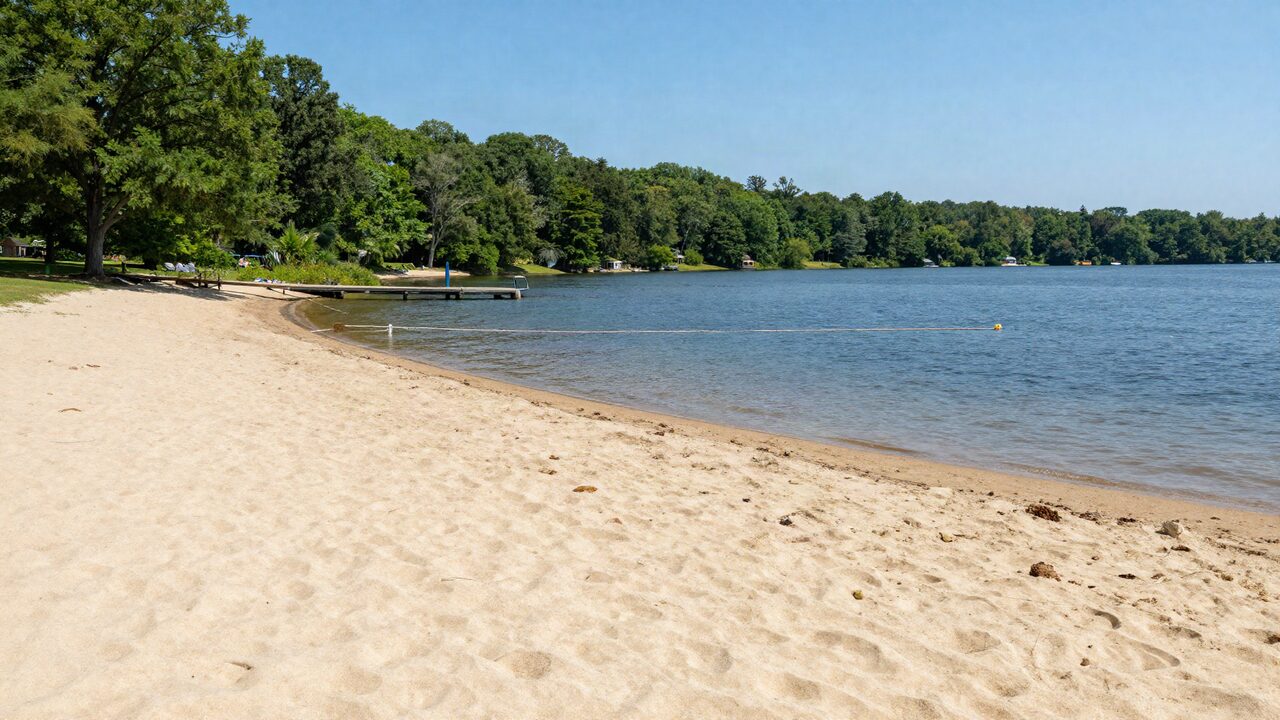
The one public swimming beach on the lake is at Lake Anna State Park, and you swim only in its designated area. The park's page, checked today, says "An unguarded swimming beach is available year-round" and that guests "swim at the beach's designated area but do so at their own risk." It also says "Swimming elsewhere in the park is not advised."
That shapes the plan for a group. You are not dropping kids off at a staffed pool. Someone in your group is the lifeguard, and that job needs to rotate so it stays sharp.
| What | What the park page says |
|---|---|
| Where to swim | The beach's designated area only |
| Lifeguards | Described as an unguarded beach |
| Season | Available year-round |
| Cost | Daily parking fee per vehicle, always required |
| Food | Snack bar near the beach, in season |
| Restrooms and showers | Bathhouse-concessions complex in the park |
| Access | Rail and sidewalk to the beach |
| Crowds | Likely to reach capacity on summer weekends and holidays |
Fees and hours change, so check the current price on their site before you go. For the rest of the park, from trails and fishing to reserving a picnic shelter, see our Lake Anna State Park guide for groups. This guide sticks to the water.
Outside the state park, swimming happens mainly from private docks, rental homes and boats anchored in coves. Those spots have no staff at all, which makes the rest of this guide more important, not less.
Check the water before anyone gets in
Check the Virginia Department of Health (VDH) algal bloom map and its newsroom on the morning of every swim day, because advisories can start or end during the season. Harmful algal blooms, often called HABs, are the main water quality issue at Lake Anna, and VDH has issued swimming advisories for parts of the lake in several recent summers.
VDH's newsroom tag for Lake Anna shows the pattern. In 2023 it issued an advisory for the Upper Pamunkey Branch above Route 208. In July 2024 it extended an advisory for the North Anna Branch and added one for the Upper and Middle Pamunkey Branch. In those notices VDH advised that "People and pets are advised to avoid swimming, windsurfing and stand-up-paddle-boarding" in the affected areas, and said an advisory lifts only after algae levels return to acceptable levels in samples taken at least 10 days apart.
The newest Lake Anna item on that page today is from 2024, and the bloom map itself is a live dashboard, so the only reliable answer for your trip is the map on the day. Advisories cover named sections of the lake, not always the whole thing, so read which branch and which landmarks it names.
How to check in under five minutes:
- Open the VDH algal bloom surveillance map and zoom to Lake Anna.
- Check the VDH newsroom for any Lake Anna advisory issued or lifted recently.
- Look at the water where you plan to swim. If anything looks off, skip it.
What harmful algae look like, and what to do
The short version: if the water looks wrong, stay out, and keep children and pets out. VDH says algae are normal in Virginia waters and most blooms are harmless, but some harm fish, people and animals, and a bloom "can change the water to appear green, red or brown."
| What you see | What to do |
|---|---|
| A film or scum on the surface | Keep children and pets out of the water |
| Green, red or brown water | Skip swimming there and check the VDH map |
| Cloudy or dirty water, or a bad smell | Stay away from it, per VDH |
| Dead fish or animals in the water | Report to the Virginia Emergency Operations Center, 1-800-468-8892 |
| A bloom you want to report | Use the VDH online HAB report form |
| Someone feels sick after swimming | See a care provider and mention the water contact; HAB Hotline 1-888-238-6154 |
A few habits cut the risk for everyone:
- Never let children or pets drink lake water. VDH has repeated this in its Lake Anna advisories.
- Rinse off with fresh water after a swim, and rinse dogs too, before they lick their coats.
- Don't swim with broken skin. VDH advises against it in natural water, because germs can infect cuts.
- Never swallow untreated water. Teach kids to keep their mouths closed when they go under.
- Be cautious after heavy rain. VDH has urged caution in natural waters after heavy rain, when runoff washes germs into lakes and rivers.
Life jackets: the rules and the fit
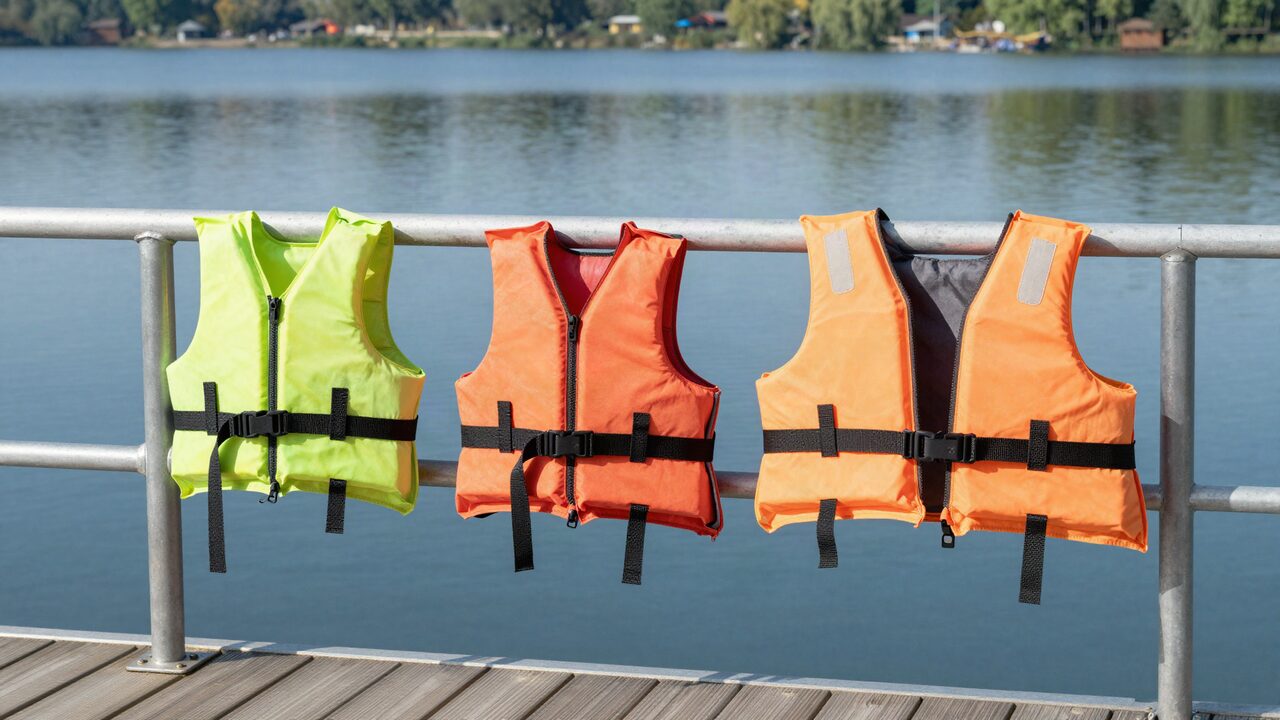
On a boat, Virginia requires one Coast Guard-approved wearable life jacket for each person aboard, and children under 13 must wear theirs while the boat is under way. The Virginia Department of Wildlife Resources (DWR) applies the federal rule: no one may operate a recreational vessel on federal waters with a child under 13 aboard unless each child wears an appropriate Coast Guard-approved life jacket, or is below deck or in an enclosed cabin. DWR notes that most waters in Virginia are considered federal waters.
| Situation | What DWR's equipment page says |
|---|---|
| Any recreational boat | One wearable Coast Guard-approved life jacket per person |
| Child under 13 on a moving boat | Must wear an appropriate approved life jacket, unless below deck or in an enclosed cabin |
| Personal watercraft | Operator, every rider and anyone towed must wear one; inflatables are not allowed |
| Boats 16 feet or longer | Must also carry a throwable device (not required on a personal watercraft) |
| Tubing or other towed sports | Check the label; some jackets are not approved for towed watersports |
| Condition | Each jacket in good and serviceable condition |
Fit matters as much as the rule. DWR says a jacket "should be snug, but not tight," and a child's jacket should not move more than 3 inches when you lift it by the shoulders. A jacket that slides up over a child's chin will not hold their head above water.
What we suggest for a group with kids, on top of the rules:
- Bring jackets sized for each child. Weigh the kids before the trip and match the label. Borrowed adult jackets do not fit children.
- Wear them on the dock. The rules cover boats, but a dock with a drop into deep water is where small children fall in. A simple house rule of "jacket on past the grass" is easy to follow.
- Weak swimmers wear one at the beach too. The park beach is unguarded, so a jacket buys time.
- Hang them where everyone can reach them, and count them at the end of each day.
Running a safe swim day with a big group
The best swim days have one adult on water watch at a time, a clear meeting point, and a plan for storms. A group of 10 to 20 people splits up quickly, and the risk is that every adult assumes someone else is watching.
- Name a water watcher in 30-minute shifts. That person is not on their phone, not reading and not in charge of lunch. Some families hand over a lanyard or whistle with each shift.
- Count heads every time someone gets in or out, and before you leave.
- Pick a swim zone for young children inside the beach's designated area and keep them in it.
- Set a meeting spot on the sand that never moves, so kids know where to come back to.
- Watch the sky. Leave the water at the first thunder and wait in cars or a building.
- Shade, water and sunscreen for everyone, especially grandparents who sit on the sand for hours.
| Role | Who | Notes |
|---|---|---|
| Water watcher | One adult at a time | 30-minute shifts, no phone |
| Head counter | The trip organizer | Count in, count out |
| Kit carrier | One household | Life jackets, first-aid kit, rinse water |
| Weather check | Anyone with a phone | Radar before you go and at lunch |
Swimming from the house and the dock
Swimming at a rental home or from a boat is where most groups spend their water time, and it has no lifeguards, no posted rules and no one checking the water but you. The same habits apply: check the VDH map, look at the water, keep jackets on children near the edge, and keep someone on watch.
Agree on dock rules on the first night, before anyone gets in. Typical ones that work: no diving off the dock unless the depth is known, children in jackets on the dock, no one swims alone, and no swimming near moving boats or after dark. If you bring dogs, plan for them too. JekkyStay homes allow up to 3 pets with a $100 pet fee per stay, and service animals are free, so the algae rules above matter for the dogs on the trip as much as the kids. Our guide to a group vacation rental with dogs covers the rest.
Our Lake Anna House is the home we have on the lake; see the Lake Anna destination page for dates. For the rest of the trip, read things to do at Lake Anna, the Lake Anna family reunion guide, and the Lake Anna What's on page for local events.
The bottom line
Swimming at Lake Anna is a summer highlight for a group, as long as you treat it like open water. Use the state park's designated beach and plan for no lifeguard. Check the VDH algae map and newsroom on the morning of every swim day and stay out of any section under an advisory. Keep children and pets out of water with a film or a strange color. Pack a properly fitted life jacket for every child, put them on whenever a boat moves, and keep one adult watching the water at all times.
Frequently asked questions
Is there a public swimming beach at Lake Anna?
Yes. Lake Anna State Park has a swimming beach in a designated area. The Virginia State Parks page describes it as an unguarded swimming beach available year-round, says guests swim at their own risk, and advises against swimming elsewhere in the park. A daily parking fee applies.
Are there lifeguards at the Lake Anna State Park beach?
The park's page, checked today, describes the beach as unguarded. Plan as if no lifeguard is on duty and assign an adult to watch the water at all times. Call the park before your trip if you want to confirm.
Is Lake Anna safe to swim in?
Much of the lake is used for swimming, but the Virginia Department of Health has issued harmful algal bloom swimming advisories for parts of the lake in past summers, mostly in the upper North Anna and Pamunkey branches. Check the VDH algal bloom map and newsroom before you swim, and stay out of any area under an advisory.
Do kids have to wear life jackets on a boat at Lake Anna?
Virginia's boating rules apply the federal rule: no one may operate a recreational vessel on federal waters with a child under 13 aboard unless each child wears an appropriate Coast Guard-approved life jacket or is below deck or in an enclosed cabin. Most Virginia waters count as federal waters. Every person on a boat also needs a wearable life jacket on board.
Can dogs swim in Lake Anna?
Dogs are at real risk from harmful algae, because they swim in and drink the water. Keep pets out of water with a film or a strange color, rinse them with fresh water after a swim, and see a vet if they seem ill. Never let them swim in an area under an advisory.
How do I report an algae bloom or a sick swimmer?
Use the VDH online harmful algal bloom report form for a bloom you see. For questions about health effects in people or animals, call the VDH HAB Hotline at 1-888-238-6154. Report dead fish to the Virginia Emergency Operations Center at 1-800-468-8892.
Sources
- Virginia State Parks: Lake Anna State Park
- Virginia Department of Health: harmful algal blooms
- Virginia Department of Health: algal bloom surveillance map
- Virginia Department of Health: Lake Anna news and advisories
- Virginia Department of Health: caution following heavy rains
- Virginia Department of Wildlife Resources: required boating equipment