Quick answer
Two families can share one house at Christmas well if they agree on dates, budget, bedrooms and traditions before anyone books, and if the schedule gives each family time on its own every day. Most holiday friction comes from surprises, so the work is in the planning.
This guide is for in-laws spending their first Christmas together, blended families bringing two sets of kids under one roof, and old friends merging their holidays. It covers whose traditions go when, how to hand out bedrooms fairly, how to split costs and how to build a schedule that keeps everyone glad they came.
Key takeaways
- Agree on the big four before anyone books: dates, budget, bedrooms and who hosts which meal.
- Give each family's most important tradition its own slot, such as Christmas Eve for one and Christmas morning for the other.
- Assign bedrooms by need first (babies, older relatives, couples), then draw lots for the rest.
- Split the house by bedroom or by person, and keep shared food and extras in one tracked pot.
- Plan at least one block of time each day when each family can be on its own.
In this guide
Agree on the big four before you book
Settle dates, budget, bedrooms and who hosts which meal in one conversation before anyone pays a deposit.
It sounds formal for a family Christmas, but a 30 minute video call now saves a tense week later. Put one person from each family on the call and cover:
- Dates. Arrival and departure days for each family. One family may want to arrive on the 23rd and the other on Christmas Eve. That is fine, but it changes the cost split.
- Budget. A range per family for the house, and a rough figure for food and outings. Our guide to setting a group trip budget before booking has a simple worksheet.
- Bedrooms. Who needs what, before anyone sees the floor plan.
- Meals. Which family leads which big meal, and which meals are simple or eaten out.
Write the answers in a shared note or the group chat. A stepfamily, as Wikipedia defines it, is a family where at least one parent has children who are not biologically related to their spouse. In those families, and in any first shared holiday, people often assume their own family's way is the normal way. Writing it down turns assumptions into choices.
Give each family's traditions their own slot
Ask each family for the one or two traditions that matter most, then give each one its own time.
Every family has a Christmas that feels right to them: Christmas Eve dinner with a certain dish, church at midnight, stockings before breakfast, a walk after lunch, a film on the 25th. You can't fit all of them into three days, and you don't need to. Ask each family to rank its traditions and protect the top one or two.
A schedule that often works:
| Day | Morning | Afternoon | Evening |
|---|---|---|---|
| Dec 23 (arrival) | Travel | Settle in, grocery run | Easy dinner: pizza or takeout |
| Christmas Eve | Free time, each family on its own | Shared outing or games | Family A's Christmas Eve dinner and tradition |
| Christmas Day | Family B's morning routine, stockings and gifts | Shared gift swap, walk | Christmas dinner together |
| Dec 26 | Slow start, leftovers | Each family on its own | Movie night or games |
| Dec 27 (departure) | Pack, tidy up | Checkout |
The point is that each family gets a moment that feels like its own Christmas, and the other family joins as a guest. Guests in someone else's tradition tend to be generous. Families forced into a merged version of both often feel that neither one happened.
When two traditions clash, such as two different Christmas Eve dishes, try alternating years, or put both on the table and let the kids vote on which one stays.
Hand out bedrooms by need, then by draw
Assign rooms to the people with real needs first, then use a fair draw for everyone else.
Bedroom choice is where two families most often feel one side came out ahead. Take it off the table early with a simple order:
- Needs first. An older relative who can't manage stairs gets the ground floor room. Parents with a baby get the room closest to a bathroom and farthest from the living room. A couple who needs a door that locks gets one.
- Balance the good rooms. If there are two primary suites, each family gets one. If there is only one, the family that didn't get it gets first pick of everything else, or the bigger share of a cheaper split.
- Draw for the rest. Names in a hat for the remaining rooms, kids included.
- Rotate next year. If you plan to do this again, the family that got the better rooms this year picks second next time.
Keep each family's rooms close together when you can, such as one family upstairs and one on the main floor. It gives everyone a home base. Our full guide to assigning bedrooms on a group trip covers kids' rooms, bunk rooms and what to do if someone is unhappy.
Split the costs so nobody keeps score
Split the house by bedroom or by person, keep shared costs in one tracked pot, and settle before you leave.
Money is easier to talk about between two families than among a dozen individuals, because each family pays as one unit. Pick one method and agree on it in writing:
| Method | How it works | Best when |
|---|---|---|
| Even split | Each family pays half | Families are about the same size and stay the same nights |
| By bedroom | Each family pays for the rooms it uses | One family is much larger or takes the primary suite |
| By adult | Adults pay a full share, kids a half share or nothing | Families have very different numbers of children |
| By night | Each family pays for the nights it stays | One family arrives later or leaves earlier |
For food and extras, one shared pot works best. Splitwise, a free app for dividing shared costs, lets anyone log a grocery run and shows who owes whom, with options to split equally, by percentage or by shares. Settle up on the last morning, not weeks later.
Our guide to splitting costs on a group vacation rental goes further into deposits, payment timing and what happens if someone drops out.
Plan the meals by family
Let each family lead one big meal and keep the rest simple.
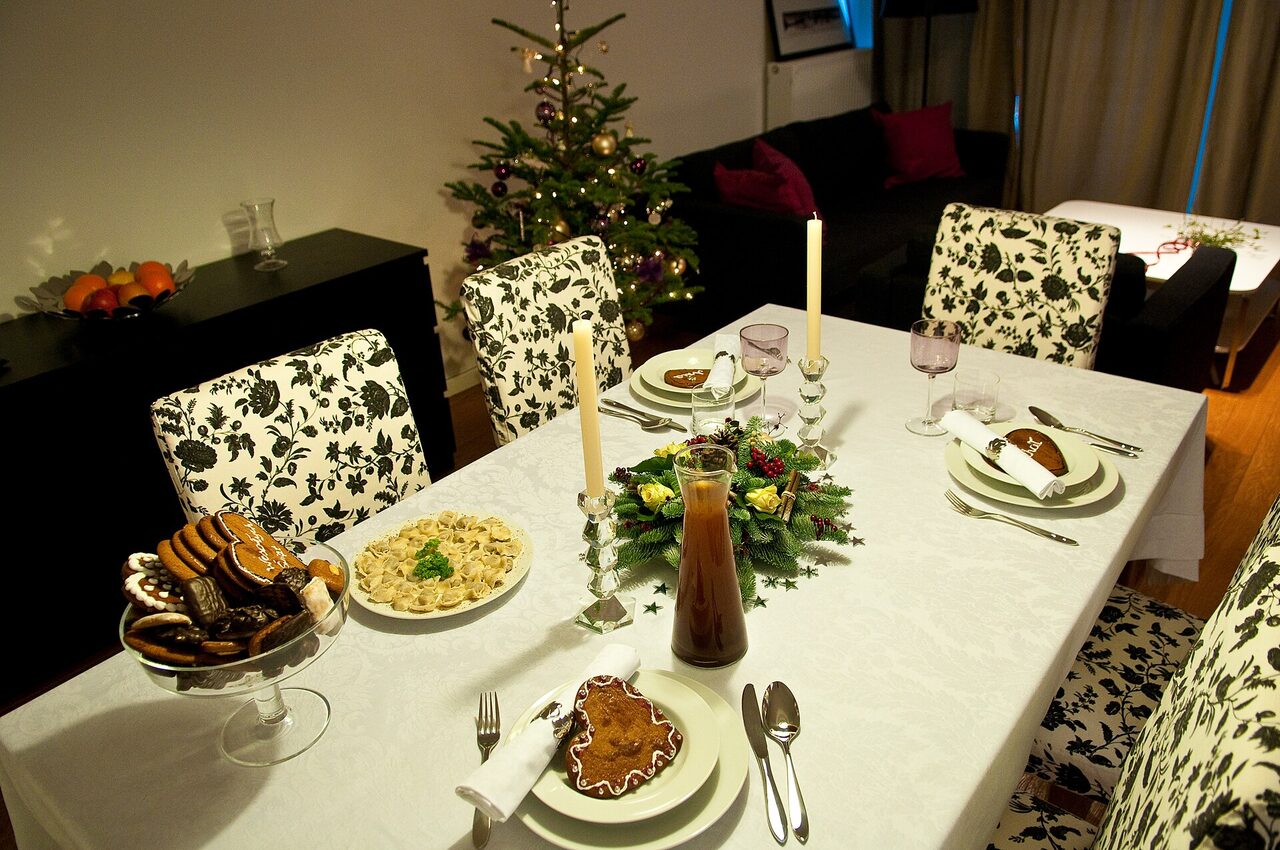
Christmas dinner for twelve is a lot of work in a kitchen you don't know. Share the load:
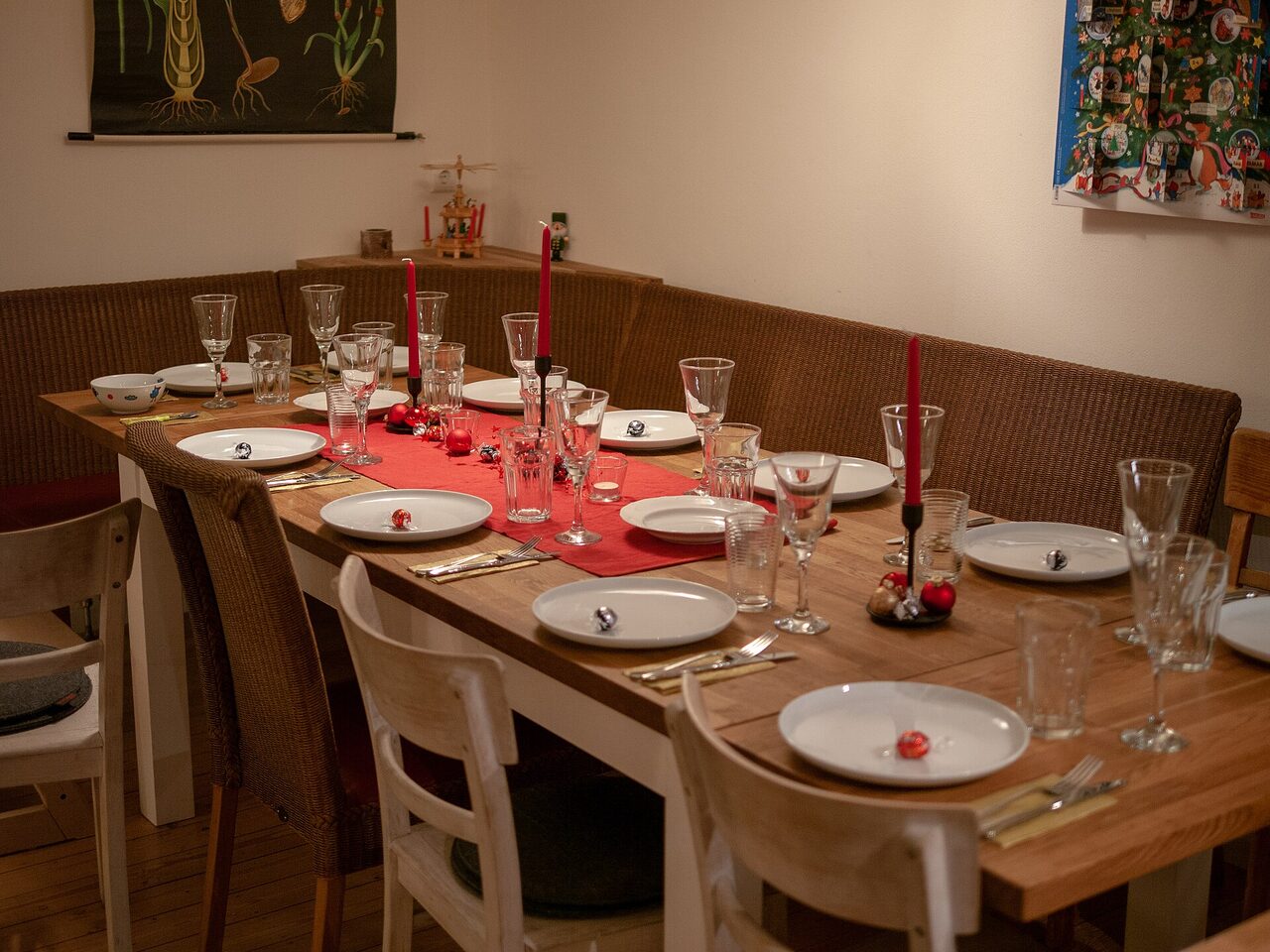
- Each family leads one big meal. Family A cooks Christmas Eve, Family B cooks Christmas Day, and the other family does the cleanup.
- Breakfasts are self-serve. Stock cereal, fruit, eggs and bread, and let people eat when they wake up.
- One meal out or ordered in. A night off from cooking helps, especially on arrival day or the 26th.
- Leftovers night. Plan it, so nobody feels bad about not cooking.
Ask about allergies and dietary needs before the grocery list is made, and give each family a shelf in the fridge for its own snacks and baby food. For the main event, our guide to Christmas dinner in a vacation rental covers what to ask the host about the kitchen and how to cook for a crowd.
Build in time apart every day
Give each family a block of time on its own every day, and make it part of the plan rather than a sign that something is wrong.
Even families who love each other get tired of being together all day in one house. Small children need naps, teenagers need space, and couples need an hour to themselves. If time apart is on the schedule, nobody has to ask for it.
Ways to make it work:
- Split the house. One family takes the living room for a film while the other has the kitchen or the patio.
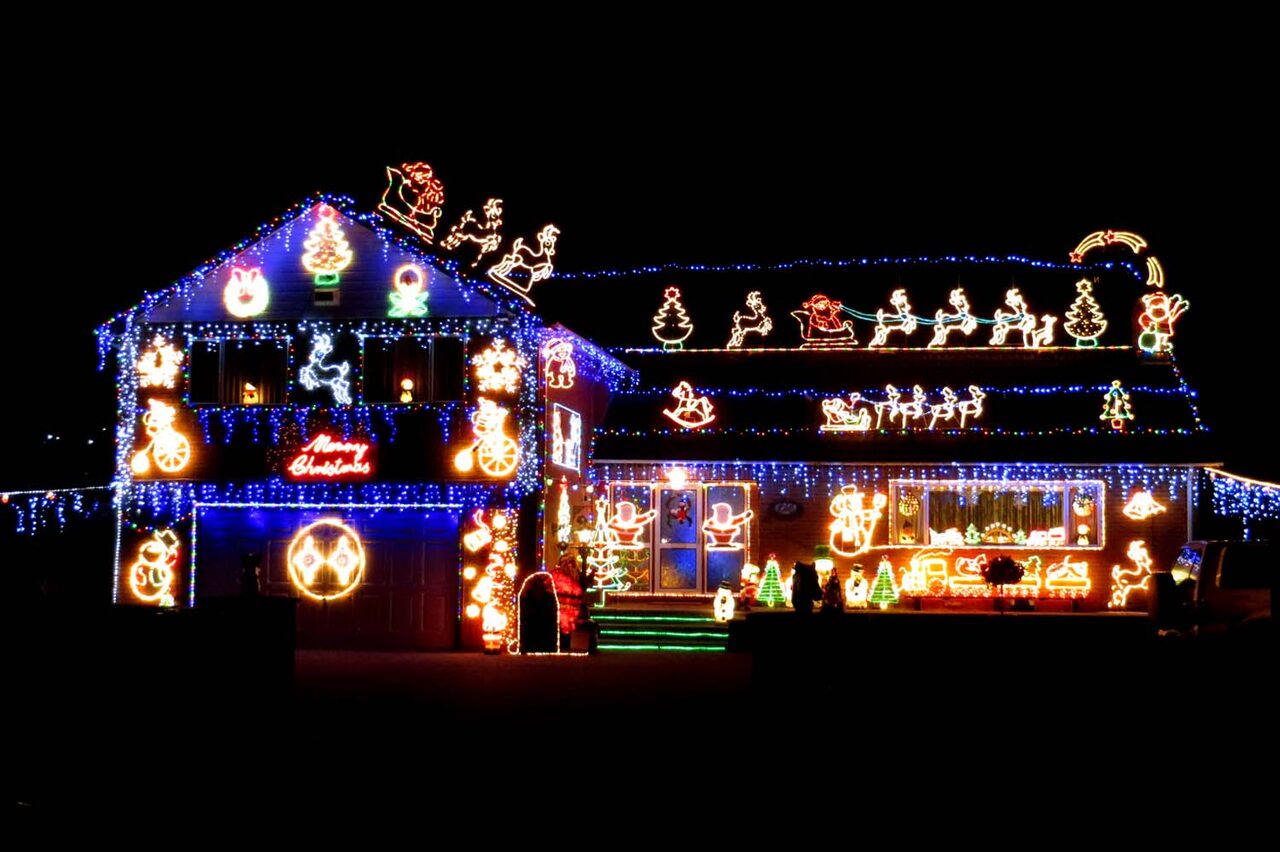
- Split the day. One family goes for a morning walk or to a holiday lights display while the other sleeps in.
- Open gifts separately. Each family can open its own gifts in its own space, then join a shared gift swap game after lunch.
- Keep one evening free. No plan, no shared meal, everyone does their own thing.
Choose the right house
Look for enough beds and bathrooms, a big dining table and two separate places to hang out.
A house that fits two families at Christmas usually has:
- Beds for everyone in rooms with doors that close, plus a plan for kids.
- One bathroom for every three or four people, so mornings don't stall.
- A dining table that seats everyone, or a table plus an island.
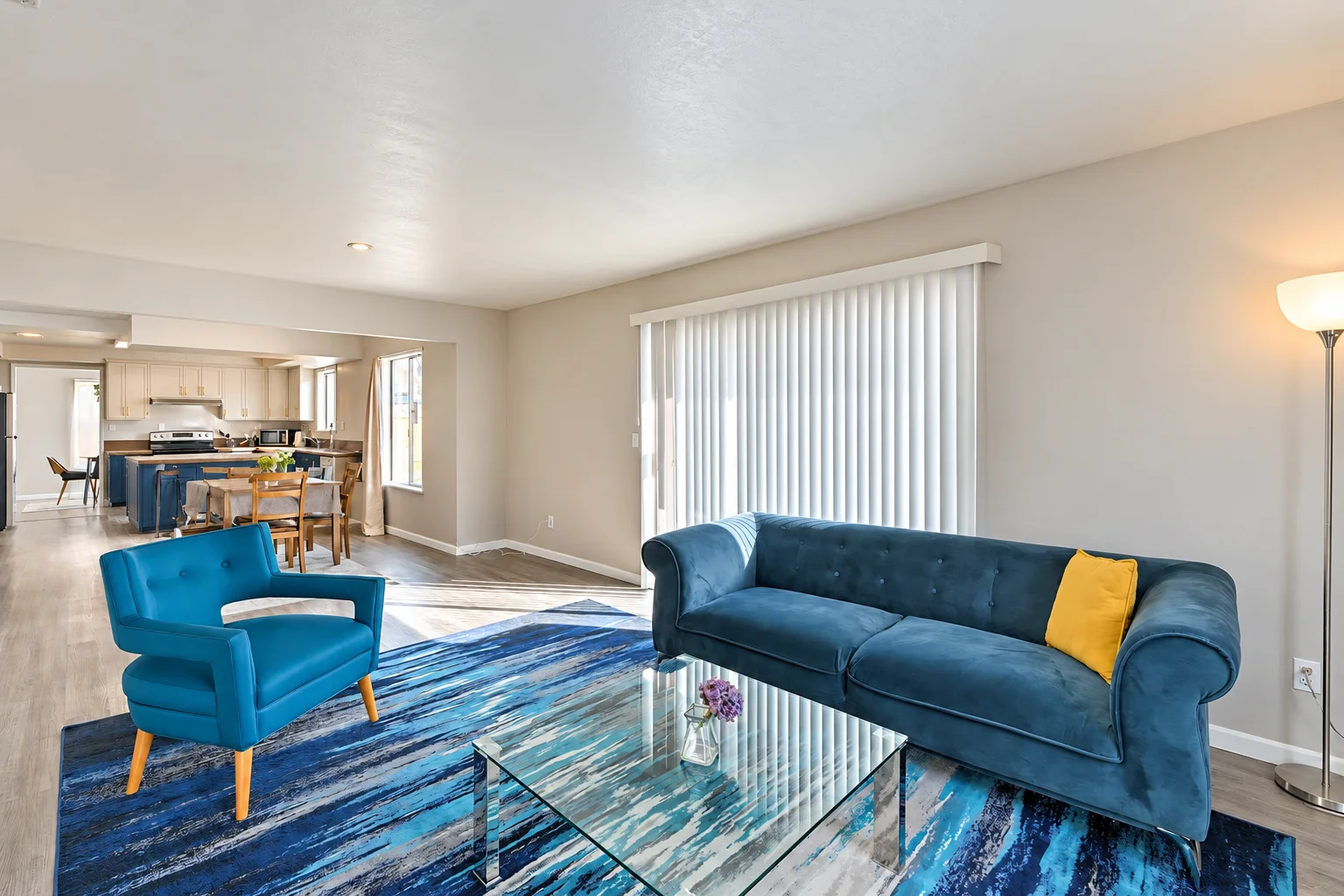
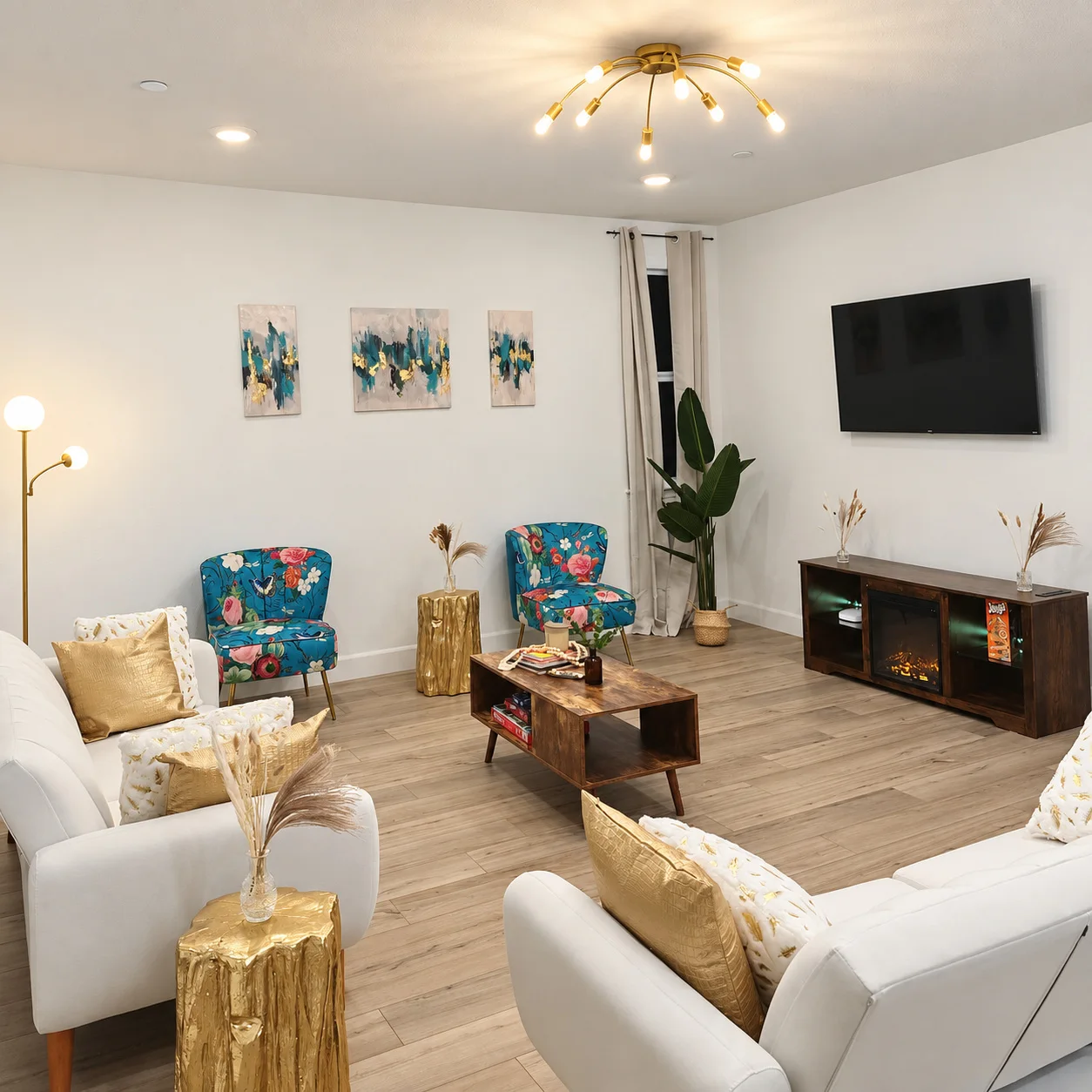
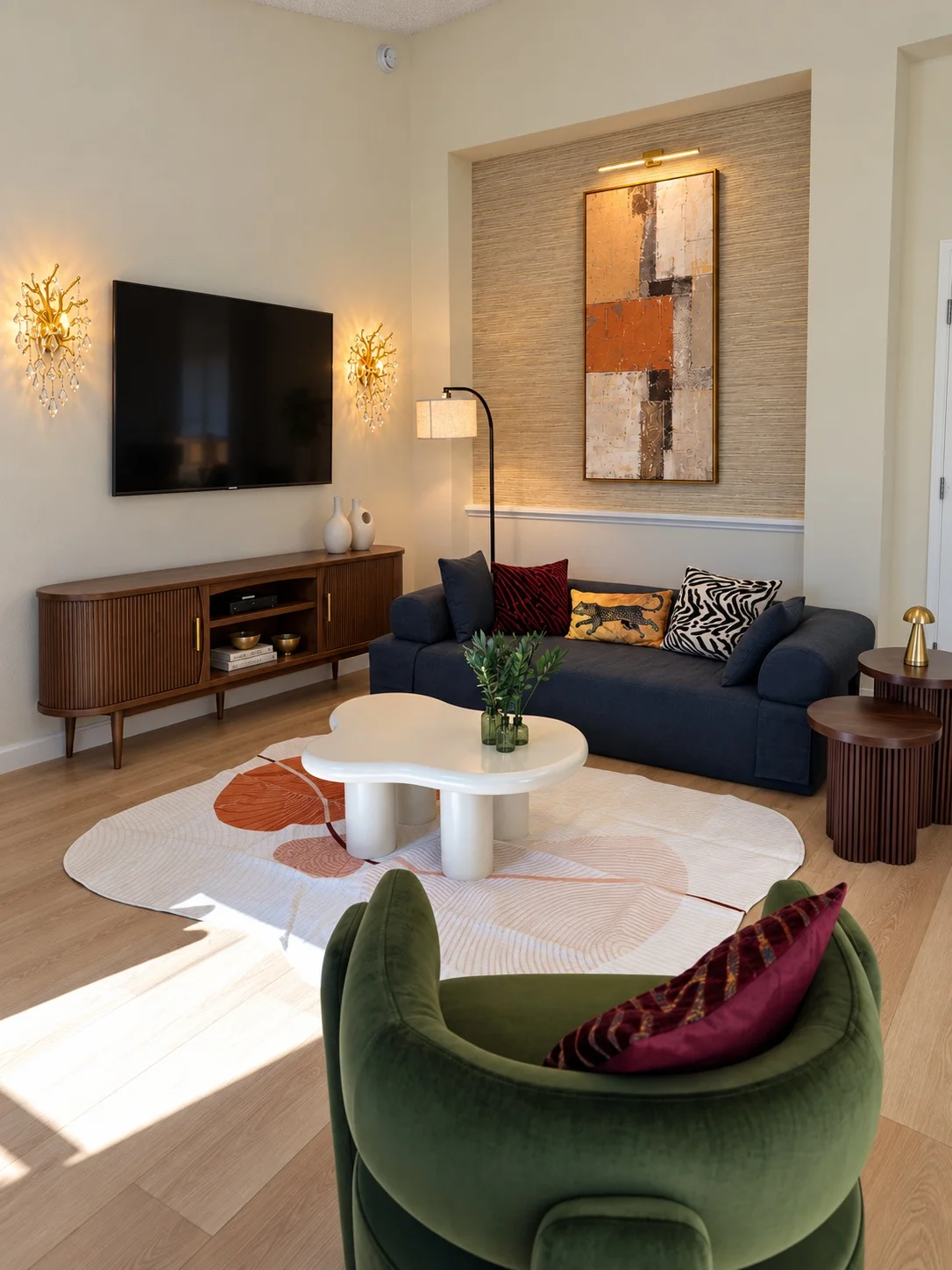
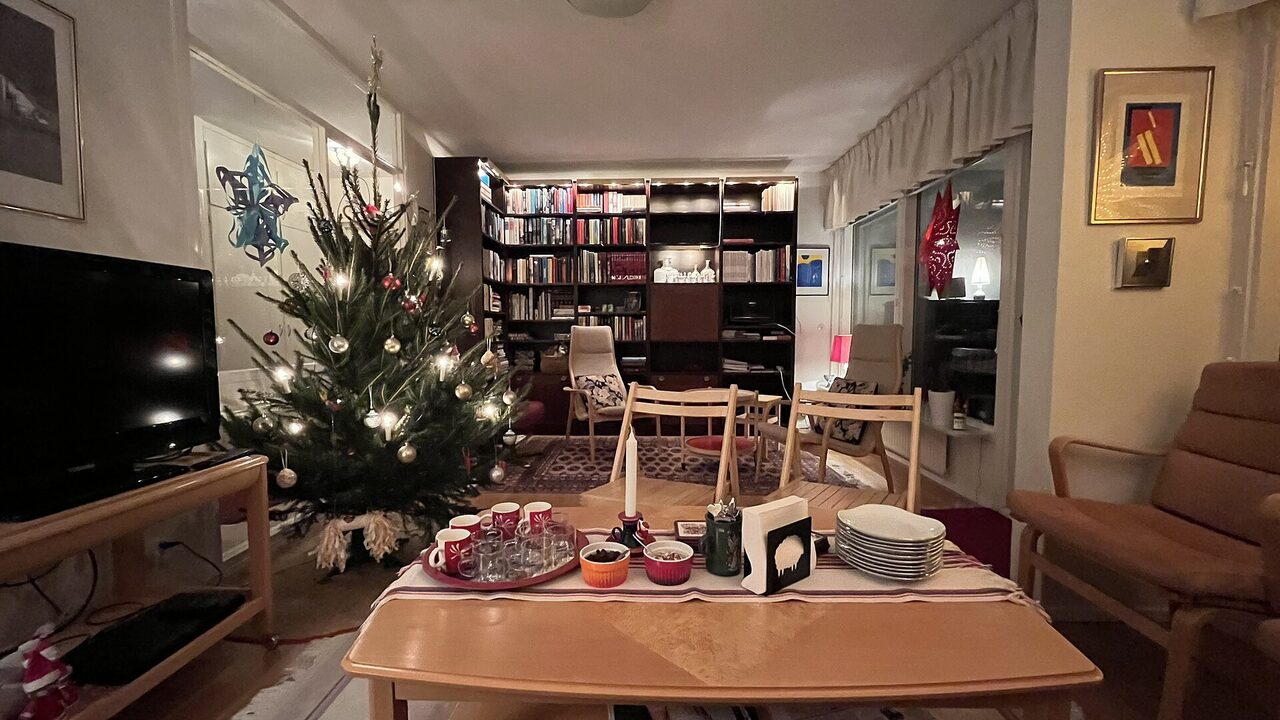
- Two living spaces, so each family has somewhere to be.
- A kitchen with two ovens or plenty of counter space for Christmas dinner.
- Space for gifts and a tree, or check whether the host allows a real tree.
Our homes for groups in six destinations have five to seven bedrooms, and most sleep up to 16 guests, enough for two families of six to eight. Pets can come too: up to 3 per stay, with a $100 pet fee per stay, and service animals are always free. For more ideas on bigger holiday gatherings, see our page on family reunions and our guide to a Christmas and New Year vacation rental for family.
When you book directly with JekkyStay, our Check-in Promise applies: "If your group can't get into the home at check-in and we can't get you in within one hour of your call, we refund your first night." That is one less thing to worry about when two families arrive on the 23rd with cars full of gifts.
The bottom line
Two families can share a happy Christmas in one house if they decide the big things before booking: dates, budget, bedrooms and meals. Give each family's most important tradition its own slot, hand out rooms by need and then by draw, keep money in one tracked pot and plan time apart every day. Then pick a home with enough beds, bathrooms and living space for both families to feel at home.
Frequently asked questions
How do two families share Christmas in one house without fighting?
Settle the main questions before the trip: dates, budget, bedrooms, the meal plan and which traditions happen when. Then build in time apart each day. Most friction comes from surprises, not from the families themselves.
How do we decide whose Christmas traditions to follow?
Ask each family for its one or two traditions that matter most, then give each its own time slot. A common split is one family's Christmas Eve dinner and the other's Christmas morning routine. Smaller traditions can be shared or skipped this year.
How should two families split the cost of a holiday rental?
The simplest fair split is by bedroom or by adult, with children counted at a lower share if everyone agrees. Keep groceries and shared extras in a separate pot tracked in an app such as Splitwise, and settle up before you leave.
Who gets the best bedroom when two families share a house?
Start with needs: a ground floor room for an older relative, a quiet room near a bathroom for a baby, a door that closes for a couple. After that, draw lots or alternate, with the other family getting first pick next year.
How big a house do two families need at Christmas?
Count beds, not just bedrooms, and aim for one bathroom for every three or four people. Two families of four to six usually fit well in a five to seven bedroom home with a large dining table and two living spaces.
What if one family wants to open presents at a different time?
Let them. Each family can open its own gifts in its own space or at its own time, then everyone meets for a shared exchange, such as a gift swap game after lunch.