Quick answer
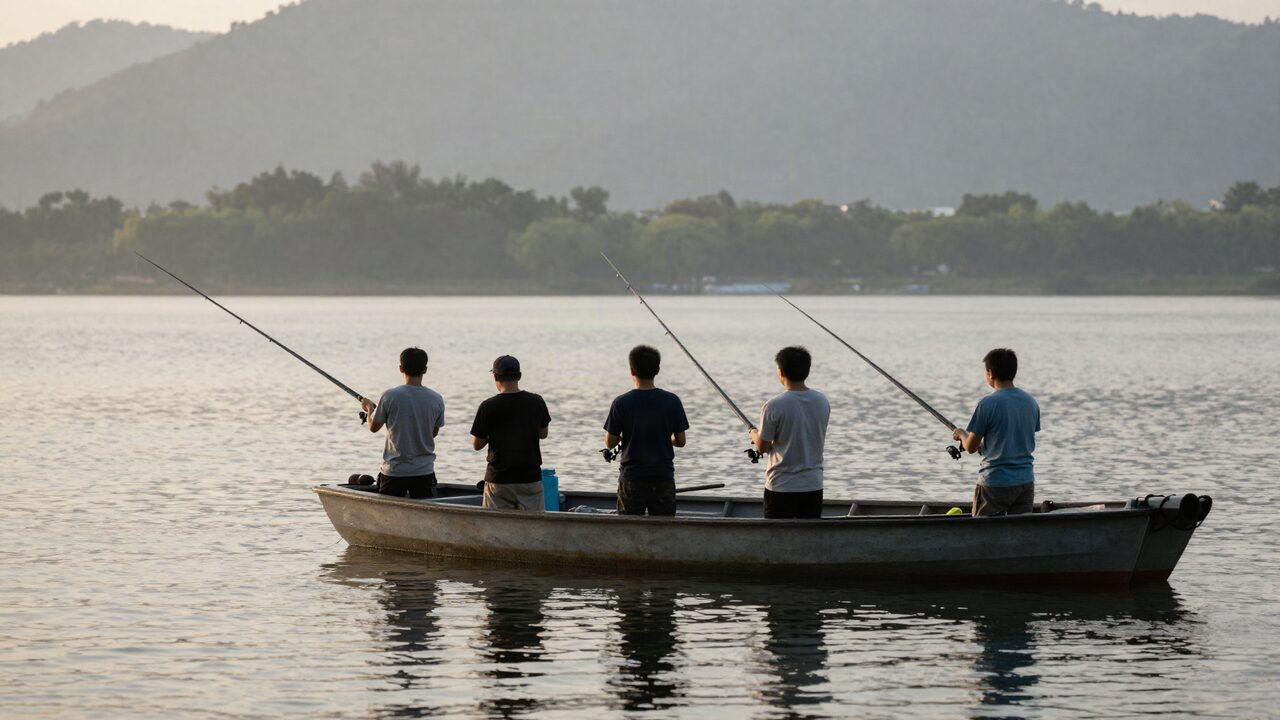
To plan a fishing trip with friends, pick the water and the fish first, then buy each angler's state license online, book a guide for at least the first day if the group is mixed, split the gear lists, and rent a house with parking for trucks, space for rods and a place to clean fish.
Key takeaways
- Pick the water and the target fish first; the season, the gear and the house all follow from that choice.
- Every adult who fishes needs that state's license. Texas and Virginia both sell short-term licenses for visitors, bought online before you leave.
- Book a guide for the first day if half the group is new to the water; a guided boat usually takes a small group, so a larger party may need more than one.
- Pack by job: rods and tackle, safety gear, cooler and ice, and cleaning kit, with one person checking each list.
- Choose a house with parking for trucks and trailers, a garage or covered space for rods, and a freezer, and ask the host where fish can be cleaned.
In this guide
Start with the water and the fish
The first decision is where you will fish and what you want to catch, because it sets everything else. A striped bass trip on a big reservoir, a catfish weekend on a river and a bay trip for redfish need different boats, different tackle and different seasons.
Agree on three things in the group chat before anyone books:
- The target. One species, or "whatever bites" for a relaxed trip.
- The style. Guided boat, rented boat, your own boat on a trailer, or bank and pier fishing.
- The mix of people. How many have fished this kind of water before, and how many just want a few hours on a boat and a good dinner.
If the group has a few serious anglers and several casual ones, plan for both. The serious anglers can take a guided boat at dawn while the rest sleep in and join for an afternoon on a pontoon or the bank.
Licenses: the step groups forget
Every person who fishes needs that state's license, and buying them online before you leave saves a stop at a bait shop on the first morning. The rules and prices differ by state, so one person should check the official agency page and send everyone the link.
Two examples from states where we have homes, as listed on the agencies' pages today:
| Texas (Texas Parks and Wildlife) | Virginia (Department of Wildlife Resources) | |
|---|---|---|
| Who needs one | Anglers 17 and older | Anglers 16 and older, freshwater |
| Short visit, nonresident | One-day all-water license, $16 | One-day freshwater, $20; five-day freshwater, $36 |
| Full season, nonresident | Freshwater package $58; all-water package $68 | Annual freshwater, $72 |
| Residents | One-day all-water $11; freshwater package $30 | Annual freshwater $28; five-day $19 |
| Where to buy | Online, at retailers, or TPWD offices | Online at Go Outdoors Virginia, license agents, or by phone |
A few details that catch groups out:
- Texas packages run to August 31. TPWD says its packages are valid from the date of sale through August 31, so a license bought in July is a short one. The one-day license is valid for the day or days you select.
- Saltwater is separate. In Texas, a freshwater package does not cover the bay. If the group might fish both, the all-water license covers both.
- Kids are usually exempt. Texas exempts anglers under 17; Virginia exempts those under 16. They still need to follow the size and bag limits.
- Limits are per person. Every state sets daily bag limits and minimum sizes by species. Print them or save a screenshot, and make sure everyone keeping fish knows them.
Guide, rental boat or your own boat
A guide is the best money a mixed group can spend on day one. The guide brings the boat and tackle, knows where fish are holding that week, and teaches beginners to cast and set a hook. In Texas, TPWD requires anyone paid to take people fishing on public water to hold a fishing guide license, so ask any guide you book for theirs.
How to choose:
| Option | Best for | What to check |
|---|---|---|
| Guided charter | Beginners, a new lake, a short trip | How many anglers per boat, what is included, the cancellation and weather policy |
| Rental pontoon or fishing boat | A relaxed day with mixed ages | Boating safety rules for the driver, fuel, life jackets for every size |
| Your own boat | Experienced groups on a longer trip | Launch ramps and fees, trailer parking at the house |
| Bank, pier or shore | Kids, beginners, a cheap afternoon | Where fishing is allowed, parking, shade |
A guided boat usually takes only a few anglers, so a group of ten might book two boats, or book one boat for two half-day trips and swap people. Book guides early for spring and fall weekends, which are the busiest seasons on many lakes.
The gear list, split by job
Split the packing into four lists and give each one to one person, so nothing is forgotten and nothing is packed three times.
Rods and tackle. Rods in tubes or a rod sock, reels with fresh line, a shared tackle box with hooks, weights, lures or rigs for the target species, pliers, line cutters and a landing net. If you hire a guide, ask what they provide so you do not haul gear you will not use.
Safety and comfort. A properly sized life jacket for every person on a rental or private boat, sunscreen, hats, polarized sunglasses, rain jackets, a first-aid kit, and plenty of drinking water. Early mornings on the water are cold even when afternoons are hot.
Cooler and ice. One large cooler for the catch and a separate one for drinks and lunch, so nobody opens the fish cooler every twenty minutes. Plan ice runs, because a cooler for the catch eats ice fast.
Cleaning kit. A fillet knife, a cutting board you do not mind getting dirty, gloves, heavy trash bags, zip-top freezer bags and a marker for labeling packs with the date and species.
Keeping and cooking the catch
Fish taste best when they go on ice right away and get cleaned the same day. The FDA's guidance for fresh seafood is to refrigerate it at 40°F or below if you will use it within 2 days, and otherwise to wrap it tightly in plastic, foil or moisture-proof paper and freeze it. Most seafood should be cooked to an internal temperature of 145°F.
A simple system for a group:
- Fish go straight onto ice in the catch cooler.
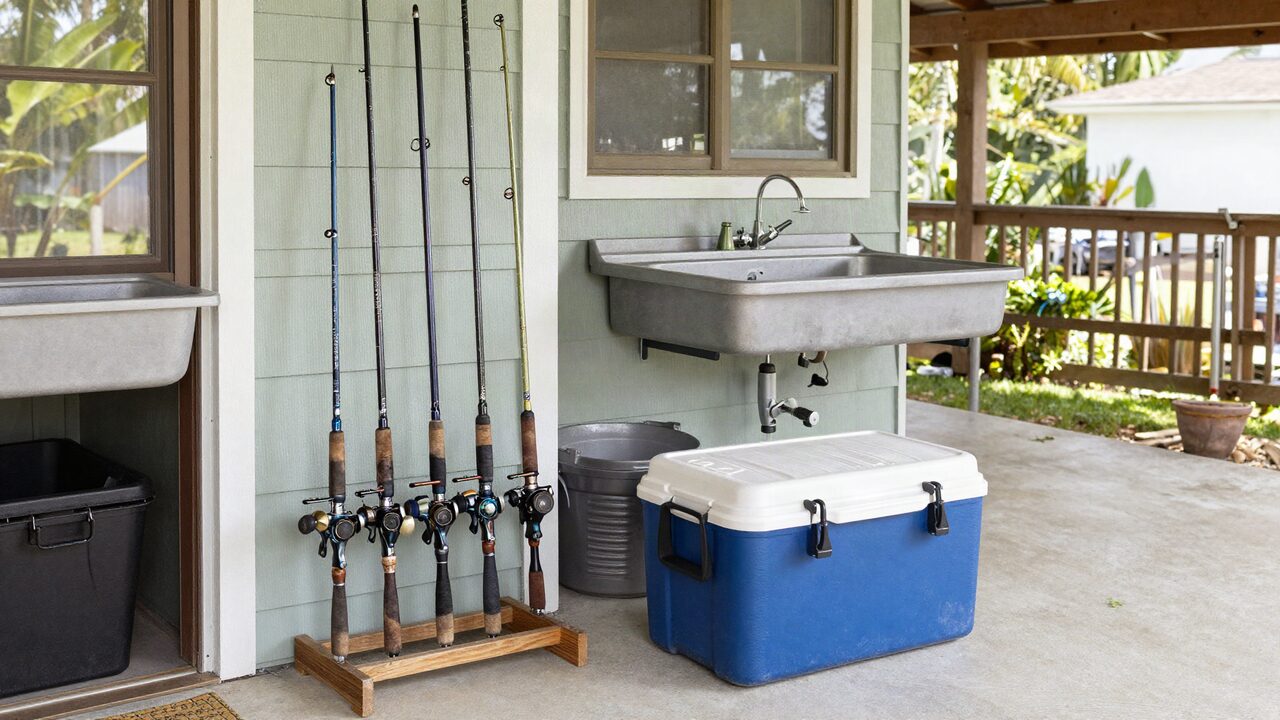
- Clean them outside at the end of the day, at a cleaning station, an outdoor sink or a table you can hose down.
- Bag scraps twice and take them to an outdoor bin the same night, or ask the host where they should go.
- Keep what you will eat in the next two days in the fridge, and freeze the rest flat in labeled bags.
- On the last day, pack frozen fillets in a cooler with fresh ice for the drive home.
Choosing a house for a fishing group
The right house matters more on a fishing trip than on most group trips, because of the gear, the early starts and the fish. Look for these before you book, and ask the host about anything the listing does not say:
- Parking for trucks and trailers. Ask how many vehicles fit and whether a boat trailer can be parked at the house.
- A garage or covered storage. Rods, tackle and coolers need a place that is not the living room. Garage parking also keeps gear out of sight overnight.
- An outdoor place to clean fish. Ask the host where cleaning is allowed. Many hosts do not want fish cleaned in the kitchen.
- A freezer with room. A full-size freezer, or at least an empty freezer section, for the catch.
- Enough bedrooms for early risers. People leaving at 5am wake light sleepers. Separate bedrooms and a few bathrooms keep the peace.
- A washer and dryer. For wet, fishy clothes after a rainy morning.
Pets can come too. At our homes, up to three pets can stay with a $100 pet fee per stay, and service animals stay free. Our guide to a group vacation rental with dogs covers the rest.
For specific waters, see our Lake Anna striped bass fishing guide and our guide to Delta boating and fishing near Antioch. Our lake home is listed on the Lake Anna destination page, and you can browse all of our homes for groups or see our group getaways page.
A sample long weekend
Example: four days for eight friends, four of them experienced and four new to fishing.
| Day | Morning | Afternoon | Evening |
|---|---|---|---|
| Thursday | Drive in, pick up groceries and ice | Unpack gear in the garage, check licenses | Easy dinner, set alarms |
| Friday | Two guided boats from dawn | Clean fish, naps | Fish fry at the house |
| Saturday | Experienced anglers on their own boat; others fish from shore | Pontoon or rest | Grill night, cards |
| Sunday | Short last session or sleep in | Pack frozen fish on fresh ice | Head home |
Split shared costs, such as guides, the house, ice, bait and fuel, in one app as you go. Our guide on how to split costs on a group vacation rental has a simple method, and the group trip planning timeline shows when to book each piece.
The bottom line
Choose the water and the fish first, then everything else follows. Have every angler buy the state license online before the trip, book a guide for at least the first day if the group is mixed, split the gear into four lists, and get the catch on ice and cleaned the same day. Then rent a house with space for trucks, rods and coolers, and ask the host where fish can be cleaned before you book.
Frequently asked questions
Does everyone on a group fishing trip need a fishing license?
Everyone who fishes and is above the state's age cutoff needs one. In Texas, anglers 17 and older need a license; in Virginia, anyone 16 or older needs a freshwater license. A friend who only rides along usually does not, but check the state's rules.
How much is a fishing license for an out-of-state visitor?
It depends on the state. Texas Parks and Wildlife lists a nonresident one-day all-water license at $16. Virginia DWR lists nonresident freshwater licenses at $20 for one day, $36 for five days and $72 a year. Check the state agency's page for current prices before you buy.
Should we hire a fishing guide?
Hire one if most of the group is new to the water or new to fishing. A guide brings the boat, knows where the fish are that week and teaches the basics, which turns a slow first day into a good one. Experienced groups often book a guide for day one and fish on their own after that.
How do we keep our catch fresh at the rental?
Put fish on ice as soon as they are caught, clean them the same day, and refrigerate at 40°F or below if you will eat them within two days. Otherwise wrap them tightly and freeze them. The FDA says most seafood should be cooked to an internal temperature of 145°F.
Can we clean fish inside a vacation rental?
Ask the host before you book. Many hosts prefer fish to be cleaned outside, at a cleaning station or outdoor sink, and want scraps bagged and taken out the same day. Kitchen sinks and indoor trash cans hold the smell for days.
Can we bring our dogs on a fishing trip?
At JekkyStay homes, up to three pets can stay, with a $100 pet fee per stay, and service animals stay free. Keep dogs away from hooks, lines and fish scraps.